
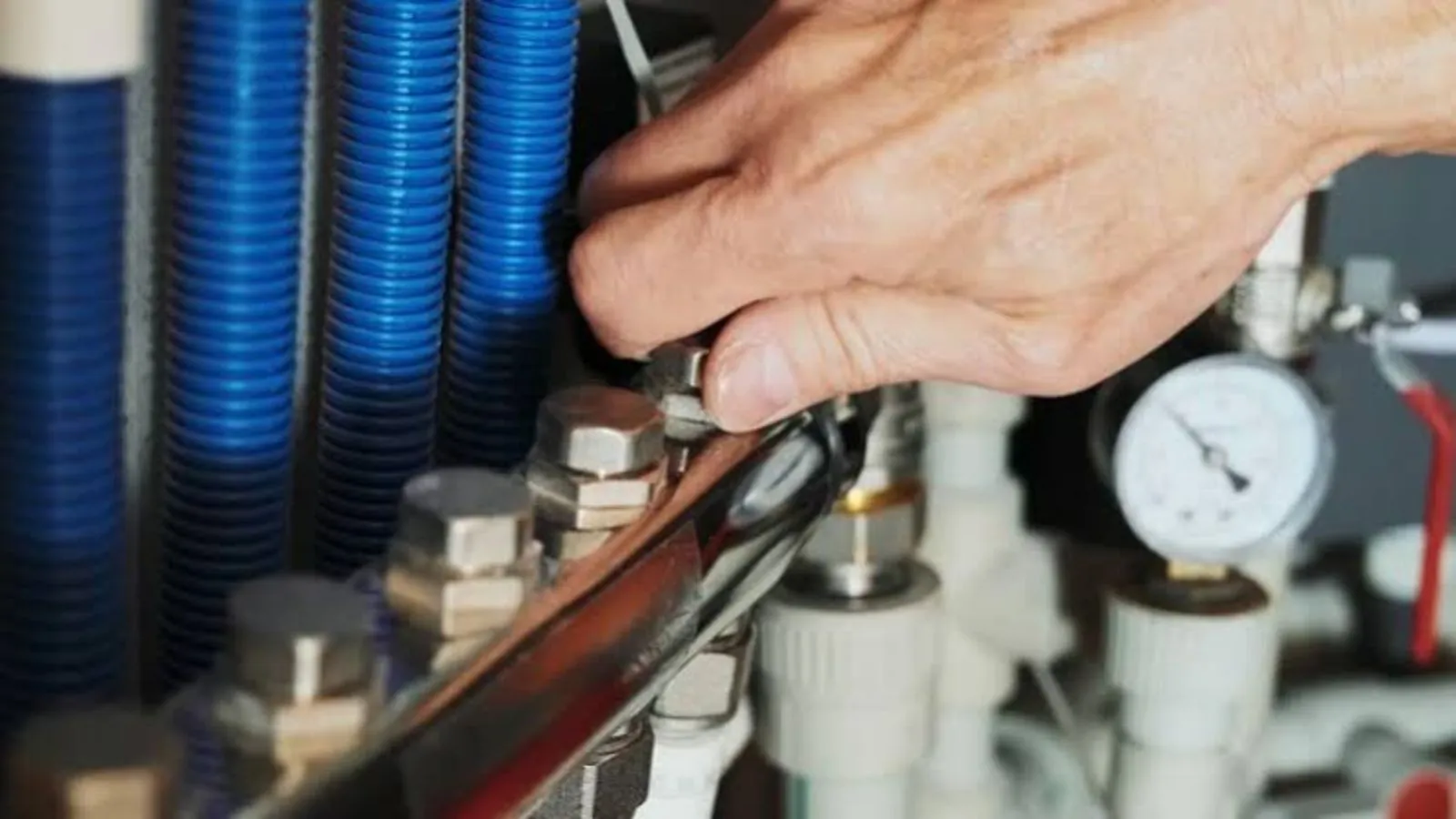
A water heater that is leaking or has split is an emergency, and our crews answer 24/7. While you wait, close the cold water supply valve on top of the tank, turn off the power or gas to the heater, and keep people out of the pooling water.
Water heater leak cleanup means removing the water a tank released, then drying the floor, wall base and anything stored nearby. A standard tank holds 40 to 50 gallons, and a failure can release most of it at once or seep for weeks before anyone looks.
Water heater leaking now: shut it down in this order
The order of shutoffs matters. First close the cold water supply valve on the pipe feeding the top of the tank, which stops new water from entering. Then shut off the energy source so the heater is not firing on an empty tank.
On an electric heater, that means the dedicated breaker, but only if the panel is dry and safe to reach. On a gas heater, turn the gas valve on the supply line to the off position, or set the control to pilot. If you smell gas, leave the house and call 911 or the gas utility.
Do not drain the tank unless a plumber tells you to. Hot water scalds, and the drain valve on a failed tank can clog and spray. If the puddle turns out to come from a nearby washer or dishwasher instead, the appliance leak page covers those sources.
What to do while you wait for the crew
Five short actions slow the damage and keep everyone safe.
Close the cold supply
Turn the valve on the cold pipe above the tank fully clockwise or perpendicular to the pipe.
Kill power or gas
Breaker for electric, gas valve for gas. Skip the breaker if the panel is wet.
Move stored items
Lift boxes, paint cans and furniture off the floor, and take electronics upstairs.
Photograph the tank
Capture the label, the leak point and the pooled water. Your insurer and plumber will want these.
Keep the floor clear
Hot water may still be pooling, so keep kids and pets away from the utility area.
Tank leaking now?
Close the cold supply, then call (732) 352-9660 and we will plan the extraction.
Electrical and gas safety around a leaking tank
Water pooling around an electric heater, a furnace or the panel is an electrical hazard. Stay out of the room if you cannot reach the breaker without stepping through water.
Flip the breaker only if the panel is dry and easy to reach. A rotten egg smell near a gas heater, or any electrical risk, means a call to 911 or the utility comes first. After that, dial (732) 352-9660.
A scalding hot puddle near the tank can burn skin, so never touch the water before it has cooled.
How tanks fail: seeps, splits and the pressure valve
Tank water heaters corrode from the inside. Sediment collects at the bottom, the steel liner wears, and eventually a pinhole opens. A slow seep can run for weeks and leave rust at the base and a soft floor. A split seam lets go all at once.
A leak from the side of the tank means the tank itself failed and the heater has to be replaced. A leak from the top may be a loose fitting. Water from the discharge pipe attached to the temperature and pressure relief valve is a different warning: the valve is relieving pressure, which points to thermal expansion or a heating control fault.
A plumber diagnoses the heater. Our job is to deal with the water it put on your floor, and to find the dampness that spread past what you can see.
Drain pans, floor drains and where the water travels
A drain pan under the heater catches small leaks and sends them to a drain line. If the pan was missing, too small or the drain clogged, the water goes straight to the floor.
In basements, it spreads toward the lowest point, finds the sump or floor drain, or soaks into stored boxes and drywall at the base. In closets and utility rooms, it runs under the wall and into the carpet of the next room. Basement water damage cleanup covers what happens when the heater sits below grade.
We scan with a thermal camera and a moisture meter to see where the water traveled, and whether the wall base and subfloor still hold it once the puddle is gone.
Cleanup options by how the heater failed
A slow seep and a sudden split call for different response. Use this table to see where you land.
| Failure | What you find | Cleanup response |
|---|---|---|
| Sudden split in the tank | Large puddle, hot water, tank empty | Extraction, wall base check, drying |
| Slow seep at the base | Rust, soft flooring, small damp area | Moisture mapping and drying under materials |
| Loose fitting at the top | Drips running down the tank | Plumber fix, then dry the floor |
| Relief valve discharging | Water at the discharge pipe | Plumber check, floor drying if it overflowed |
| Drain pan overflow | Water beyond the pan | Extraction and floor drying |
For the washer, dishwasher or refrigerator line that sits near the heater, see appliance leak water damage for how those sources differ.
Night and weekend tank failures
Tanks have no sense of timing. A heater that gives out while the house is asleep can empty before anyone smells it, and a vacation weekend gives a seep time to spread.
Midnight and weekend calls reach a dispatcher, and a crew is sent that day when one is available. No arrival time is promised. You will hear plainly what the job needs and what to do while you wait.
Have the shutoffs done and the heater make and location ready, since the dispatcher will ask whether the tank is gas or electric and which floor it is on.
What shapes the cost of cleaning up after a tank
A heater leak is usually one room, which keeps the scope smaller than a whole-house flood. These factors still apply.
- Water category: tank water is clean supply water (category 1), though a long seep through insulation or dirt may be treated differently.
- Square footage: a utility closet is a smaller job than a finished basement.
- Materials: concrete dries differently from drywall, carpet or laminate.
- Drying days: a dehumidifier and air movers running longer add to the total.
- Rebuild scope: new drywall and baseboards are separate from drying.
Insurers often treat a tank that fails suddenly differently from one that seeped for months. Ask your insurer what your policy says before you file.
Call (732) 352-9660 and we will walk through scope and price before any equipment goes down, so the number you get is real.
Water heater leaks and Marlboro homes
Marlboro Township says its water comes about 75 percent from purchased surface water and the rest from township wells. Either way, a failed tank is a problem inside your house, not on the township's side of the meter, so closing your own cold valve is the right move.
A heater installed in a finished basement near stored boxes and a TV room produces a different mess than one in a garage. The decision is the same: shut off, extract, dry.
If your home is on the Adelphia side of town, a nearby crew in Adelphia can be dispatched through the same line.
Water heater leak questions from the utility room floor
Yes. Dispatch is 24/7. Whether the tank gives out Saturday at midnight or Tuesday at noon, call (732) 352-9660. A crew is sent the same day when one is available, and no arrival time is promised.
Shut the cold supply and the power or gas while you wait.
Yes, in this order. Close the cold supply valve above the tank, then turn off the electric breaker or gas valve. Skip the breaker if the panel or floor around it is wet.
If you smell gas, leave the house and call 911 or the gas utility.
Water running from the side or bottom of the tank usually means the tank has failed. Drips from the top may be a loose connection or supply fitting.
Water at the relief valve discharge pipe is a pressure warning. A plumber should check any of these.
A drain pan is a shallow tray under the tank with a drain line. It catches small leaks and carries them away so they do not reach the floor.
Whether you need one depends on the heater location, and a plumber or the township Construction Division can tell you what applies to your home.
A single room usually takes several days of air movers and dehumidifiers, longer in a finished basement or where flooring was soaked.
We check readings each visit and stop when the materials return to a normal range for your home.
A sudden tank failure is often covered, while a leak that ran for months or came from poor maintenance often is not. Ask whether the heater itself is covered.
Review your policy, ask your insurer, and snap pictures of the tank and floor first.
Water heater trouble at any hour
Call (732) 352-9660 any night or weekend for tank leak cleanup.