
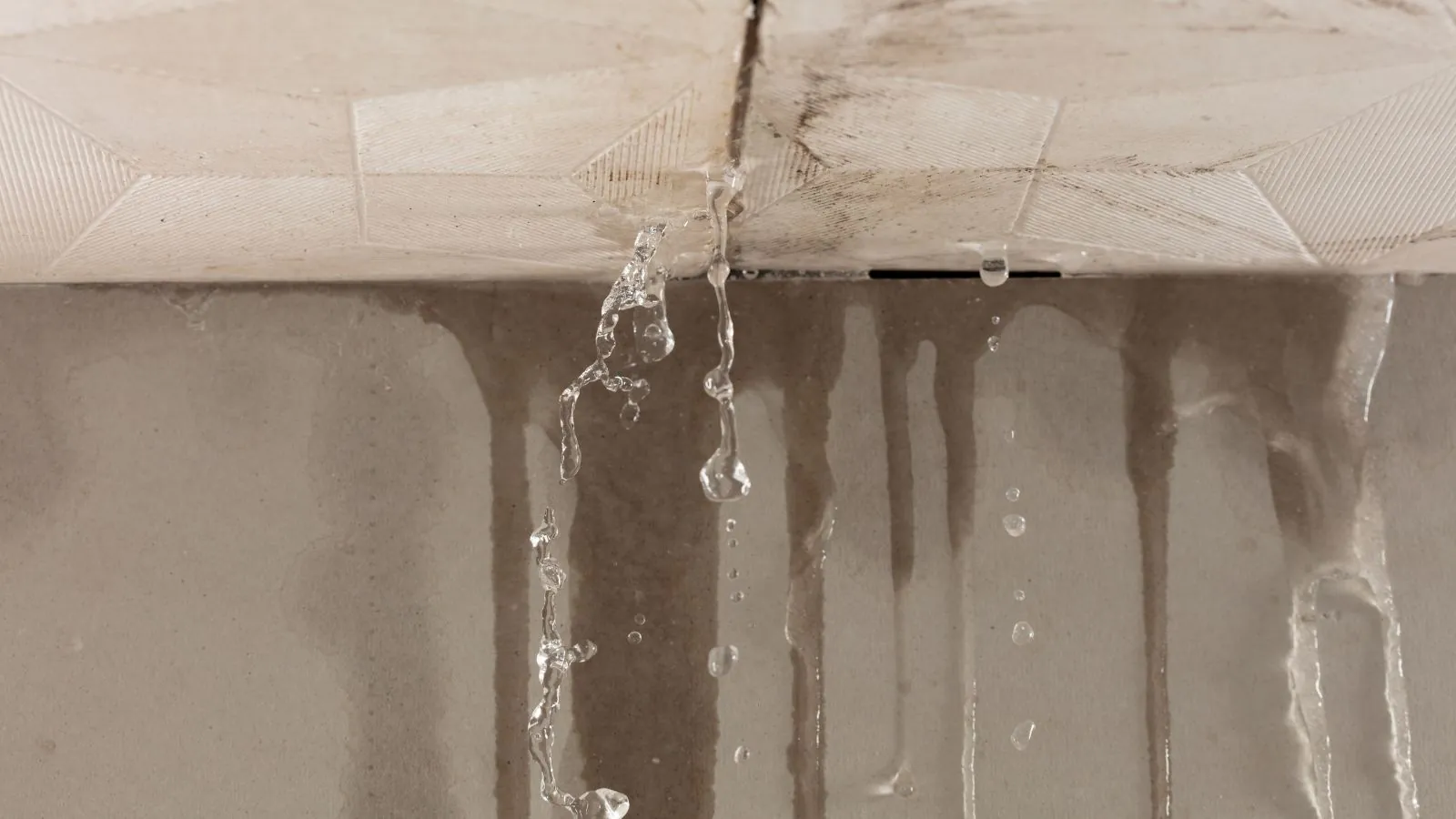
A ceiling that is dripping or bulging is holding water, and drywall that has absorbed enough of it can fall without warning. Ceiling water damage repair is the controlled removal, drying and patching of ceiling drywall, plaster and insulation after water arrives from the roof, the attic, a bathroom above or an air handler.
Dispatch runs 24/7 in Marlboro, NJ. In the meantime, move people and valuables out from under the stain, switch off lights on that circuit only if the switch is dry, and set a bucket under any drip. A leak from a unit in the attic is covered further on AC leak water damage.
Ceiling dripping or sagging right now
A brown ring means the water has already soaked through and dried at least once. A bulge, a dark wet center or steady dripping means water is still collecting in the drywall, and the weight can bring the whole panel down. Saturated drywall weighs far more than dry sheets and loses its grip on the screws.
Call as soon as you see a bulge. Tell the dispatcher what room it is, what lies above it, and whether it rained recently. Same-day response is offered when available, and a bulge that appears at 2 a.m. does not wait for morning.
What to do while help is on the way
Five quick actions reduce the damage and the risk of a fall.
Clear the room below
Move people, pets, furniture and electronics out from under the bulge or stain. Cover large pieces with plastic.
Catch the drip
Set a bucket or trash can under the drip and lay a towel in it to reduce splash. Empty it before it fills.
Find the source if it is safe
If a bathroom, laundry or kitchen sits above the stain, close that fixture's shutoff. If you suspect a pipe, close the main water valve.
Stay out of the attic
Do not step between joists on wet insulation. The ceiling below cannot carry your weight.
Photograph and call
Take wide and close photos for your insurer, then call (732) 352-9660.
Ceiling bulging over your head?
Call (732) 352-9660, step out from under it, and we will walk you through the next few minutes.
Water, light fixtures and wet insulation
Ceiling fixtures, recessed lights and fan boxes sit in the same cavity as the water. If water is dripping out of a light or a fan, stay away from it. Cut power at the breaker only if the panel is dry and you can reach it without stepping in water.
Call 911 or the utility for any electrical or gas risk before calling the restoration line. No crew opens a wet ceiling until the circuit is dead.
- Do not turn on a light that is dripping or has water in the glass.
- Do not poke the bulge from directly underneath it.
- Do not use a ladder near wet wiring.
- Keep children and pets out of the room until the ceiling is dealt with.
Collapsed ceiling and a dripping attic: how these calls go
A collapsed ceiling call usually starts the same way. A homeowner hears a thud overnight, finds wet drywall, insulation and debris on the bedroom floor, and a hole open to the attic. We treat it as a debris and moisture job. The wet material is bagged and removed, the area is dried, and the edges of the opening are cut back to sound drywall.
A dripping attic is the other common call. The caller goes up for a flashlight and finds the underside of the roof deck wet, insulation darkened and water running along a rafter to the ceiling. We find where the water enters, dry the framing and trace the stain on the ceiling to its origin.
When the water comes from the roof
Roof leaks cause a large share of ceiling stains, and they behave differently from plumbing leaks. Water enters at a flashing, a lifted shingle, a plumbing vent boot or a chimney joint, then runs along a rafter or the roof deck before it drips. The stain on the ceiling can sit several feet from the actual opening.
We start from the stain and work upward. A moisture meter and a thermal camera show how far the water has spread through the insulation. Our crews dry and remove what is wet and protect the area, but the shingles, flashing and vent boots belong to a roofer. A temporary tarp from a roofer between rain events keeps the cavity from rewetting during drying.
A leak that appears only in cold months may involve ice backing up under shingles. The Freehold-Marlboro NOAA station records an average of 106 days a year at or below 32F, so winter freeze and thaw cycles are a real factor when you track a roof leak. If it rained, take a photo of the stain and the date, then call the roofer and your insurer.
Reading the stain to find the source
The look of the stain tells us where to start. This table is what we check first, though only moisture readings confirm the source.
| What you see | Likely source | Typical timing | First check |
|---|---|---|---|
| Brown ring with a dry center | Past leak that has dried | Months old, may recur | Meter reading around the ring |
| Stain that grows after rain | Roof, flashing or vent boot | Within hours of rainfall | Attic roof deck and rafters |
| Stain under a bathroom | Tub drain, supply line or toilet seal | Appears when fixture is used | Plumbing above, fixture shutoff |
| Stain under an attic unit | Condensate pan or drain line | Grows while AC is running | Pan and drain line in the attic |
| Bulge with steady drip | Active leak, water trapped in drywall | Now | Safe drainage and power check |
Drying and opening the ceiling cavity
Wet drywall that is intact and has not lost its paper face sometimes dries in place. Drywall that sags, flakes or stays soft is cut out in a clean rectangle, and wet insulation is bagged. The open cavity then dries with air movers and a dehumidifier, which is the same method described on structural drying and dehumidification.
If water ran down inside the wall, the repair continues into wall and drywall water damage repair. Work follows ANSI/IICRC S500, and moisture readings from the joists decide when patching and painting can begin.
What drives the cost of ceiling repair
A single stained panel and a collapsed bedroom ceiling are different jobs. The factors below set the scope, and the price is explained before work starts.
- Water category: clean roof or supply water is Category 1, while water that has crossed attic dust or old insulation may be classed higher.
- Affected area: one panel, one room, or a ceiling that runs through a hallway and a closet.
- Materials involved: drywall, plaster and lath, textured finishes, and blown or batt insulation each respond differently.
- Drying days and equipment: attic and ceiling work often needs lift access and extra air movers.
- Rebuild scope: drywall, taping, texture matching and paint are priced separately from drying.
Sudden and accidental water damage is often covered, while gradual leaks and neglected roofs often are not. Check your policy or ask your insurer. To get a real number on your ceiling, call (732) 352-9660.
Ceiling leaks after storms in Marlboro
The Freehold-Marlboro NOAA station records 48.57 inches of precipitation a year, so a roof that leaks at one flashing will show it. If the stain appears right after a hard storm, the wind-driven rain path matters, and storm water damage cleanup covers how water enters through siding, windows and roofs.
Homeowners in Colts Neck can also call through the Colts Neck service area, and our dispatch at 184 Route 9 covers the rest of Marlboro.
Ceiling leak questions from Marlboro callers
Yes. The line is staffed around the clock, and a bulging ceiling on a Saturday night is answered like any other call. Tell us what room it is, what is above it and whether it has rained. Same-day response is offered when available, and no arrival time is promised before we know the situation.
Not unless a professional tells you to. The water can come out fast, and light fixtures or wiring may sit in the same cavity. Move everything out from under the bulge, put a bucket in place and call. A crew can drain it in a controlled way after checking power.
Intact drywall that is only slightly damp can sometimes dry in place. Sagging, flaking or soft drywall comes out. Plaster ceilings are judged by moisture readings and by whether the plaster is still bonded to the lath. We show you the readings before any cutting begins.
Coverage depends on the cause and your policy. A leak from a storm opening in the roof is often covered, while a leak from a worn roof that went unrepaired often is not. Photograph the damage, keep roof repair records and ask your insurer what applies.
A roofer repairs the shingles, flashing and vents. We dry the attic and ceiling, remove wet materials and prepare the area for rebuild. Scheduling both within the same few days helps, since an open roof can rewet a cavity we have just dried.
Paint after readings in the drywall and framing match a dry reference, and after any patching has cured. Painting early can trap moisture and cause bubbling. We tell you when the readings are ready, which for small areas is often after about three to five days of drying.
A dark spot may be mold, dirt or old water staining, and only testing can tell. Mold needs moisture, so finding and drying the wet cause comes first. If mold is confirmed, remediation follows ANSI/IICRC S520, and health questions belong to a physician.
Take the weight off your ceiling tonight
Call (732) 352-9660 any hour, and a crew can be lined up for same-day response when available.