
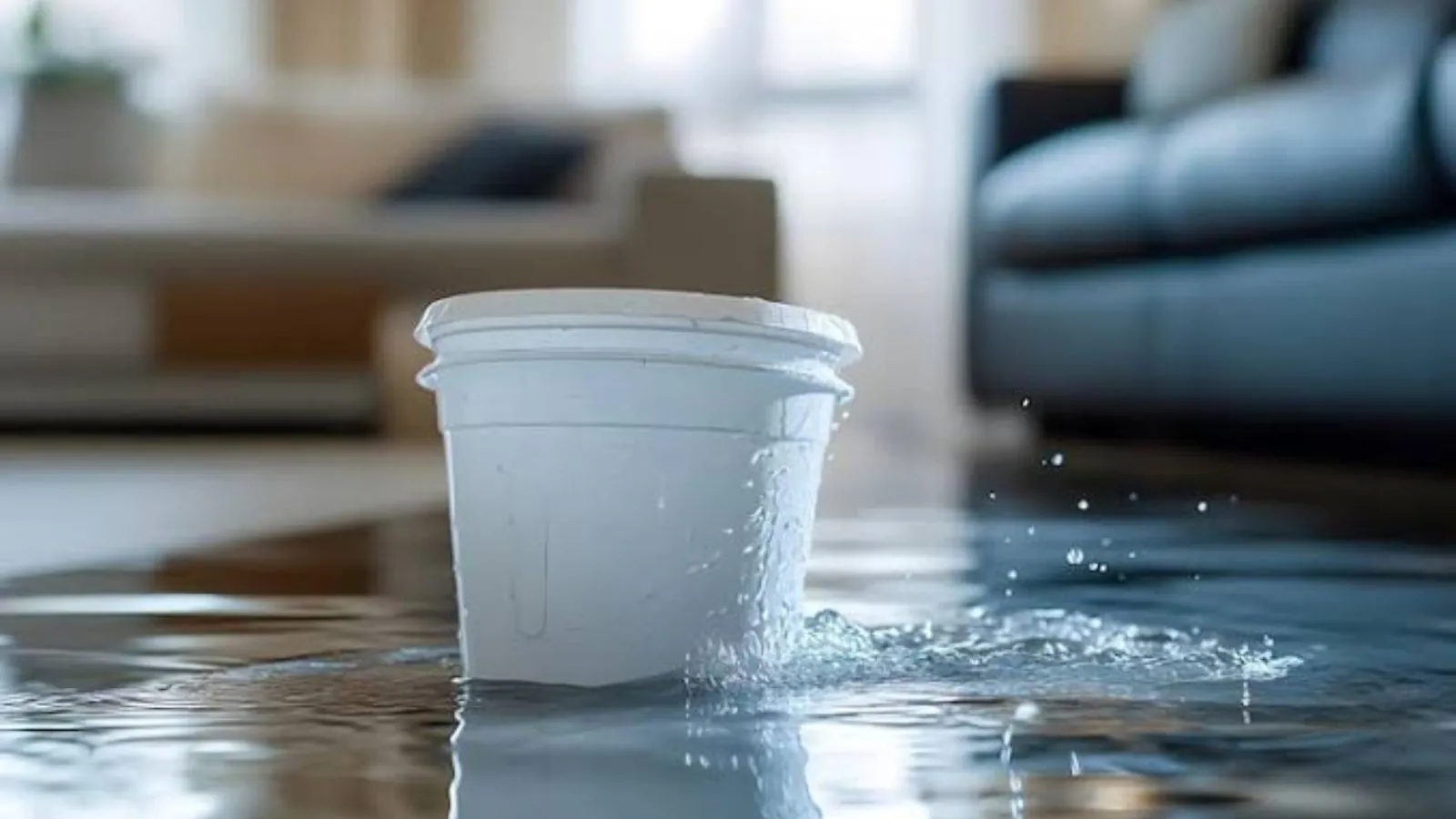
Water standing on your floor is an emergency, and our crews take calls 24/7 for water extraction in Marlboro. While you wait, stop the source if you can, shut the main water valve, lift valuables onto furniture or shelves, and keep children and pets out of the room.
Water extraction means removing bulk liquid from a building with submersible pumps and extraction units, before any drying equipment goes in. Water that sits keeps wicking into drywall, subfloor and padding, so speed matters more here than on any other job.
Standing water in the house right now: what extraction does first
The first job is volume. A half inch of water across a 600 square foot room is roughly 190 gallons, and a household wet vac holds about 12. That gap is why a shop vacuum and a few towels rarely finish the job, and why the water keeps creeping toward walls while you work.
Our crews start by finding the lowest point in the room and the path the water took to get there. Submersible pumps go into the deepest spot. Where the water is only an inch or two deep, a wand-style extraction unit works the floor in passes, the same way you would mow a lawn.
The goal is not a dry house yet. The goal is to take away every gallon that can be physically lifted, so the drying stage starts with moisture only in the materials, not on top of them.
What to do safely before the crew arrives
These steps cost nothing and slow the spread. Do only what is dry and safe to reach. Homes near Route 79 can read the page for Morganville for notes on reaching that part of the township.
Stop the source
Close the fixture valve, or shut the main water valve where the supply enters the house, usually near the water meter or heater.
Lift what you can
Move books, shoes, electronics and small rugs onto counters or beds. Leave heavy furniture where it stands.
Take photos first
Photograph the water line on walls and the items affected. Your insurer will ask for pictures of the loss before cleanup.
Keep people out
Block off the room for children and pets. Standing water hides slick floors and can carry bacteria if it came from a drain.
Skip the household vacuum
A standard vacuum is not built for water and can shock you. Wait for extraction equipment instead.
Water on the floor now?
Call (732) 352-9660 and tell us how deep it is, and we will send the right pumps.
Electrical hazards when water covers the floor
Do not wade into standing water if outlets, power strips, appliances or the electrical panel are wet or near the water. Stay out of the room.
Switch off breakers only if the panel is dry and you can reach it without crossing water. A wet panel, a gas smell or water climbing toward outlets means calling 911 or the utility first, and our line at (732) 352-9660 after that.
If the water came up through a floor drain or toilet, treat it as sewage: keep everyone out and read the sewage backup cleanup page before touching anything.
Pumps, wands and extraction units: what each one is for
Extraction is not one machine. The right tool depends on how deep the water is and what it is sitting on. Using the wrong one leaves moisture behind that shows up later as a musty smell or a stained subfloor.
Water over two inches deep goes to submersible pumps first, because they move gallons per minute rather than gallons per hour. Once the level drops to a film, flatter tools take over.
| Situation | Equipment | What it does |
|---|---|---|
| Deep water, basement or garage | Submersible pump with discharge hose | Moves bulk water out fast until only a film remains |
| Shallow water on hard floors | Wand extraction unit | Lifts water in overlapping passes along the floor |
| Saturated carpet and pad | Weighted carpet wand or floating tool | Presses water out of fibers and padding before it reaches the subfloor |
| Water trapped in low spots or corners | Squeegee and small hand pump | Reaches pockets the larger units cannot |
| Wet wall base after extraction | Moisture meter and thermal camera | Shows where water went that you cannot see |
After the water is out: where it goes next
Extraction removes the liquid. It does not remove the moisture already inside materials. Drywall, baseboards, subfloor and padding keep holding water for days, and that is what feeds mold if it is left alone.
That is why every extraction job is followed by moisture mapping and drying. We run air movers and LGR dehumidifiers through the structural drying process until readings return to a normal range for your home. If the soaked material is wall-to-wall carpet, carpet water damage restoration covers whether the pad needs to come out and the carpet can stay.
Crews working to ANSI/IICRC S500 log moisture readings on every visit. Ask any company you call whether its crews follow that standard.
Nights and weekends: after-hours extraction
Pipes do not wait for business hours. A washer hose that lets go at 1 a.m. puts hundreds of gallons across a floor by sunrise, and a sump pump that fails during a Saturday storm does the same in a basement.
After-hours calls reach a live dispatcher, and a pump crew rolls the same day when a truck is open. Storms and closed roads change drive times, so no fixed arrival time is given. What you do get is an honest read on which pumps the job needs.
When you call, tell us how deep the water is, what room it is in, and whether you can see where it came from. That lets the crew load the right pumps before leaving the yard.
What drives the cost of water extraction
Extraction cost is set by the job, not a flat rate. These are the factors that move it.
- Water category: clean supply water (category 1) is simpler than gray water (category 2) or sewage and floodwater (category 3), which add protective gear and disposal steps.
- Depth and volume: more gallons mean longer pump time and sometimes a second unit.
- Floor type and square footage: carpet and pad take more labor than tile or concrete.
- Access: finished basements, stairwells and long hose runs add time on site.
- What follows: extraction usually leads into drying days and possible tear-out, which are scoped separately.
Insurance varies by cause. A sudden failure such as a split hose is often covered, a slow leak or skipped maintenance often is not, and rising flood water usually needs its own flood policy. Read your policy or ask your insurer first.
Scope and price get explained before any pump starts. Call (732) 352-9660 and we will give you a real number for your rooms.
Marlboro rain, sump pumps and where the water goes
The NOAA Freehold-Marlboro station records about 48.57 inches of precipitation in a normal year, so heavy rain is a known part of living here. When a sump pump fails or a hose bursts, the pumped water has to go somewhere that is allowed.
Township stormwater code Section 295-24 bans non-stormwater discharges into the storm sewer but exempts uncontaminated sump pump water. That means clean groundwater can go out through a hose to the yard, while anything that touched sewage cannot. We keep that distinction in mind when we set up discharge lines.
If your home sits near Route 9 or off Route 79, the same rules apply. For properties closer to the Freehold line, a nearby crew in Freehold may reach you with the same equipment.
Water extraction questions from Marlboro homeowners
Yes. A 2 a.m. call or a holiday weekend call gets the same pump-ready dispatch as a Tuesday morning. A pump crew is sent the same day if a unit is available, and no arrival time is promised.
Tell the dispatcher the room, the depth of the water and whether the source is stopped. That decides which pumps go on the truck.
Water starts moving into drywall, trim and padding within the first hours, and the longer it sits the higher it climbs through wicking. Hardwood and laminate can start to swell quickly.
There is no safe waiting period. If you can see water on the floor, call, and use the steps above to slow it while the crew heads your way.
A shop vacuum is fine for a spill. It is too small for hundreds of gallons, and plugging in near standing water carries a shock risk.
Rental pumps move water but do not map moisture or dry the structure afterward. Most people end up calling anyway once the floor is clear but the walls are still wet.
Clean groundwater from a basement sump is treated differently from water that touched sewage or chemicals. Township stormwater code Section 295-24 exempts uncontaminated sump discharge from the storm sewer ban.
Contaminated water should not be discharged outdoors. Ask the township if you are unsure about your property.
We take moisture readings with meters and a thermal camera, then set air movers and dehumidifiers. Wet padding or soaked baseboard may be removed if it will not dry in place.
Drying usually takes several days, and the crew rechecks readings until the materials return to a normal range.
A burst supply line or a failed washer hose is often covered because it was sudden. Slow leaks and neglect often are not, and flood water usually needs separate flood coverage.
Read the policy language, call your insurer, and take photos of the water first. Keep receipts for anything you buy.
Pumps are ready tonight
Dispatch answers 24/7 at (732) 352-9660 for standing water in any room of your home.