
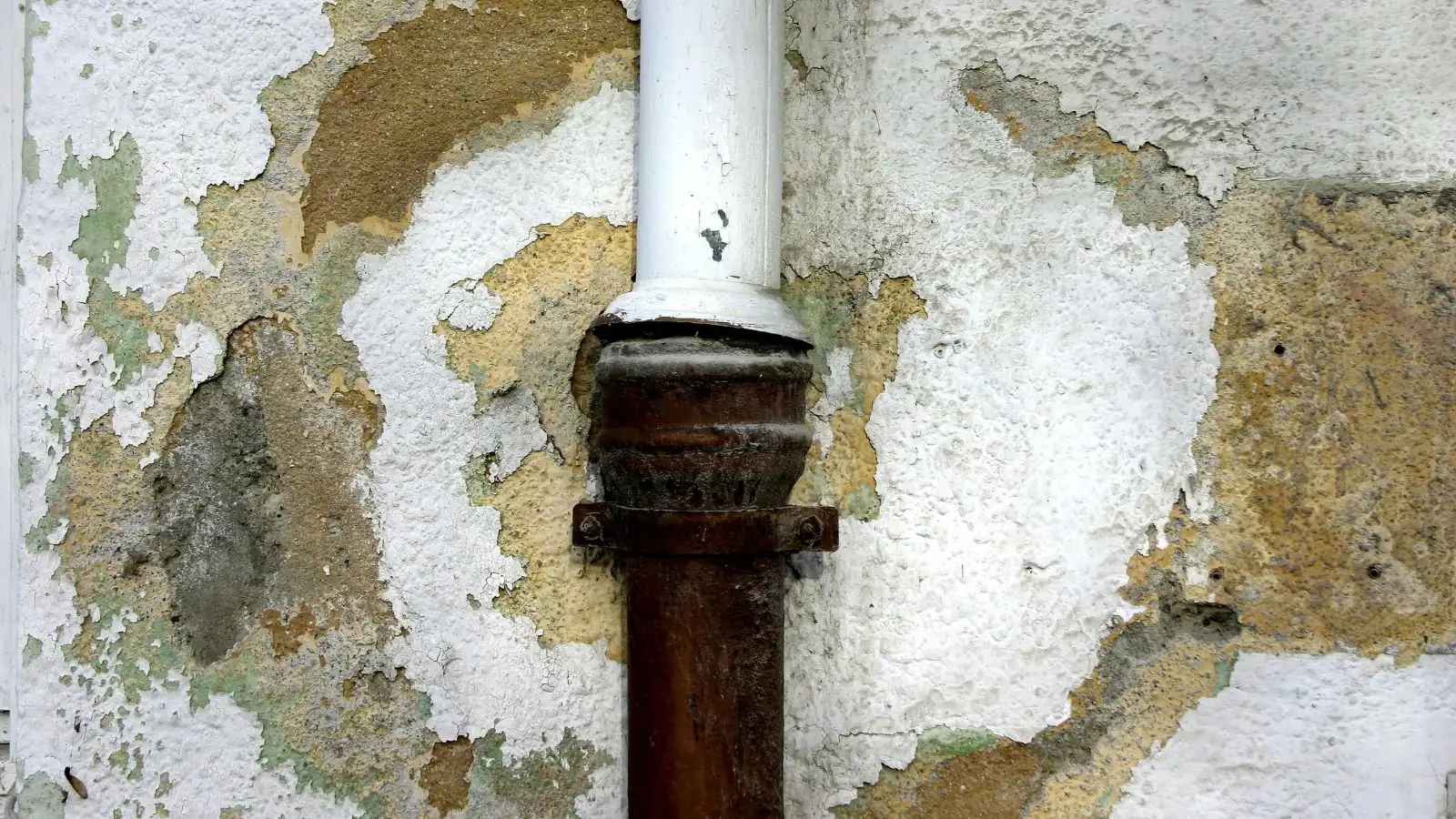
Drywall water damage repair is the process of locating moisture in a wall, removing the sheetrock, trim and insulation that cannot dry in place, drying the framing, and rebuilding the surface.
Paper-faced gypsum board soaks up water like a wick, and the damage often runs well past the visible stain. Marlboro homeowners call us for bubbling paint, a baseboard that has lifted, a soft spot at the bottom of a wall, or a damp smell with no puddle in sight. A moisture meter and a thermal camera tell us what is wet before we open anything.
How Water Gets Into a Wall
Walls rarely fail from the room side. Water arrives from a supply line or drain inside the cavity, from a roof or window leak that runs down the framing, from a flooded floor that wicks up the bottom of the board, or from an appliance beside the wall. Each route leaves a different pattern, and the pattern tells us where to look.
A pipe leak usually soaks the board around the pipe and below it. Floor water wicks upward, so the lower foot or two of the wall goes first. A roof or siding leak shows up high or beside a window, then travels down inside the cavity and appears far from where it got in. That last pattern is the one that fools people most often.
Signs the Drywall Is Wet or Failing
Some signs are obvious and some only show on a meter. Look for these on any wall near a bathroom, kitchen, laundry, exterior door or window, and the wall under a ceiling stain.
Paint that bubbles or peels is moisture pushing from behind. Seams that ridge, tape that lets go, and a wall that feels cool or clammy to the palm point to water in the board. A musty odor with no visible source suggests wet insulation or framing inside the cavity.
- Bubbling, peeling or stained paint and wallpaper
- Baseboards that are lifting, swollen or pulling away from the wall
- Soft, crumbly or sagging board when pressed with a thumb
- Rust on screw heads or corner bead
- A musty smell that gets stronger when the heat or AC runs
Is the wall soft or stained?
Call (732) 352-9660, say what you see, and we will line up a same-day response when available.
Siding Leak to Kitchen Wall: A Typical Scenario
A common call goes like this. A homeowner notices a brown stain and a soft baseboard on an interior kitchen wall, with no plumbing nearby. The cause turns out to be failed flashing or a gap in the siding on the outside of that wall. Rain runs behind the siding, soaks the sheathing and wall insulation, and finally shows up as a stain inside.
Fixing only the drywall in that case wastes money, because the next storm wets it again. The exterior opening has to be sealed by a siding or roofing contractor, and the wet cavity has to be opened and dried first. If the water reached the cabinets or the sink base, our kitchen water damage restoration work covers that part of the room.
How We Assess and Dry a Wet Wall
We start with a pin and pinless moisture meter, then scan with a thermal camera to see the cool, wet areas behind the paint. We record readings on a dry reference wall in the same house so the numbers mean something. Readings are mapped by wall and by height, and that map becomes the scope we explain before work starts.
Where board can dry in place, we drill small relief holes at the baseboard line or pull the baseboard and aim air movers into the cavity while a low-grain refrigerant dehumidifier removes the moisture. The method follows ANSI/IICRC S500, the published standard for water damage restoration, and you can ask any company whether its crews work to it. The full process is described on our structural drying and dehumidification page.
Tear-Out and Rebuild: What Comes Out and What Stays
Not every wet wall gets demolished. Drywall that took clean water and is caught fast can sometimes be dried and kept. Board that has been wet for days, has swelled, or took Category 2 or 3 water usually comes out, along with the insulation behind it.
A typical tear-out cuts the board in a straight line about 12 to 24 inches above the highest wet reading, so the new piece has a clean edge to tape against. Wet fiberglass or cellulose insulation is removed and bagged. Studs and the bottom plate are dried to a reading near the dry reference before anything closes up. Then comes new board, tape, joint compound, primer, paint and fresh baseboard.
| Condition | Usual approach | Why |
|---|---|---|
| Clean water, found within a day or two, board firm | Dry in place with air movers and dehumidifier | Board and paint can often recover if readings fall |
| Swollen board, loose tape, soft to the thumb | Cut out and replace | Gypsum that has lost strength does not regain it |
| Wet insulation inside the cavity | Remove and replace insulation | Insulation holds water against the framing for weeks |
| Category 2 or 3 water, such as a dishwasher drain or sewage | Remove affected board and trim | Contaminated porous material is not kept |
| Water from siding or roof leak | Open the cavity, dry, then repair the source | The exterior opening has to be sealed or it repeats |
Baseboards, Trim and Wall Insulation
Baseboard is often the first thing to give. MDF swells and crumbles when it wets, while solid wood trim can often be pulled, dried and reinstalled. We number and set aside trim that can be reused, which saves matching profiles later.
Insulation behind the wall deserves its own look. Batt insulation that gets soaked slumps, loses its value and stays wet against the studs, so it is removed from the wet section. Foam board and closed-cell spray foam tolerate water better, and a reading tells us whether they need to come out. If the stain began overhead, the same leak may have run down from the ceiling, which our ceiling water damage repair page covers.
Mold Risk Inside Closed Walls
A wall that stays damp is a place where mold can start, because mold needs moisture and a cavity holds it in. Drying quickly is the best defense. If you can already see dark growth on the board or smell it, tell us when you call so the scope can include containment. Testing and removal follow ANSI/IICRC S520, and our mold remediation page explains that process.
What Affects the Cost of Wall and Drywall Repair
Wall repair is priced by scope, so the same stain can mean a small patch or a full rebuild. These are the factors that move the number.
- Water category Category 1 clean water from a supply line is the simplest. Category 2 or 3 water means more removal and cleaning.
- Affected area The number of wall sections and the height of the wet zone set how much board, insulation and trim come out.
- Materials involved Plaster, textured walls, tile backer and custom trim cost more to match than flat painted board.
- Drying days and equipment Each air mover and dehumidifier on site for each day adds to the drying portion of the job.
- Rebuild scope Taping, texture, priming, painting and trim finish work depend on how much of the room has to be redone.
Sudden and accidental water damage is often covered by a homeowners policy, while gradual leaks and neglect often are not. Check your policy or ask your insurer before you decide on repairs, and take photos of the wall before anything is removed. Call (732) 352-9660 and we will explain the scope and the price before work starts.
Working Around Marlboro Homes
Marlboro gets about 48.57 inches of precipitation in a normal year, according to the NOAA Freehold-Marlboro station, so roof and siding details get tested often. With 93.1% of homes owner-occupied, most repairs are decisions made by the household that lives there. Ask the township Construction Division whether a larger rebuild needs a permit.
Its permit page says contractors must show a NJ Division of Consumer Affairs registration. If your home sits near the Freehold line, a nearby crew in Freehold is part of the same dispatch.
Wall and Drywall Water Damage Questions
It depends on how long it was wet and what kind of water it was. Firm board that took clean water and is dried within a day or two can sometimes stay. Board that is soft, swollen or has loose tape is normally cut out. A moisture reading on the board and the framing behind it settles the question.
Paint can look normal while the cavity is soaked. A pinless meter reads moisture through the board, and a thermal camera shows cool, wet patches. We compare each reading with a dry wall in the same house. If the numbers are above that reference, we open a small inspection hole before deciding anything.
The opening outside has to be sealed, usually by a siding or roofing contractor, or the wall gets wet again. The wet cavity is opened and dried at the same time. Interior drywall, insulation and paint come last, after the framing reads dry.
Not always. MDF baseboard swells and usually gets replaced. Solid wood trim can often be removed, dried and reinstalled. Pulling the baseboard also lets air reach the bottom of the cavity, which speeds up drying.
Many walls dry in about three to five days with air movers and a dehumidifier running, though thick insulation, plaster or repeated wetting can take longer. We check readings each visit and stop equipment only when the framing matches the dry reference. We do not rent equipment on its own.
Mold needs moisture, so a wall that stays wet can support it. Fast drying lowers the chance, but no one can promise mold will never appear. If you smell mustiness or see dark spots, mention it when you call so we can scope testing and containment to ANSI/IICRC S520.
Stop the source if you can, such as the main water valve for a pipe leak. Move furniture away from the wall and take photos for your insurer. Stay away from outlets on a wet wall, and call 911 or the utility for any electrical or gas risk before you call us.
Get the wall metered before it gets painted over
Call (732) 352-9660 for a scope and a price explained before any board comes out.