
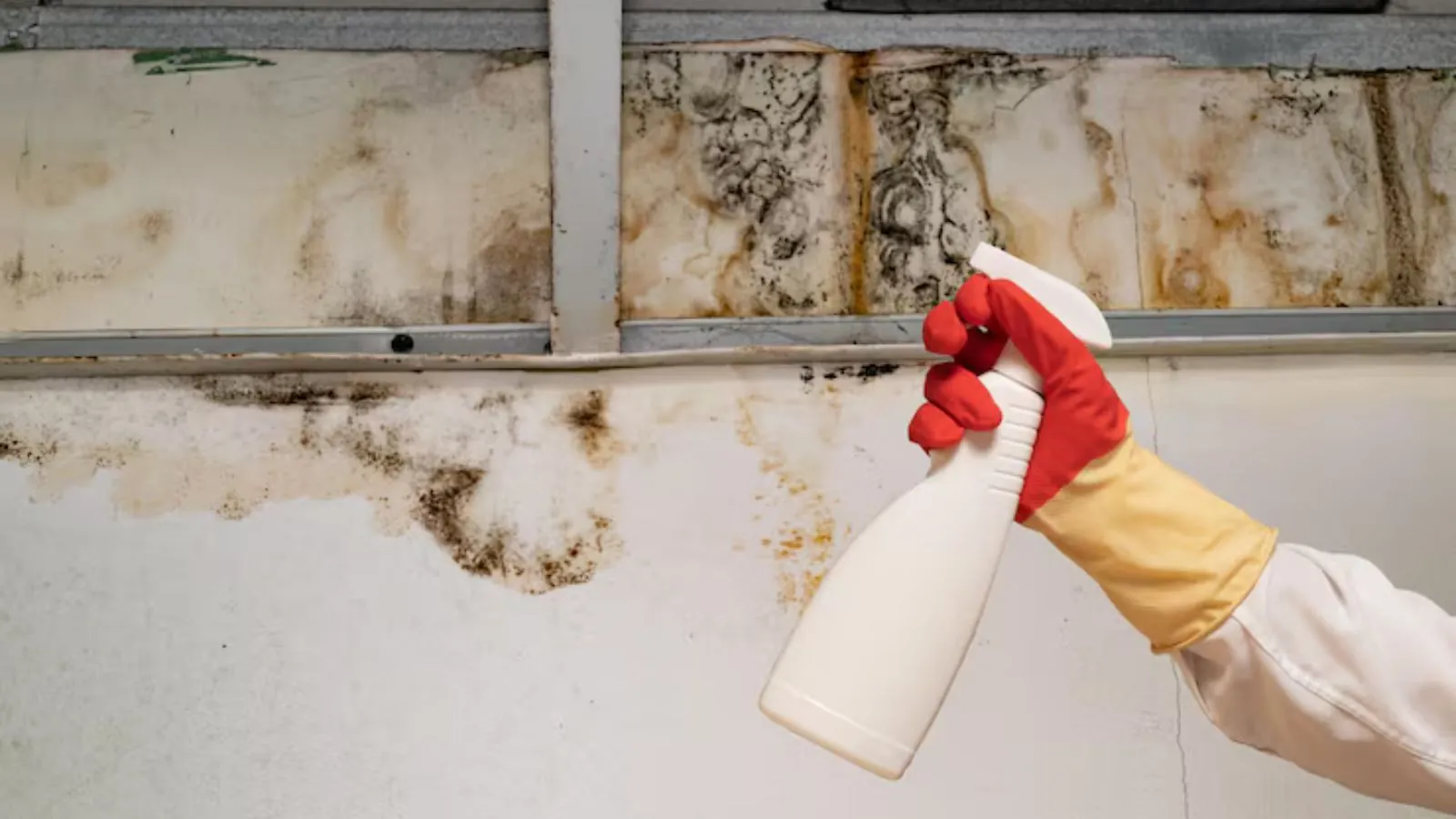
Mold remediation is the controlled removal of mold growth and the materials it has damaged, done inside containment so spores are not spread to clean rooms, and done only after the moisture feeding it has been stopped.
Most Marlboro calls begin with a leak: a toilet supply line, a sink drain, a clogged AC condensate line or a roof. Dark spots on a ceiling or a musty smell in a closet are what people notice first. Our crews follow ANSI/IICRC S520, the published standard for mold remediation, and you can ask any company you call whether its crews work to it.
Black Spots on the Ceiling or a Musty Smell: What It Can Mean
People search for phrases like black spots on ceiling, black spots on ceiling above shower, musty smell in house after rain, or musty smell that comes and goes. Each of those has more than one possible cause. Dark spots can be mold, but they can also be dirt, soot from candles, a water stain or mildew-like staining from a bathroom fan that does not vent outside.
Only testing or a trained eye on site separates them, and a smell alone does not prove anything either. What the symptoms do tell you is where to look for moisture. Spots above a shower point to steam and a weak exhaust fan. A smell that returns after rain points to a roof, window or wall leak. A smell that comes and goes with the AC suggests a condensate line or a wet air handler pan.
- Dark or fuzzy spots on a ceiling, especially below a bathroom, attic or roof edge
- A musty smell that is stronger in a closet, basement corner or one room
- Paint that bubbles or wallpaper that peels above a stain
- A recent leak, even one you repaired, that was never dried with equipment
Fix the Moisture Source Before Any Removal
The NJ Department of Health guideline says to fix the water source first and dry the area before renovation. That order matters because removing mold from a wall that is still wet only buys a few weeks. We look for the leak with moisture meters and a thermal camera, and we will tell you plainly if a plumber, roofer or HVAC technician has to finish repairing the source before our containment goes up.
Spots or a musty smell after a leak?
Call (732) 352-9660 and describe what you see, and we will set up a same-day response when available.
Common Leaks Behind a Mold Call
A toilet supply line or wax ring that seeps for weeks can soak the subfloor and the ceiling below it without ever making a puddle. A slow sink drain leak turns the cabinet base and the back of the wall into a damp, dark pocket. Neither shows until a stain or a smell does.
An AC condensate line that clogs sends water into the drain pan, and in an attic that water ends up in the ceiling drywall. Our AC leak water damage page covers that failure in detail. A roof leak is the fourth common source, and it tends to feed growth on the attic side of the ceiling first. Closets on exterior walls and bathrooms with a fan that vents into the attic round out the list.
Mold in a Closet or Bathroom
Closets collect mold because they trap still air against an exterior wall, and a small leak or condensation keeps the wall cold and damp. Clothes, shoes and boxes stored against the wall make it worse. We take the contents out, check the wall with a meter, and remove the affected drywall and baseboard if growth has penetrated it.
Bathrooms are a different pattern. Steam without a working vent coats the ceiling, and a cracked shower surround or failed caulk lets water into the wall behind the tile. If growth is on the surface of painted board and the board is firm, cleaning may be enough. If the board is soft or the growth runs behind the tile, the wall section comes out, as described on our wall and drywall water damage repair page.
How the NJ Department of Health Guideline Sizes the Job
The NJ Department of Health publishes a size guideline for mold in buildings. Under 10 square feet of visible growth, a homeowner may handle it. For 10 to 100 square feet, the guideline says to seek a professional opinion. Over 100 square feet, it says to hire a qualified contractor.
The same page states that there are no State certification programs for companies performing mold work, and the department does not endorse any company. That puts the burden on you to ask questions. Ask what standard the crew follows, how containment is set up, whether the company will accept independent testing, and whether it is licensed and insured. We name ANSI/IICRC S520 as the published standard because it is the one our process is built around.
| Visible growth | What the guideline says | What we usually do |
|---|---|---|
| Under 10 sq ft | A homeowner may handle it | Advise on the source and the cleaning, or scope a small job if you prefer a crew |
| 10 to 100 sq ft | Seek a professional opinion | Inspect, map moisture, and scope containment and removal |
| Over 100 sq ft | Hire a qualified contractor | Full containment, negative air and removal plan, with clearance testing offered |
Containment, HEPA Filtration and Negative Air
Disturbing mold throws spores into the air, so the work area is sealed before anything is cut. We hang polyethylene sheeting with a zippered door, tape the seams and cover the supply and return vents. The goal is to keep spores out of the rest of the house.
Inside, a HEPA air filtration unit cleans the air continuously, and a negative air machine pulls air out of the contained space so any leakage moves inward, not outward. Workers wear respirators and disposable suits. Affected drywall, insulation or carpet is bagged in place, surfaces are HEPA vacuumed and damp wiped, and the structure is dried. Then the containment comes down.
Testing and Independent Clearance Testing
Testing before work can help show whether airborne spore levels in a room differ from the outdoor air or from an unaffected room. It does not replace finding the moisture source, and a lab result is not a diagnosis of anything. After removal, clearance testing checks whether the area is back to a normal condition.
We recommend that clearance testing be done by an independent third party, not by the company that did the removal. A separate tester has no stake in the outcome, and the report gives you something concrete to keep. Independent testing is a separate fee from remediation, and we coordinate our schedule around it.
Mold Clearance for a Home Sale or Loan
Buyers and sellers sometimes call after an inspection report mentions visible growth or a moisture reading. A buyer's lender or an appraiser may ask for the mold to be addressed before closing. We cannot speak for any lender, and requirements differ from one to the next, so the first step is to ask the lender or the buyer's agent what documentation they want.
What we can do is provide a written scope of the work, document the source repair, and coordinate with an independent tester so a clearance report exists at the end. Time matters when a closing date is set, so say so when you call.
What Affects the Cost of Mold Remediation
Mold jobs vary widely, which is why no one can honestly quote from a phone description alone. These are the factors.
- Affected area The square footage and the number of rooms set the containment size and the amount of material removed.
- Materials involved Drywall, framing, insulation, carpet and ductwork each take different removal and cleaning steps.
- Containment and equipment days Negative air machines and HEPA units run for the length of the job, so duration changes cost.
- Moisture source and drying If the area is still wet, structural drying has to run before or during the work.
- Testing and rebuild Independent clearance testing is billed by the tester, and replacing board, trim and paint is a separate scope.
Policies treat mold differently. Some cover it only when it follows a covered sudden loss, some limit the amount, and some exclude it. Check your policy or ask your insurer before work begins. Call (732) 352-9660 and we will explain the scope and the price before work starts.
Drying the Structure and Rebuilding After Removal
A cleared room is not finished until the structure is dry. We take readings on the framing and subfloor, and our structural drying and dehumidification process holds a room at a target reading before closing walls. If the growth began with a stained ceiling, the ceiling work is covered on our ceiling water damage repair page.
No company can promise that mold will stay away forever, because mold returns whenever moisture does. What we can do is remove what is there, dry what is left, and tell you what to watch: bath fans that vent outdoors, a condensate line that drains, flashing that sheds water. Rebuild follows only after the area reads dry.
Mold Calls in Marlboro
Marlboro averages 48.57 inches of precipitation a year at the NOAA Freehold-Marlboro station, and the township's Texas Road and Fletcher Drive areas are known to flood in intense rain. After a wet season, a musty closet in Robertsville or a stained ceiling in Morganville is a reasonable reason to call. Homes on the Colts Neck side of the township line can read about our Colts Neck coverage as well.
Mold Remediation Questions From Marlboro Homeowners
It may be, but black spots can also be dirt, soot or a water stain. A moisture reading and, if needed, a lab test tell them apart. Check for a bathroom above, a roof leak or a vent problem. Call with what you see and we will advise on the next step.
A musty smell points to moisture, and the source may be hidden in a wall, under flooring or at an air handler. We use moisture meters and a thermal camera to find damp areas. If a smell comes and goes with rain or with the AC, say so, because the pattern helps narrow the cause.
Yes. We handle growth that follows a leak from a toilet supply, a sink drain, an AC condensate line or a roof. The leak has to be repaired first, then we contain, remove affected material and dry the structure. Health questions belong with your physician.
It means a separate third party samples the area after removal, so the company that did the work is not grading itself. The tester issues a report. It is billed separately from remediation, and we schedule around it when you want it.
We can scope and perform the work and coordinate with an independent tester, but we cannot speak for any lender. Ask the lender or the agent exactly what documentation they require, then call us with the closing date so the schedule can be planned.
None beyond a call. Phone (732) 352-9660, describe what you see, and we will offer a same-day response when available. We do not promise an arrival time, but we will tell you what to do while you wait.
The NJ Department of Health states there are no State certification programs for companies performing mold work, and it does not endorse companies. Ask any contractor which standard it follows. ANSI/IICRC S520 is the published one.
Contain it, remove it, then dry the room
Call (732) 352-9660 for a written scope and a price explained before work starts.