
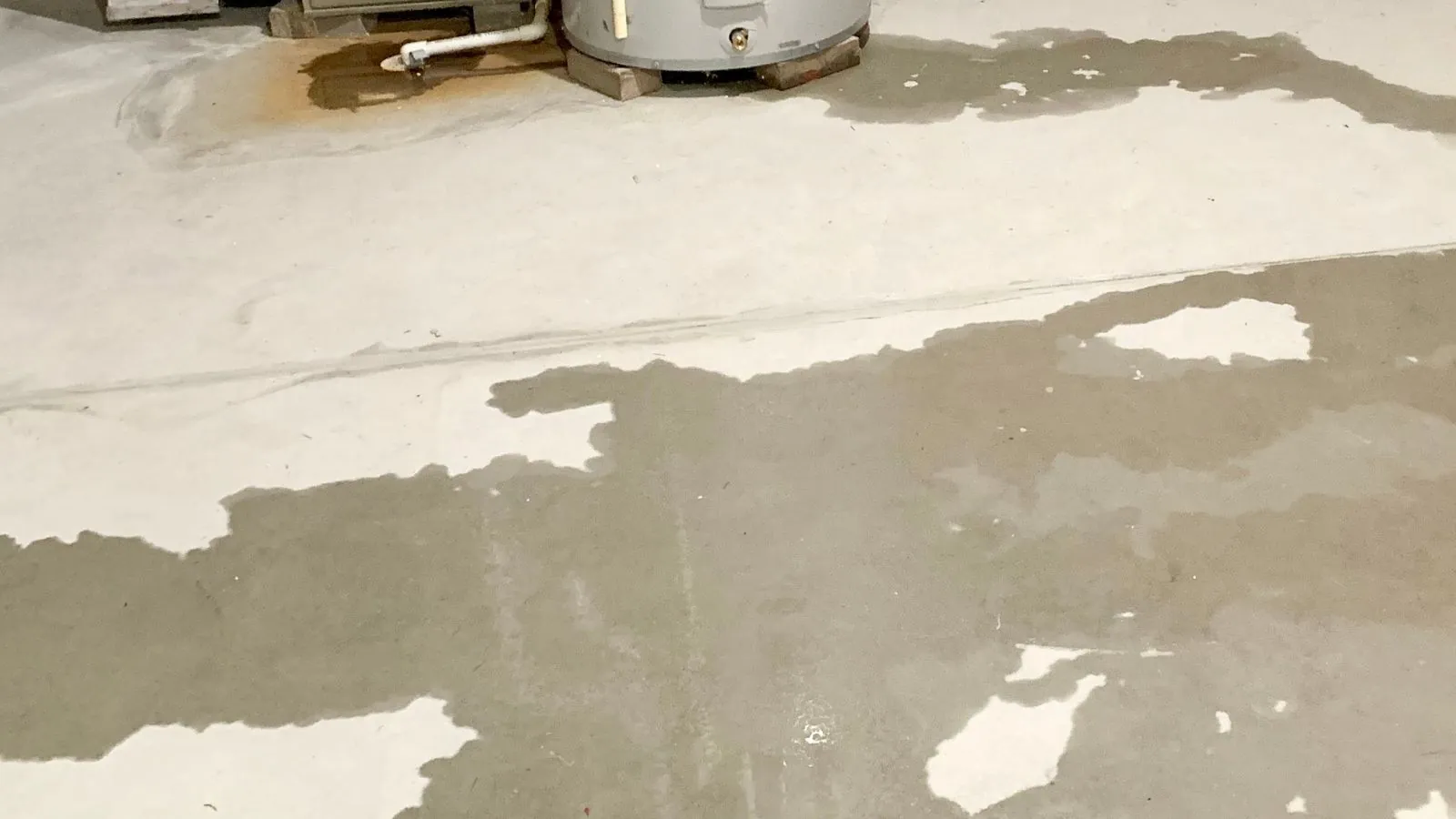
Water on a basement floor is urgent because it has nowhere to go and the materials around it start absorbing at once. Basement water damage cleanup is the pump-out, removal of wet finishes and structural drying of a below-grade room after a sump failure, seepage, a plumbing break or a drain backup.
Dispatch runs 24/7 in Marlboro, NJ. Before the crew arrives, stay off the stairs if water has reached the panel, move valuables upstairs, and keep power off in the wet area only if the panel is dry. If the water is raw sewage, the work shifts to sewage backup cleanup.
Water in the basement right now
A basement collects water from every direction. Rain loads the soil around the foundation, a sump pump fails or cannot keep up, a pipe breaks overhead, or a floor drain backs up. The water has to be identified by source first, because that decides whether it is clean, gray or contaminated.
Call as soon as you see standing water. Tell the dispatcher how deep it is, whether the sump is running, and what is stored or finished in the room. Same-day response is offered when available, and the line is staffed at 4 a.m. as well.
What to do while help is on the way
These actions slow the damage on the way to the extraction units.
Stop the source if it is a pipe
Close the main water valve if the water comes from a supply line, a water heater or a washer hose. A running sump pump should keep running.
Stay out of deep water
Water above ankle height can reach outlets, a furnace or a panel. Do not wade through it.
Move up what you can
Carry boxes, rugs and electronics upstairs from the dry side of the room only. Lift furniture legs onto blocks.
Check the sump pump
If the pump is dead, look at the float and the discharge line from the dry stairs. Do not touch the plug if the floor is wet.
Photograph and call
Take photos of the water line on walls and stored items, then call (732) 352-9660.
Water on the basement floor?
Call (732) 352-9660, tell us how deep it is, and we will tell you what is safe to touch while the crew is on the way.
Water, electrical panels and sewage in a basement
Basements often hold the electrical panel, the furnace, the water heater and the floor drain. If water is touching an outlet, the panel or any appliance, stay out. Shut the power off only when the panel is dry and reachable without wading.
Call 911 or the utility for any electrical or gas risk before calling the restoration line. If the water smells like sewage or came up through a drain, treat it as contaminated and do not touch it.
- Do not enter a basement with water at or above outlet height.
- Do not run a household vacuum or a space heater in the wet area.
- Keep children and pets away from the stairs and the water.
- If you smell gas, leave the house and call from outside.
When the sump pump fails or cannot keep up
A sump pit gathers groundwater from the drain tile around the footing and pumps it out. It fails when the power goes out during a storm, when the float sticks, when the discharge line freezes or clogs, or when the pump is simply smaller than the inflow. A pump that has not run in months can seize.
The Marlboro stormwater ordinance, Sec. 295-24, bans non-stormwater discharges into the storm sewer but exempts uncontaminated groundwater from a basement or crawl space sump pump. That tells you the pump discharge is expected, but not where yours must go, so ask the township before you reroute the pipe. Never send sewage or washer water to a sump pit.
Where basement water comes from
Not every wet basement has the same cause, and the cause decides the cleanup. This table lists the usual sources and the first thing we check for each.
| Source | Water category | Typical sign | First check |
|---|---|---|---|
| Sump pump failure | Category 1 or 2 | Water in the pit, pump silent or running constantly | Float, power supply and discharge line |
| Seepage at the wall and floor joint | Category 1 or 2 | Dark line along the base of the wall | Gutter downspouts and grading outside |
| Window well overflow | Category 1 or 2 | Water under the window, stained sill | Well drain and cover |
| Supply line or water heater | Category 1 | Warm or cold clean water from overhead | Main shutoff and fixture above |
| Floor drain backup | Category 3 | Dark water with odor at the drain | Stay out, treat as sewage |
Water that crosses a floor drain from the sewer line is contaminated by definition, which is why the drain sources are handled differently.
Finished basements: carpet, drywall, trim and insulation
A finished basement hides water in the places that dry slowest. Carpet and pad sit on a slab that holds moisture, drywall wicks water up the wall, and fiberglass insulation behind it traps it against the concrete. Trim, doors and built-in cabinets swell next.
We cut drywall about a foot above the water line when it has wicked, remove wet insulation, and lift carpet pad that cannot dry. Hard surfaces such as tile dry quickly, while carpet may be saved if the water was clean, as described on carpet water damage restoration. Everything removed is photographed and listed for your insurer.
Pumping out and drying a below-grade room
Extraction comes first. A truck-mounted or portable pump moves standing water out, and an extraction unit clears the rest. Pumping down a flooded basement too quickly when the soil outside is still saturated can stress the walls, so depth and groundwater conditions guide the pace.
Drying a basement is slow work, because the concrete holds moisture. LGR dehumidifiers pull water from the air, air movers run along the walls, and moisture readings in the slab and framing show progress. The method is covered in detail on structural drying and dehumidification, and we follow ANSI/IICRC S500.
What drives the cost of basement water cleanup
A wet storage room and a flooded finished basement are far apart in scope. The factors below set it, and the price is explained before work starts.
- Water category: clean groundwater, gray water and sewage have different handling and disposal requirements.
- Affected square footage and depth of water: a few inches over a full footprint is more volume than a puddle.
- Materials involved: bare slab, carpet, drywall, insulation, built-ins and stored contents.
- Drying days and equipment: concrete dries slowly, and the number of dehumidifiers and air movers drives the line.
- Rebuild scope: drywall, flooring, trim and paint are priced apart from the drying.
Sudden and accidental water damage, such as a burst pipe, is often covered, while flood damage is usually excluded and needs separate flood coverage. Sump failure and sewer backup coverage often require specific endorsements, so check your policy or ask your insurer. For a real number, call (732) 352-9660.
Basement water and flood risk in Marlboro
The Monmouth County hazard plan puts about 4.9 percent of Marlboro Township in the 1 percent annual-chance floodplain, lists Deep Run as a regulatory floodway, and counts 7 repetitive-loss properties and 104 NFIP policies. Check the FEMA flood map for your address, since a standard homeowners policy generally excludes flood and a new NFIP policy generally has a 30-day wait.
The plan also notes that Texas Road and Fletcher Drive flood in intense rain, so ask whether your street is one of them. Our page on flood damage restoration covers rising water, and a nearby crew in Freehold backs up dispatch from 184 Route 9.
Basement flood questions from Marlboro callers
Yes. The line is staffed around the clock, so a sump failure during a Sunday night storm is answered like any other call. Tell us the water depth and whether the panel or furnace is wet. Same-day response is offered when available, and no arrival time is promised before the situation is clear.
No. Restoration removes the water, dries the structure and repairs what was damaged. It does not stop groundwater from entering again. Waterproofing, such as drain tile, a new sump system, grading or exterior sealing, is a separate trade. We will tell you what we saw and suggest asking a waterproofing contractor.
Standard policies often exclude groundwater and surface flooding, and sump failure or backup coverage is usually an optional endorsement. Check your policy for those terms or ask your insurer. Photograph the water line, the pump and the damaged contents before anything is removed.
Drying a finished basement often takes a week or more, because concrete and wall framing hold moisture. Clean-water jobs in an unfinished space can be faster. We take daily readings and stop equipment only when the slab and framing match a dry reference.
Sometimes, if the water was clean and the carpet is lifted and dried quickly. Carpet exposed to groundwater or sewage is usually discarded. The pad almost always comes out. We test moisture and tell you which category you are dealing with before anything is thrown away.
Not if water is near outlets, the furnace or the panel. Shallow water on a clear floor can be handled with a wet vac, but deep water, sewage or a wet electrical area needs a professional. Pumping too fast can also stress the walls when the soil outside is still saturated.
Township code Sec. 295-24 exempts uncontaminated sump pump groundwater from the ban on non-stormwater discharges to the storm sewer. It does not tell you where your pipe should end. Ask the township Construction Division and avoid sending water onto a neighbor's lot.
Get the basement pumped and drying
Call (732) 352-9660 any hour, and a crew can plan the pump-out and dry-out with you.