
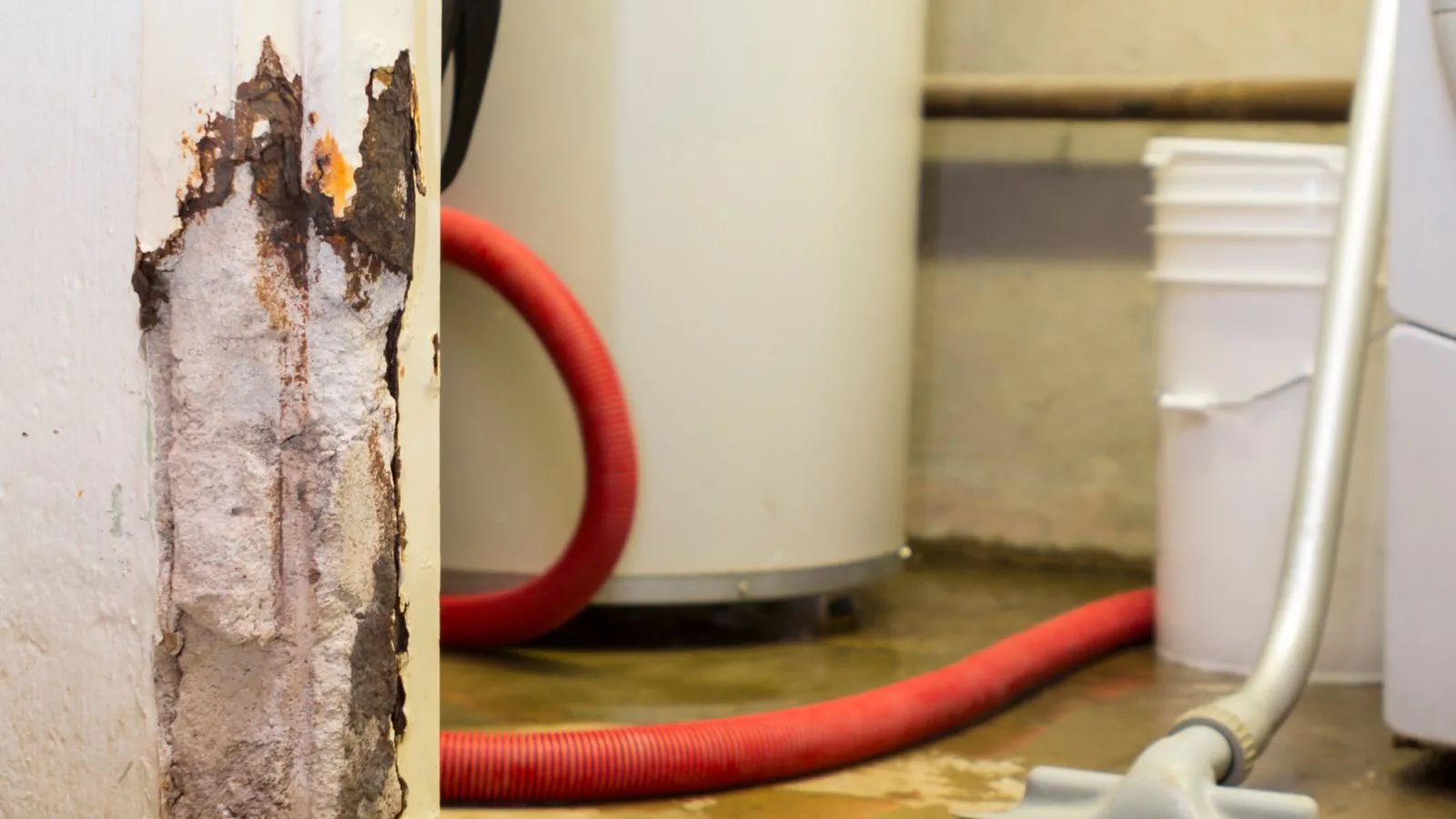
A slab leak is a pressurized water line leaking in or beneath the concrete floor of a house, and water that reaches the surface is an emergency. We answer 24/7. If you suspect one, close the main water valve, keep the floor clear, and avoid standing on warm or wet spots near outlets.
Slab leak water damage is what the leaking line does to flooring, baseboards and walls above it, and it can start without a puddle. Concrete is porous, so water can spread sideways under the slab before it comes up through a crack or joint.
Signs of a slab leak: warm spots, hissing and a sudden water bill
People usually find a slab leak by a symptom, not a puddle. The classic signs of a slab leak are a warm spot on the floor, the sound of running water when everything is off, a water bill that jumped without explanation, and a wet or musty smell in a room with no visible source.
A warm spot on the floor usually points to a hot water line leaking under the slab. The floor feels like it has a heating pad under it, especially in a hallway or bathroom. In a bathroom, other signs of a slab leak include grout that keeps going dark, a baseboard that swells, or tile that lifts at one corner.
A suddenly high water bill is the other common clue. If you shut every fixture and the meter's leak indicator still spins, water is going somewhere. A slab leak is one possible answer, along with a running toilet or a leaking irrigation line, and a plumber sorts them out.
What to do first when a slab leak is spreading
Do these in order. None require tools beyond a flashlight.
Run the meter test
Turn off every fixture and appliance, then check the water meter. If the dial or leak indicator moves, water is escaping.
Close the main
Shut the main water valve at the house. If the meter stops, the leak is on the house side.
Mark warm and damp spots
Place painter's tape around any warm area on the floor, and photograph it with the date.
Protect flooring
Lift rugs and furniture legs off wet floors. Do not push water around with towels you then lay back down.
Call a plumber and us
A plumber locates and repairs the line. We dry the floor, wall base and anything the water soaked.
Warm floor or a wet patch?
Close the main and call (732) 352-9660 and we will map the moisture.
Electrical safety near a warm or wet slab
Water under a slab can rise near outlets, appliances and the panel. Stay out of any room where water is touching these, and do not touch a wet appliance.
Cut power only if the panel is dry and out of the water's reach. Water at outlets, buzzing or a gas smell: get 911 or the utility on the line before you dial (732) 352-9660.
A hot water leak under the slab can heat the floor enough to burn bare feet, so keep children and pets off a warm spot.
Why slabs leak: the mechanism, not a statistic
Supply lines buried in or under a slab sit in contact with concrete, gravel and soil. Over years, a line can rub against its surroundings as the house settles and temperatures change, or corrode where water chemistry attacks the metal, or fail at a joint.
A hot water line expands and contracts every time it runs, and that movement wears at the same spots. That is why hot lines are the ones most often suspected when a floor feels warm.
We do not claim how often this happens in Marlboro, because we have no local count to back it. What we can say is how it behaves when it does happen: slowly, out of sight, and often for months before the first sign.
What happens under and above the floor
A plumber finds the leak, often with acoustic or thermal tools, and decides whether to repair the line, reroute it through the walls or ceiling, or break into the slab. We do not repair the pipe.
Our part starts with moisture meters and a thermal camera to map where the water traveled. Flooring is the first casualty. Wood and laminate cup or buckle as they absorb moisture from below, which our hardwood floor water damage repair page explains in detail.
Drywall takes it up from the base and wicks it higher. Because the source is below, the wet area is often larger than the stain you see.
Dry in place, lift flooring or reroute: a decision table
The best path depends on what the leak soaked and how long it ran.
| Condition | Likely response | Trade-off |
|---|---|---|
| Warm spot, no flooring damage | Plumber locates, moisture check | Early catch keeps damage small |
| Hardwood cupping above the leak | Lift boards, dry slab and subfloor | Some boards may be saved if dried quickly |
| Carpet and pad damp | Pull pad, dry carpet or replace | Pad usually cannot be saved |
| Wet drywall base | Cut a strip above the stain, dry the cavity | Opens wall but prevents hidden moisture |
| Slab itself saturated | Dehumidifiers and air movement over days | Concrete releases water slowly |
Concrete holds moisture a long time, so structural drying and dehumidification usually runs for days, not hours.
Night and weekend slab leak emergencies
A slab leak can surface at any hour. A floor that was dry at dinner can show a wet patch at midnight, or a hissing sound can wake you.
Night and weekend calls reach dispatch, and a crew is sent that same day when one is available. No arrival time is promised. Tell the dispatcher what you found, such as a warm spot, a high bill or wet flooring, and whether the main is closed.
A plumber is also needed, and calling both lets repair and drying be timed so the same floor is not opened twice.
What a slab leak cleanup costs depends on
The pipe repair is a plumber's price. The cleanup and drying price follows these factors.
- Water category: a fresh line break is clean supply water (category 1), but a leak that ran for months through soil may be treated differently.
- Square footage: a single room differs from a hallway and several rooms.
- Materials: tile, hardwood, carpet and drywall each respond differently to moisture from below.
- Drying days: concrete releases moisture slowly, so equipment may run longer.
- Rebuild scope: flooring, baseboards and drywall replacement is a separate stage.
Insurers often split a slab leak into two parts: the water damage to your finishes and the cost of reaching the pipe. Sudden failures are often treated more kindly than slow wear, so read your policy and ask your insurer which part applies.
Call (732) 352-9660. Scope and price are laid out before work starts, and the number reflects your own floor plan.
Slab leaks and Marlboro homes
Houses built on a slab are a different case from those with basements or crawl spaces, and homeowners who are unsure of their foundation type can look at the lowest floor or ask the township Construction Division about property records. We do not state how many Marlboro homes sit on slabs.
Marlboro receives about 48.57 inches of precipitation a year at the NOAA Freehold-Marlboro station, and wet ground can raise groundwater near a foundation. That can make a slab leak harder to tell apart from seepage. A meter test settles it quickly.
If your home is closer to Freehold, a nearby crew in Freehold can be sent through the same dispatch line.
Slab leak questions people search at 2 a.m.
Yes. Dispatch is 24/7. If a warm floor or a wet patch shows up at midnight, call (732) 352-9660. Same-day response is offered when a crew is available. An exact arrival time is not promised.
Close the main water valve before you call.
A warm spot on the floor, the sound of water running when all fixtures are off, a water bill that jumped, and damp or musty flooring are the usual signs. In a bathroom, look for grout that stays dark or a baseboard that swells.
Any one of these deserves a meter test and a plumber.
A warm floor spot often means a hot water line is leaking below it. It can also come from a heating line or a nearby appliance, so a plumber needs to confirm.
Keep children and pets off the area and close the main if the spot is growing.
A leak somewhere in the house or yard is one possibility. Shut off every fixture and watch the meter. If it keeps moving, water is escaping, and a plumber can trace it.
A running toilet and a faulty irrigation valve are also common. A slab leak is one cause among several.
It depends on your policy and how the leak started. Sudden damage is often covered, while slow leaks and wear often are not, and the cost of getting to the pipe may be handled separately.
Go through your policy with your insurer and photograph the damage before cleanup.
Mold needs moisture. Wet flooring, baseboards and drywall that stay damp are the usual starting point, which is why drying comes first.
For testing and removal, see our mold remediation page. Remediation follows the S520 standard.
Slab leak damage, handled at night too
Dispatch answers 24/7 at (732) 352-9660 for flooring and walls soaked from below.