
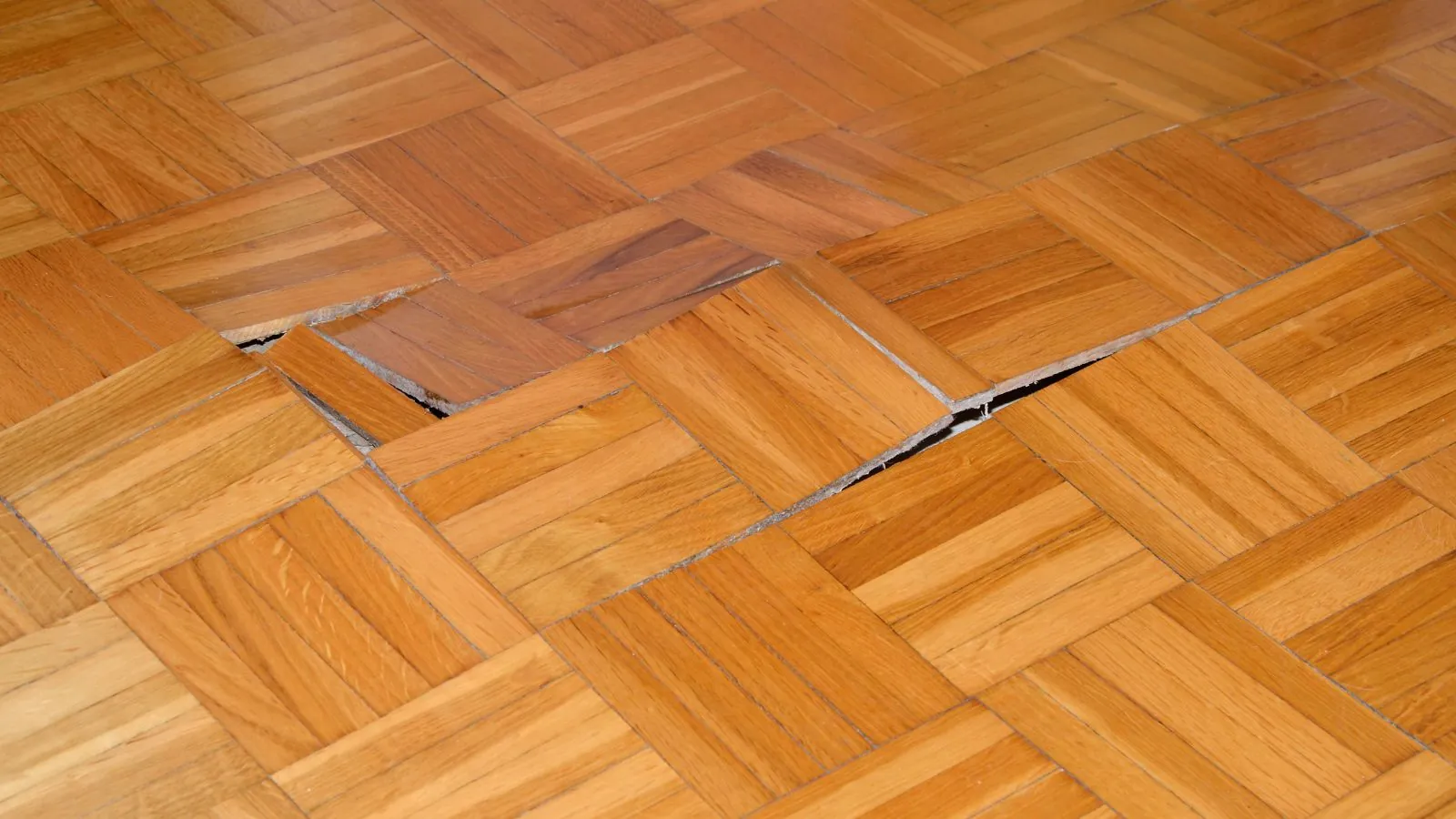
Hardwood floor water damage is the swelling, cupping and finish loss that happens when solid or engineered wood absorbs water from a leak, a spill or damp air below. Boards take on moisture through the edges and underside, and they swell until they push against each other and rise at the seams.
The floor is often salvageable when drying starts early. We meter every board, pull surface water with water extraction tools, and run floor drying systems before any decision to sand or replace.
Cupping, crowning and buckling: what the floor is telling you
Cupping means the edges of each board are higher than the center, creating a shallow dish shape. It happens when the underside of the board is wetter than the top, and it is the most common sign of a leak below or a slow, steady moisture source.
Crowning is the reverse, with the center higher than the edges, and it often shows up after a floor has cupped and then been sanded before it was dry. Buckling is the worst case: boards lift off the subfloor, sometimes in tents several inches high. A buckled floor usually means a large or long-lasting soaking and needs a close look at the subfloor.
Washer valve and condensate line leaks under the floor
Two quiet leaks cause a surprising share of cupped floors. A washer supply valve that weeps behind the machine feeds water into the subfloor a few drops at a time. A clogged air conditioner condensate line, or an overflowing secondary pan, can drip onto a hallway or closet floor for weeks.
Neither leak produces a puddle you notice, so the first sign is often the floor itself. A line of cupped boards that follows a wall, or a patch beside a washer or air handler, points to one of them. The source has to be fixed before drying, and our appliance leak page covers the washer, dishwasher and refrigerator side.
Boards starting to cup?
Call (732) 352-9660 and describe where the cupping sits, and we will plan the drying.
Wood floors versus laminate and engineered flooring
Not all floors tolerate water the same way. Solid hardwood can swell and then relax as it dries, if the soaking was short. Engineered wood has a thin wood top over layered plywood, so it handles some moisture but can delaminate. Laminate has a fiberboard core that swells permanently once soaked, and it rarely recovers.
The table compares what each floor does and what we usually recommend.
| Floor type | How it reacts | Usual outcome |
|---|---|---|
| Solid hardwood | Cups, crowns or buckles as it absorbs water | Dried in place when caught early, sanded and refinished once flat |
| Engineered wood | Edges swell and layers can separate | Dried if bonded, replaced where layers have lifted |
| Laminate | Fiberboard core swells and does not shrink back | Usually removed in the wet area and replaced |
| Luxury vinyl plank | Planks rarely absorb water, but water collects underneath | Lifted, dried underneath, reinstalled if the click-lock is intact |
| Site-finished oak or maple | Same as solid, with finish that can turn white or cloudy | Dried first, refinishing decided from final readings |
How we dry a wet wood floor
A moisture meter reads each board, and a thermal camera finds wet areas under the surface. Surface water comes up first with a squeegee or extractor so it stops wicking into the wood. Then floor drying systems go down: mats or panels that pull moisture out through suction, paired with LGR dehumidifiers that keep the air dry.
Heat is used carefully, since drying a hardwood floor too fast can crack boards. Gradual drying with readings each day is the safer route, and our structural drying process covers the equipment in detail. Expect several days for a typical hardwood floor, and longer when the subfloor is wet too.
Sand and refinish, patch or replace: honest trade-offs
Once the floor is dry, a cupped board often flattens on its own over a few weeks. Sanding before it flattens locks the cupping in, so we wait until readings and a straightedge say it is time. A light cup usually ends with a sand and refinish. A section with split boards, black staining or lifted seams may need replacement boards, which are woven into the existing floor.
Replacing a whole floor is the expensive end, and sometimes the right call if the subfloor stayed wet for weeks or the floor buckled across the room. The floor does not need to match a calendar. It needs to match the readings.
What to do about hidden moisture under the boards
Water under a floor that stays damp supports mold growth. Dark staining along board edges, a musty odor, or boards that stay soft after drying all deserve a closer look.
If growth is present, testing and remediation follow ANSI/IICRC S520, as described on our mold remediation work, and the moisture has to be gone first. Any question about how it affects a person belongs with a physician.
What drives the cost of hardwood floor repair
Scope and price are explained before work starts, and five factors set the range:
- Water category: clean supply water is simpler than gray water or sewage-tainted water.
- Affected square footage and how many rooms the flooring runs through.
- Material involved: solid wood, engineered, laminate or vinyl plank, each with a different outcome.
- Drying days and equipment: floor panels and dehumidifiers running until board readings match the dry standard.
- Rebuild scope: sanding, refinishing, replacement boards, or full replacement.
Insurance often covers sudden and accidental leaks, such as a burst line or a failed washer hose, while gradual or neglected leaks often are not covered. Check your policy and ask your insurer. Call (732) 352-9660 to get a real number.
Floors, ownership and the repair decision in Marlboro
About 93.1 percent of Marlboro's 14,716 housing units are owner-occupied (ACS 2020 to 2024), so the repair or replace decision on a floor usually belongs to the person paying for it. That makes your policy and your timeline the main inputs. Ask your insurer what it covers and what documents it needs before the floor is touched.
The same readings and drying method apply on a job for a homeowner in Eatontown. Marlboro's Construction Division handles permits, and its page says contractors must show a NJ Division of Consumer Affairs registration, so ask any flooring contractor for it.
Hardwood floor questions after a leak
Often, yes, when the soaking was short and drying starts quickly. A cupped floor is dried until readings match the dry standard, then given time to flatten. Sanding too soon locks the shape in, so we wait. If boards have split or buckled, those sections are replaced.
Look at where the cupping sits. A strip beside a washer, a patch under an air handler or a line along a wall points to a slow leak. Check behind the washer for damp flooring, and check the condensate pan and line for a clog. Call us with what you find.
No. Sanding a floor that is still damp can leave it crowned once the boards finish drying, and the finish may fail. Wait for moisture readings and a flat straightedge test. A refinisher will usually ask for the same thing.
Rarely. The fiberboard core swells when it soaks and does not shrink back, so the planks usually lift at the edges. If the area is small and the planks are lifted quickly, a few can be removed and replaced. We check how much has swollen before deciding.
A typical hardwood floor takes several days with floor drying systems, and a soaked subfloor adds time. We read the boards each visit and keep the equipment running until they match the dry standard. A shorter job is possible if the leak was caught within a day.
Sudden and accidental leaks, such as a failed supply hose, are often covered, while gradual leaks and neglect often are not. Check your policy and ask your insurer what applies. Take photos and keep the failed part, since both help your insurer.
Dry the floor before it sets
Call (732) 352-9660 for same-day response when available and a repair path explained before work starts.