
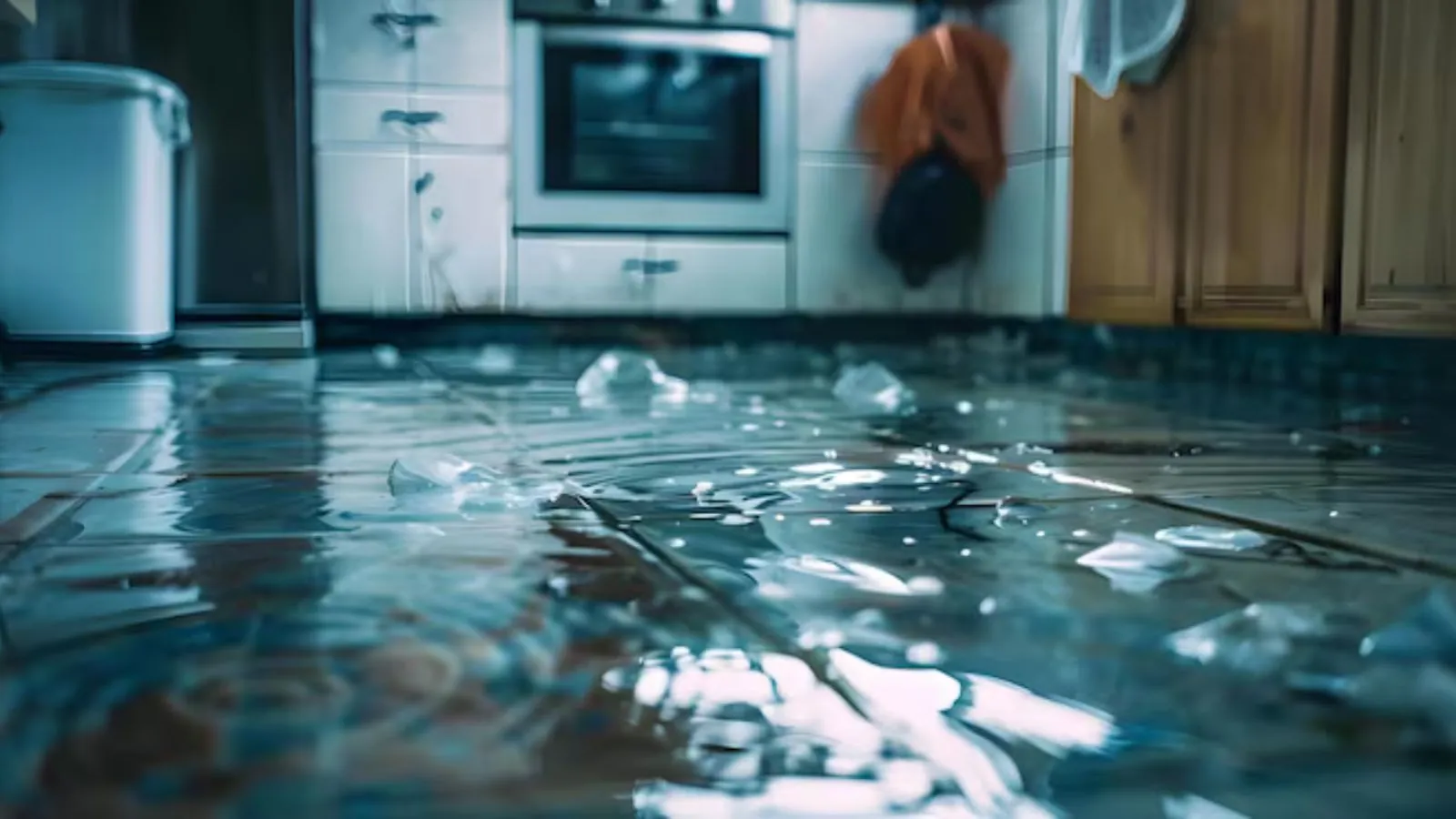
Floodwater in your home is an emergency, and our crews take flood calls 24/7. While you wait, stay out of the water, keep children and pets away, shut off power only if the panel is dry, and lift valuables out of reach.
Flood damage cleanup is the removal of water that entered from outside: a river overtopping its banks, groundwater rising through a floor, or runoff pushing in at doors and windows. That water carries soil, bacteria and sometimes sewage, so it is not handled like a leaking pipe.
Floodwater in the house right now: what makes it different
A pipe leak starts with clean water. Floodwater does not. Rain-swollen streams, saturated yards and overloaded storm drains pick up dirt, fertilizer, fuel and bacteria on the way, and by the time the water crosses your threshold it is usually category 2 or category 3.
Category 2 water, often called gray water, can cause illness if people touch or swallow it. Category 3 water, or black water, is grossly contaminated and includes anything that came from a sewer line or a river. Flood intrusion is generally treated as category 3 until proven otherwise.
That changes the job. Porous items that took in this water, like carpet pad, insulation and low drywall, are removed rather than dried, and hard surfaces are cleaned and sanitized before drying starts.
What to do while the crew is on the way
Protect people first, belongings second, and the structure last. Mail in parts of Robertsville can read Morganville or Marlboro, so the Robertsville page explains which address to give us.
Get out of the water
Do not wade through floodwater. It can hide sharp debris and live wires, and it can be contaminated.
Leave the electricity alone
Cut power only if the panel is dry and safe to reach. If it is wet, call the utility from outside the house.
Check the shutoffs
Close the main water valve if pipes are damaged. If you smell gas, leave and call 911 or the gas utility.
Photograph everything
Take pictures of the water line, the contents and the outside of the house before cleanup begins.
Keep boots and gloves handy
If you must enter, wear waterproof boots and gloves and wash hands well afterward. Children and pets stay out.
Is floodwater inside?
Call (732) 352-9660 and tell us how deep it is and whether sewage is mixed in.
Safety when floodwater touches power or sewage
Stay out of any flooded room where outlets, appliances, the furnace or the panel may be energized. Water conducts electricity, and standing in it near a live source can be fatal.
Cut power only if the panel is dry and you can get to it without crossing water. For any electrical or gas risk, call 911 or the utility first, then our line at (732) 352-9660.
If sewage has come up through a drain with the flood, our sewage backup cleanup page explains how that contamination is contained.
River, groundwater and surface flooding in Marlboro
The Monmouth County Hazard Mitigation Plan annex for Marlboro Township puts about 4.9 percent of the township in the 1 percent annual chance floodplain, with another 1.2 percent in the 0.2 percent zone. It lists 7 repetitive-loss properties and 104 flood insurance policies in force through the National Flood Insurance Program.
The plan names Texas Road and Fletcher Drive as roads that flood in intense rain and have to be blocked, and Deep Run as a regulatory floodway that crosses the township. Streambank work on Pleasant Valley Road has also been done.
It describes local flooding as tied to short bursts of heavy rain, in the range of 3 to 4 inches an hour. For your address, check the FEMA flood map and ask the township Construction Division what applies, because a home outside the mapped floodplain can still flood from runoff or a high water table.
Category 2 and category 3 water: what stays and what goes
Contaminated water changes the removal decisions. This table shows how we sort materials after a flood.
| Material | Typical decision | Reason |
|---|---|---|
| Carpet and pad | Removed and discarded | Fibers hold bacteria and cannot be sanitized reliably |
| Drywall below the flood line | Cut out | Porous paper and gypsum absorb contaminated water |
| Insulation in wet cavities | Removed | Cannot be cleaned once soaked |
| Solid wood framing | Cleaned, sanitized and dried | Structural members can often be saved |
| Tile and concrete | Cleaned and sanitized | Hard surfaces dry well and tolerate cleaners |
| Hardwood floor | Case by case | Depends on soak time and subfloor moisture |
Below-grade rooms are where floodwater tends to collect first. Our basement water damage cleanup page covers sump failure, seepage and finished basement rooms.
How a flood job runs from first call to dry structure
Crews arrive in protective gear. Water comes out first with pumps and extraction units, and anything unsalvageable is carried out and photographed for your records. Then we spray and wipe surfaces with an antimicrobial cleaner approved for this use.
Drying comes after cleaning. Air movers and LGR dehumidifiers run while moisture meters track the wood and drywall. This stage follows the same logic as any other water job, and our structural drying process page explains the readings that tell us when to stop.
Work follows ANSI/IICRC S500, the published standard for water damage restoration, and whether a company works to it is a fair question for anyone you call.
Flood insurance, the exclusion and the 30-day wait
The New Jersey Department of Banking and Insurance says standard homeowners policies generally exclude flood damage. Flood cover usually comes from the National Flood Insurance Program or a private flood policy.
A new NFIP policy generally has a 30-day wait before it takes effect, so buying one when the creek is already rising does not help that storm. If you do not know whether you have flood cover, find your policy and ask your insurer.
Hurricane Irene in 2011, Sandy in 2012 and the remnants of Ida in 2021 each brought federal disaster declarations, and Monmouth County was listed for aid under Sandy and Ida. We do not promise any claim outcome. Photograph the loss and save receipts.
Night and weekend flood cleanup
Floods peak during storms, which means evenings, weekends and holidays. Storm-night and weekend calls reach dispatch, and flood crews go out the same day when they are available, though no arrival time is promised when roads are closed.
During heavy rain a crew may be working another address, so describe your situation clearly: where the water entered, how deep it is, and whether sewage is involved. That helps us prioritize.
If roads into Marlboro are blocked, a nearby crew in Lincroft may be the closest team that can be dispatched.
What shapes a flood cleanup quote
Flood work costs more than a clean leak because of contamination. Five factors set the scope.
- Water category: category 3 floodwater requires protective gear, disposal and sanitizing.
- Square footage: a flooded basement is measured differently than a whole first floor.
- Materials: carpet, drywall, insulation and flooring each have different removal rules.
- Drying days: contaminated jobs often need more dehumidification once cleaning is done.
- Rebuild scope: new drywall, trim and flooring come as a separate stage.
Standard homeowners policies usually exclude flood. Read your policy and ask your insurer whether a flood endorsement or NFIP policy applies.
Scope and price are explained up front. Call (732) 352-9660 to get a real number for your flooded rooms.
Flood cleanup questions from Marlboro homeowners
Yes. Dispatch is 24/7, and storm floods rarely wait for a weekday. Same-day response is offered when a flood crew is available, with no arrival time promised during road closures or heavy rain.
Tell the dispatcher how deep the water is and whether sewage is involved.
The New Jersey Department of Banking and Insurance says standard homeowners policies generally do not cover flooding. Coverage usually comes from a National Flood Insurance Program or private flood policy.
Check your policy and ask your insurer. Sudden water from a burst pipe is treated differently from rising surface water.
A new NFIP policy generally has a 30-day wait, according to the state insurance department. That means a policy bought in the middle of a storm will not apply to it.
If you are not sure whether your policy includes flood coverage, ask your insurer now.
About 4.9 percent of the township sits in the 1 percent annual chance floodplain, per the county hazard plan annex. Whether your address is one of them depends on the FEMA flood map.
Ask the township Construction Division for help reading it. Homes outside the mapped zone can still flood from heavy runoff.
Floodwater picks up bacteria, soil and chemicals from yards, roads and streams, and may mix with sewage. Even if it looks clear, it is treated as contaminated.
That is why carpet and wet drywall are removed rather than dried, and why gloves and boots are needed.
Hard, nonporous items like metal and plastic can often be cleaned. Upholstered pieces, mattresses and particleboard usually cannot.
Photograph items before moving them. We can talk through what is likely salvageable when you call.
Flood cleanup starts with a call
Our crews answer flood emergencies at (732) 352-9660 any night or weekend.