
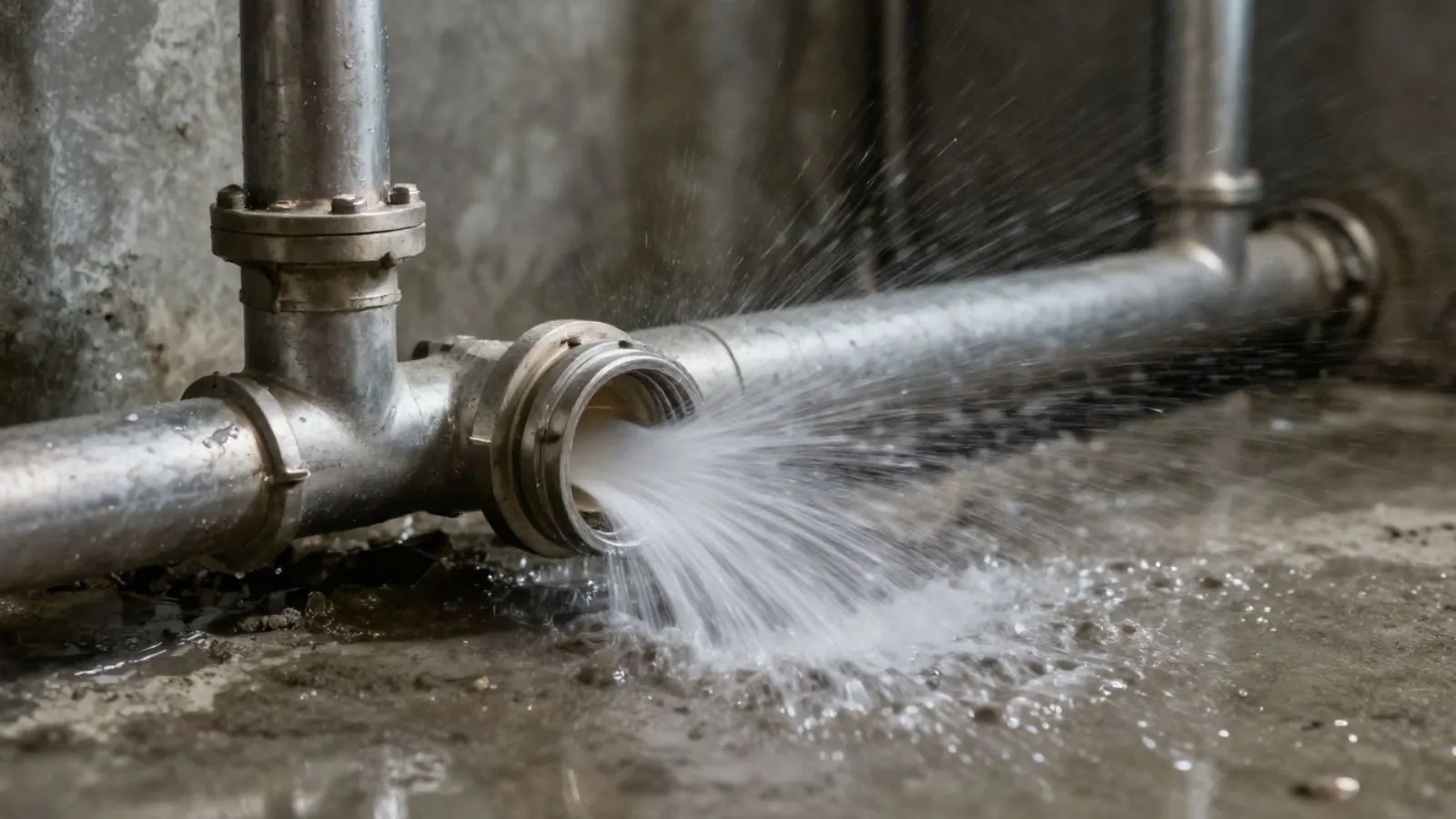
A frozen pipe is an emergency because the real flooding often starts when the ice melts. Our crews answer 24/7. If you have a faucet with no water or only a trickle, leave it open, keep the heat on, and find your main water valve before anything thaws.
Frozen pipe water damage happens when ice in a supply line expands, cracks the pipe or a fitting, and then releases water the moment it warms up. The split is usually small. The flood from it is not.
Frozen pipe thawing and leaking right now: the first move
Water that freezes expands, and a closed section of pipe has nowhere to let that pressure go. The ice itself does not leak. The damage is a hairline split or a popped joint that sits plugged until the ice melts, and then the line becomes a burst pipe.
That is why a frozen pipe calls for two decisions at once. One is how to warm the pipe safely. The other is where the main shutoff is, so you can close it the moment you hear dripping or see a wet wall.
If the pipe is already leaking, the situation has moved on from freezing. Closing the main and treating it as a burst pipe emergency is the right call, and we cover extraction and drying either way.
What to do while you wait
Work safely and slowly. Heat applied too hard to a cracked pipe can make things worse.
Open the faucet
Leave the affected tap open slightly so melting ice and pressure have a way out.
Locate the main
Know where the main water valve is and be ready to close it. Close it fully if you see any leak.
Warm the space
Open cabinet doors under sinks, raise the thermostat, and run a space heater on a safe dry surface, never near water.
Use gentle heat only
A hair dryer on low held away from standing water works on exposed pipe. Never use an open flame, torch or heat gun.
Check for dampness
Look at walls, ceilings and floors near the frozen run for darkening, bulges or drips, and call if you find any.
Thaw has started leaking?
Call (732) 352-9660 and a crew will map the damp walls before they hide the damage.
Safety when ice and electricity meet
Do not use electrical devices while standing in water, and do not plug a heater or hair dryer into an outlet near a wet floor.
Cut power only if the panel is dry and clear of any water. When water has reached outlets, light fixtures or the panel, call 911 or the utility first and (732) 352-9660 afterward.
Do not try to thaw a pipe inside a wall with a torch or heat gun. Hidden wood framing can overheat, and a hot pipe with trapped water can burst.
Why Marlboro winters make frozen lines a real question
NOAA 1991 to 2020 normals for the Freehold-Marlboro station record an average of 106 days a year with a minimum temperature at or below 32 degrees. The last spring freeze falls around April 17, and the first fall freeze around October 23.
Those numbers do not say how many pipes freeze. They do say winter is long here, and that exposed lines in garages, exterior walls, crawl spaces and unheated basements spend a lot of days near the threshold.
The practical takeaway: protect lines that run along outside walls, and know the shutoff location before the first fall freeze, not after the first leak.
How thaw-related water damage is found and dried
A split in a pipe inside a wall may show only as a damp spot on drywall or a slow drip behind a cabinet. Moisture meters and a thermal camera let us trace the water without opening every wall.
Once the leak path is known, we extract any standing water, remove wet insulation, and cut drywall only where it cannot dry in place. Air movers and LGR dehumidifiers then run until readings come back to normal for the home.
Most thaw damage lands in walls. Our wall and drywall repair page explains when baseboards and a strip of sheetrock come out and how that is rebuilt.
Pipe thawing versus pipe replacement: a decision table
A plumber judges the pipe itself. This table helps you tell what stage you are at when you call.
| What you see | Stage | Best next step |
|---|---|---|
| No water or trickle at one tap | Ice blockage, no leak yet | Warm slowly, keep tap open, locate the main |
| Dripping when ice melts | Split pipe or joint | Close the main and call a plumber and our crew |
| Wet drywall or ceiling stain | Leak inside the structure | Extraction and drying, then repair |
| Water pouring from the wall | Active burst | Main off, power off if dry, then call 911 for electrical risk |
| Pipe split but water already off | Damage contained | Moisture check anyway, since cavities hold water |
Night and weekend freeze-ups
Cold snaps do not follow business hours. The leak often shows up when ice melts overnight as the heat cycles back on, or on a weekend when a vacant house was left cold.
Freeze-up calls get answered overnight and on weekends, and a thaw crew is sent the same day when one is available. Icy roads make drive times unpredictable, so no arrival time is promised.
If you are away and a neighbor reports water at the door, the same steps apply. Have them call the township police if the main cannot be shut off, then call us.
What decides the cost after a freeze
The price follows the damage, not the temperature. These are the five factors.
- Water category: thaw water is usually category 1 supply water, but a soak through dirty insulation can change that.
- Square footage: one wall versus a ceiling and floor changes how many machines are needed.
- Materials: drywall, plaster, cabinets and flooring all respond differently to a soaking.
- Drying days: extra air movers and dehumidifiers on site for longer raise the total.
- Rebuild scope: new drywall, insulation and paint are their own stage.
Freeze damage that happens suddenly is often covered, though some policies add conditions for vacant or unheated homes. Read the policy and ask your insurer.
Call (732) 352-9660 for an actual number. Scope and price are explained before a single fan is set.
Where freeze-ups happen around Marlboro homes
Lines most exposed to cold sit in exterior walls, over garages, in crawl spaces and near hose bibs. A Marlboro homeowner with a bonus room over the garage knows the floor there stays colder than the rest of the house.
Insulating those runs, keeping a cabinet door open on a very cold night, and closing the exterior hose valve before the October freeze are small steps that reduce the chance of a split.
If your home is closer to the Eatontown side of the county, a nearby crew in Eatontown can be dispatched the same way.
Frozen pipe questions from cold Marlboro mornings
Yes. Dispatch is 24/7, which matters because a thaw can start leaking at 5 a.m. when the heat cycles on. A crew is dispatched the same day if one is available, though cold-snap roads decide the arrival time and none is promised.
Keep the tap open and the main valve close at hand while you wait.
A pipe that is frozen but not split shows no water at the tap. A split pipe starts to leak as the ice melts, and you may see dripping, a wet wall or a stain on the ceiling below.
A thermal camera and moisture meter can find the wet area behind a wall without cutting it open.
Gentle heat from a hair dryer on exposed pipe is common, but never use a torch or heat gun, and never use electrical devices near water.
If the pipe is inside a wall or the water has already started leaking, close the main and call for help.
NOAA 1991 to 2020 normals for the Freehold-Marlboro station show an average of 106 days a year at or below 32 degrees.
That tells you winter is long. It does not tell you how many pipes freeze, since that depends on insulation, wall exposure and the heating in your home.
Mold needs moisture. Wet insulation and drywall that stay damp are the usual starting point, which is why drying matters even when the pipe looks repaired.
If you suspect mold, see our mold remediation page. Testing and remediation follow the S520 standard.
Sudden damage from a pipe splitting is often covered, while damage from a long neglected leak often is not. Some policies add conditions for vacant homes or unheated houses.
Pull up your policy, ask your insurer about vacant home terms, and shoot photos first.
Cold snap, wet walls
Our crews answer frozen pipe emergencies at (732) 352-9660 around the clock.