
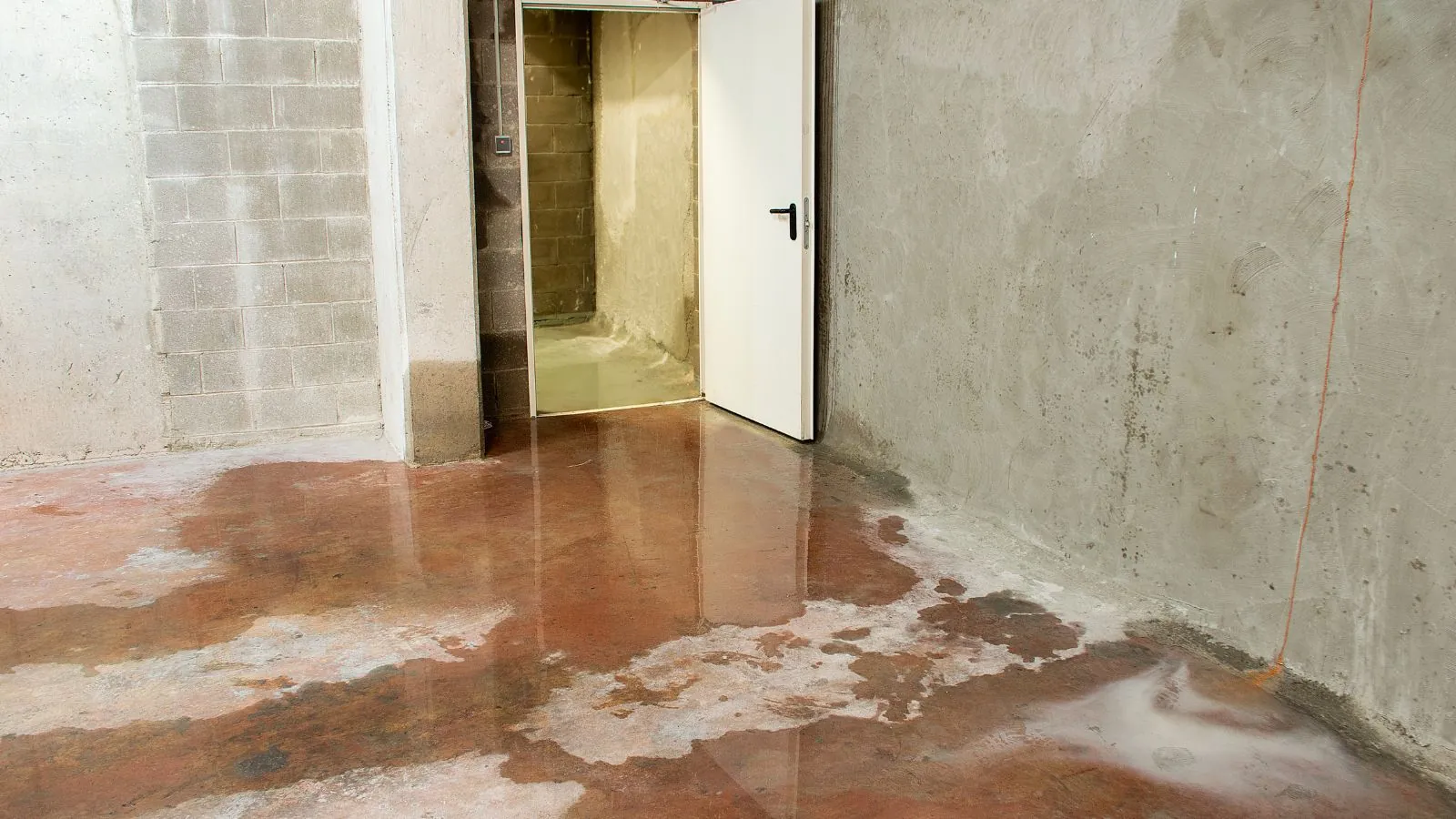
Commercial water damage restoration is the extraction, drying and repair of a business property after a leak, flood or drain failure, done on a schedule that limits the days you are closed. If water is spreading right now, shut off the main valve, power off wet areas only if the panel is dry and safe, lift inventory and records off the floor, and keep staff and customers out. Dispatch is open 24/7.
Crews begin with water extraction and move straight to measured drying, so your space is usable as soon as the readings allow.
Water in the building right now: shut-off and protect
In a commercial building, the first call is often to the facilities contact, but the first action is the same as in a house: stop the water. Find the main shut-off for the unit, or the riser valve for the floor, and close it. In a multi-tenant building, tell the property manager at once, since the leak may start in another suite or on the roof.
Then protect what can be protected. Lift boxes, stock, files and computers off the floor, move them to dry ground, and unplug equipment standing in water only if the outlet is dry. Take photos of the wet areas and the damaged stock before anything is moved or thrown out.
Electrical and ceiling hazards in a wet commercial space
Commercial spaces carry more hidden electrical load than a house, and a wet ceiling tile can drop without warning. Treat the room as unsafe until a crew has looked.
- Do not enter a room with standing water if a panel, floor outlet, server rack or large appliance is near the waterline.
- Cut power at the panel only if it is dry and you can reach it without crossing water. Otherwise call 911 or the electric utility before you call us.
- If you smell gas, evacuate the building and call 911 or the gas utility first.
- Stay out from under bulging or stained ceiling tiles, which can fall when saturated.
- Keep staff and customers out of the affected zone, and post a sign at the door.
Business closed by water?
Call (732) 352-9660 any hour, tell us your hours, and we will build the schedule around them.
What to do while you wait for the crew
We offer same-day response when available, so call as soon as you can describe what you see. Until help arrives:
Stop the source
Close the unit shut-off or riser valve, and call your plumber for a failed fixture. A restoration crew dries, it does not fix the pipe.
Isolate the damage
Close doors to wet rooms, turn off the HVAC fan if it is spreading damp air, and stop foot traffic.
Save the essentials
Move files, stock, laptops and anything that cannot be replaced off the floor and out of the room.
Photograph and list
Photograph the source, the water line and the damaged stock, and note what was in each area.
Call and describe
Call (732) 352-9660 and say how many rooms or suites are wet, whether neighbors are affected, and when you need the space open.
Small shop, office suite or multi-unit building: what changes
Scale changes the job. A single retail unit may need one crew and a day of extraction, while an office floor with open ceilings or a multi-unit building with wet shared walls needs staged work. A shop in a strip along Route 9 or Route 79 may share walls, a roof and sometimes a drain line with its neighbors, so a leak next door can become your leak.
In a multi-unit building, the crew maps which units are wet, in what order, and who is affected. Drying one unit while an adjacent wet wall stays wet only moves the water. The table shows how priorities shift by property type.
| Property type | Common water events | First priorities |
|---|---|---|
| Retail shop | Sprinkler or supply line failure, roof leak onto stock | Protect inventory, dry the sales floor, reopen sections |
| Office suite | Burst line above ceiling, toilet overflow, HVAC condensate | Save records and electronics, dry carpet tile and ceiling grid |
| Restaurant or food service | Dishwasher or grease trap backup, supply line failure | Contain contamination, clear the kitchen floor, protect equipment |
| Multi-unit building | Riser leak, shared wall seep, unit above overflowing | Map wet units, dry shared walls and ceilings together |
| Medical or lab space | Clean-water leak near equipment | Protect equipment, coordinate drying with your own protocols |
After-hours work and keeping downtime short
Every day a business is closed costs rent, payroll and customers. After-hours work, such as extraction at night or drying equipment placed when the building is empty, can shorten the closure. We can set the schedule so the sales floor or the front office reopens first while the back rooms keep drying.
Staging also matters for noise and access. Air movers and dehumidifiers hum all day, so we place them to keep walkways, exits and fire doors clear. Ask the crew for a plan that opens the highest-value areas first and tells you which rooms stay off limits.
Drying a commercial structure
Commercial floors and walls dry differently from a house. Carpet tile can often be lifted and dried or replaced by the tile, ceiling grid can be pulled and replaced, and concrete slabs release water slowly. Moisture meters, thermal imaging and LGR dehumidifiers guide the work, and daily readings decide when it ends.
Our structural drying process follows ANSI/IICRC S500, and you can ask any company whether its crews work to it. Larger buildings may need more machines and more days, and the plan states both before work starts.
Documentation that supports your claim and your lease
Records matter after the water is gone. We provide dated photos, moisture readings, a written scope of work and an equipment log, all in a form you can hand to your insurer, landlord or property manager.
We cannot promise how an insurer will respond, and we do not decide coverage. Check your policy for business property and business interruption wording, and ask your insurer what it needs. If you rent, read the lease to see who is responsible for the building and who for the contents.
Flooding versus a building leak
A burst line is a building problem. Rising water from outside is a different one. When rain and runoff push into a ground-floor space or a storage level, the water is usually Category 2 or 3 and needs the protocols described on our flood damage restoration page.
That also changes the insurance conversation. Commercial property policies generally treat flood separately, so check your policy and ask your insurer whether flood coverage is included. Document the water line and the source before cleanup starts.
What drives the cost of commercial water damage work
Every property is different, so scope and price are explained before work starts. These factors move the number:
- Water category: clean supply water, gray water and sewage-contaminated water carry different protocols.
- Affected area and building type: one suite, a full floor or several units.
- Materials involved: carpet tile, ceiling grid, drywall, flooring, stock and equipment.
- Drying days and equipment: more volume and thick materials mean more machines and more days.
- After-hours scheduling and rebuild scope, including repairs and repainting.
Call (732) 352-9660 for a real number once the scope is clear.
Working with Marlboro businesses and nearby towns
Marlboro's commercial corridors run along Route 9, Route 79 and Route 18, and many of the businesses there are in multi-tenant buildings where a leak travels. If the building was damaged in a storm, the county hazard plan notes about 4.9 percent of the township sits in the 1 percent annual chance floodplain, so check the FEMA flood map for your address before assuming a flood is covered.
The township Construction Division handles permits, and its page says contractors must show a NJ Division of Consumer Affairs registration. We also serve businesses over the line, and a crew in Freehold follows the same process.
Commercial water damage questions from owners and managers
Yes. Dispatch runs 24/7, so a pipe that bursts on a Saturday night is a call you can make right then. We offer same-day response when available and do not promise an arrival time. Until the crew arrives, shut off the water, keep people out, and call 911 if electricity or gas is involved.
Often, yes. We can stage extraction and drying at night or on weekends, and reopen part of the space first. The plan depends on what is wet, where the equipment fits and how the building is used. Tell us your hours when you call so the schedule can be built around them.
That is set by your lease and your insurance, and we do not decide it. Typically a landlord insures the building and a tenant insures contents and improvements, but leases vary. Read your lease and ask your insurer and property manager before work starts.
You receive dated photos, moisture readings, an equipment log and a written scope of work. These are the records most insurers and landlords ask for. We cannot promise any outcome from an insurer, and coverage decisions are theirs.
It depends on the size of the loss, the materials and how fast they dry. A single suite with a clean-water leak may reopen sooner than a building with a wet slab and shared walls. We explain the schedule and the readings that decide it before work starts.
Yes. Multi-unit jobs are mapped unit by unit, with attention to shared walls, ceilings and risers. We coordinate order of work with the property manager so neighbors are not left with a wet wall.
Get the doors open sooner
Call (732) 352-9660 after hours or on a weekend for same-day response when available.