
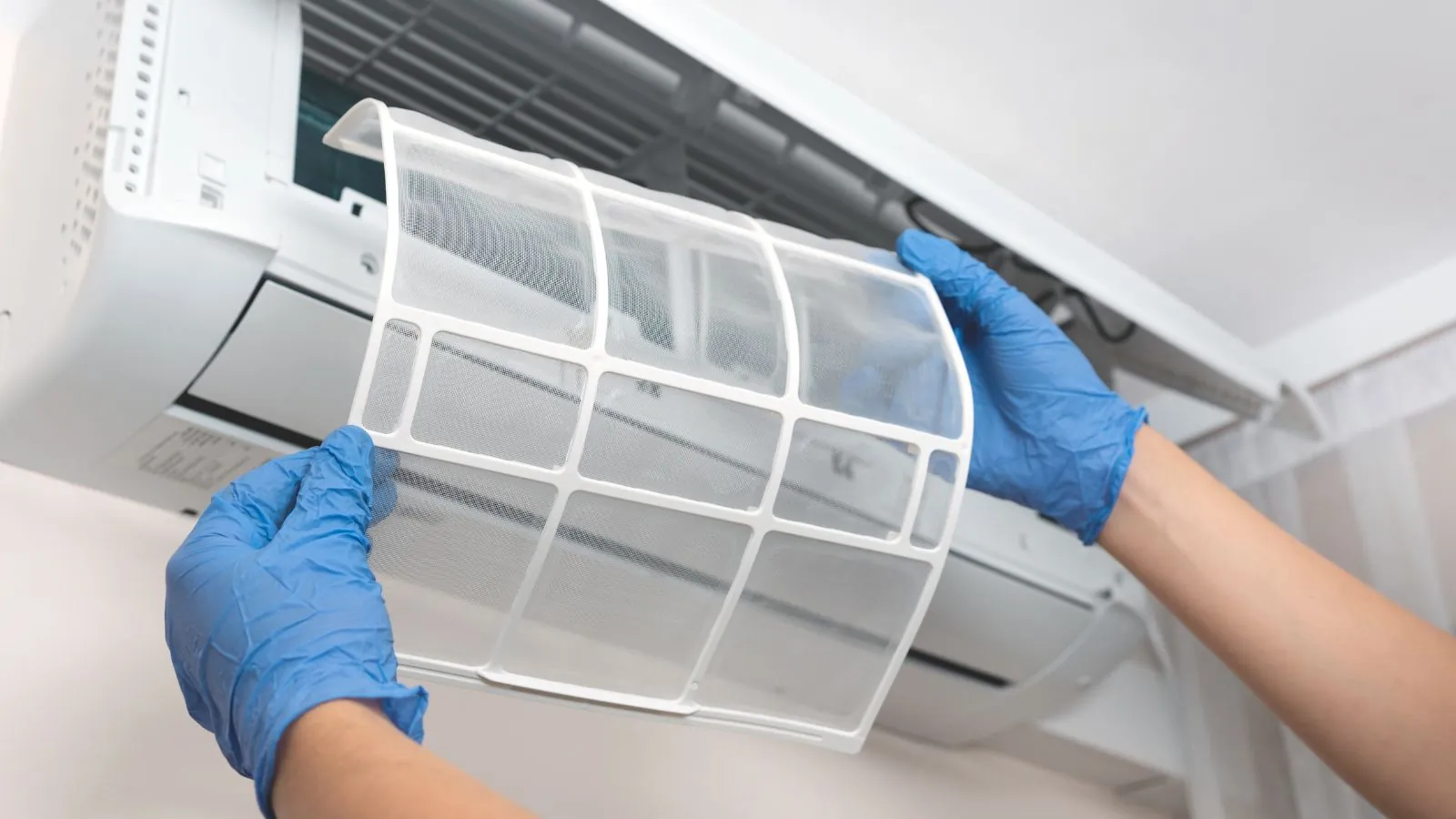
An air conditioner pulls gallons of water out of the air on a hot day, and all of it is supposed to leave the house through a small drain line. AC leak water damage is the wet ceiling, insulation, drywall and flooring left when that condensate backs up or a pan overflows. A stained ceiling under an attic unit is the classic sign.
Our crews in Marlboro, NJ dry the building materials, while your HVAC contractor repairs the equipment. If the drywall is already sagging, the repair path runs through ceiling water damage repair.
Why a working air conditioner puts water in the house
The evaporator coil is cold, so moisture in the indoor air condenses on it and drips into a pan. From the pan, a three-quarter inch PVC line carries the water to a drain, a condensate pump or the outdoors. Algae and dust form a slime inside that line over a cooling season, and when the slime plugs it, the pan fills and spills.
Two safeguards exist. A float switch should shut the system off when the pan fills, and a secondary pan under the air handler should catch overflow. Both fail more often than people expect, because the switch can be bypassed or corroded and the pan itself can rust through or crack.
Signs that condensate is leaking into the building
Most condensate leaks announce themselves slowly. A tan ring appears on the ceiling under the attic unit, paint blisters near a closet, or the baseboard in the hall feels soft. The air handler may also stop cooling because the float switch tripped, which is a clue that water has already collected.
Look for these symptoms around the equipment and the rooms near it:
- Water or rust stains in the secondary pan or on the closet floor
- A musty smell near the return vent that gets stronger when the system runs
- A ceiling stain that grows after the AC has run for several hours
- Wet or compressed attic insulation under the air handler
- Warped floor edges in a hallway that shares a wall with the unit
Drain line clogged, ceiling stained?
Call (732) 352-9660 and describe where the unit sits, and we will tell you what to protect before a crew arrives.
The attic air handler and the condensate backup
Here is a call we hear in summer. A homeowner notices a brown stain on the upstairs hallway ceiling, climbs into the attic and finds the secondary pan brimming and the insulation under it soaked. The primary drain line is clogged, and the float switch never shut the unit off. By then the water has been running into the ceiling drywall for days.
Attic installs are the hardest to catch because nobody looks at them. Water soaks the insulation first, spreads along the joists, and then finds the lowest point in the ceiling below. Wet batts hold moisture and stop insulating, so we remove the saturated section before drying the framing.
Condensate leak sources compared
The source decides where the water lands and who has to fix the cause. The table separates the equipment repair, which belongs to an HVAC contractor, from the building drying, which is ours.
| Source | What goes wrong | Where it shows up | Repair belongs to |
|---|---|---|---|
| Primary drain line | Algae or debris plugs the PVC line | Pan overflows, ceiling stain below | HVAC contractor clears the line |
| Secondary pan | Rust hole or crack, or overflow past the rim | Insulation and drywall under the unit | HVAC contractor replaces the pan |
| Float switch | Fails to cut power when the pan fills | Repeated overflow, long soak time | HVAC contractor |
| Frozen evaporator coil | Ice melts faster than the pan can handle | Sudden flood at the air handler | HVAC contractor, then we dry |
| Wet ceiling, insulation, floor | Materials absorb and hold the water | Stains, sag, odor, cupped boards | Marlboro Water Damage Pros |
Drying ceilings, insulation and framing after a drip
A thermal imaging camera shows cold, wet patches in a ceiling from the room side, and a moisture meter confirms them. Soaked insulation comes out, and drywall that has sagged or lost its paper face is cut back to a clean edge. Joists and sheathing stay in place and get dried.
In the attic we use air movers aimed along the framing and a dehumidifier sized for the space, since attic air alone will not carry the moisture away. If the wet drywall runs down the wall, the cutting plan follows the guidance on wall and drywall water damage repair. Work follows ANSI/IICRC S500, and daily readings tell us when to stop.
Mold after a condensate leak
Mold needs moisture, and a drip that runs for days gives it that. The first job is to dry the area and fix the source, which is the same sequence the New Jersey Department of Health lists in its guidance. That guidance says a homeowner may handle patches under 10 square feet, a professional opinion makes sense for 10 to 100 square feet, and areas over 100 square feet call for a qualified contractor.
Testing tells you whether a stain is mold, and remediation follows ANSI/IICRC S520. If the sample or the lender requires it, see our page on mold remediation. Questions about health go to a physician, and we do not diagnose.
Hardwood cupping from a closet air handler
First-floor units in a hall closet or utility room leak onto flooring instead of insulation. Water runs under the closet door, slides beneath the baseboard and gets into the hardwood or laminate seams. Cupping, where board edges rise above the center, can appear within a few days.
The fix starts with drying under and around the boards, using mats or directed air, before any sanding is considered. Moisture readings in sample boards guide the decision, and the options are laid out on hardwood floor water damage repair.
What drives the cost of an AC leak cleanup
A short overflow into a pan liner is a small job, while a month of dripping into an attic is not. Scope is set by the factors below, and the price is explained before work starts.
- Water category: condensate is usually treated as Category 1 at the start, but standing water and attic dust can change that classification.
- Affected area: one ceiling bay and an entire second-floor hall are different jobs in square footage.
- Materials involved: blown insulation, drywall, plaster and finished floors each dry or fail differently.
- Drying days and equipment: attic work needs air movers and dehumidifiers staged on joists, which adds setup time.
- Rebuild scope: ceiling patching, texture and paint are priced apart from the drying.
Sudden and accidental water damage is often covered, but a leak that went on for months from a neglected drain line often is not. Check your policy or ask your insurer. To get a real number, call (732) 352-9660.
Local steps for Marlboro homeowners
If the ceiling repair grows beyond a patch, ask the township Construction Division whether a permit applies. Its permit page says contractors must show a New Jersey Division of Consumer Affairs registration, so ask to see the card before you sign.
Whether your air handler sits in a Wickatunk attic off Route 79 or a Morganville hall closet, the first question is where the unit is and what sits beneath it. A homeowner closer to Lincroft can also reach a crew through the Lincroft service area.
Questions about AC leaks and wet ceilings
Turn it off at the thermostat until the drain line is cleared. A clogged line sends more water into the structure every hour the unit runs. Once an HVAC contractor clears the line and checks the float switch, the system can run again, and we continue drying the wet materials.
We dry and restore the building materials. The condensate line, secondary pan and float switch belong to an HVAC contractor. Having both visit the same week is common, and we can tell the contractor which areas are wet so the repair does not disturb drying equipment.
Wet insulation looks darker, compressed and clumped, and it may feel cold. Do not step between joists, since a wet ceiling below will not hold your weight. A moisture meter and thermal camera can check the attic from the access point and confirm which sections need to be removed.
Coverage depends on your policy and on whether the event was sudden or gradual. A pan that overflowed once is often treated differently from a leak that ran for months. Photograph the stain and the pan, keep records of any HVAC repair, and ask your insurer what it covers.
Most small ceiling sections need three to five days of air movement and dehumidification, and attic insulation may take longer if it is replaced. We read moisture levels on every visit and finish only when they match a dry reference. Patching and paint happen afterward.
Possibly. A roof leak tends to show up after rain, while a condensate leak grows when the AC runs. Check the attic for a pan, a damp drain line or wet insulation under the unit. If the stain follows rain, see our page on ceiling water damage repair, which also covers roof leaks.
Dry the attic before the next heat wave
Call (732) 352-9660 any hour, and a crew can plan the attic dry-out with you.