
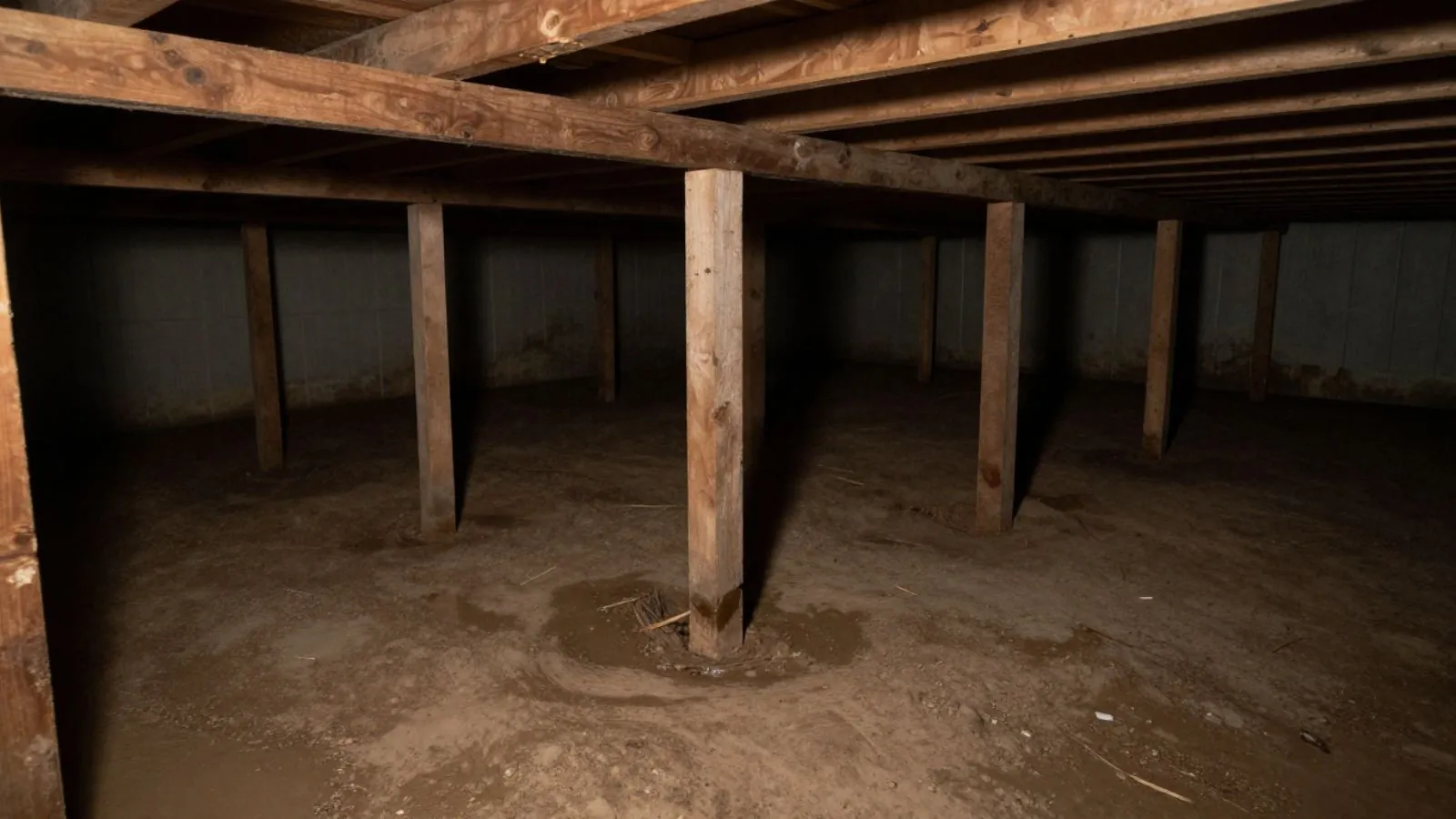
Crawl space water damage is moisture, standing water or soaked insulation in the shallow void between the soil and the floor framing of a house. Because nobody walks down there, a leaking supply line or a groundwater seep can run for weeks before the floor above goes soft or starts to smell.
We find the source, pull pooled water with extraction pumps, and dry the joists and subfloor before rot or mold gets a foothold. This page covers what we check, what gets replaced, and what drives the work.
Where the water comes from under a house
A crawl space collects water from two directions. From above, a failed supply line, a leaking drain trap or a dripping condensate line sends water through the subfloor and into the insulation. From the sides and below, runoff against the foundation, a high water table or a downspout that dumps beside the wall pushes water in through vents, wall seams and the dirt floor.
The source decides the plan. A pinhole in a copper line under the kitchen is a plumber's repair plus a dry-out. Groundwater that returns with every heavy rain is a drainage problem that restoration alone will not cure, and we tell you which one you have before any equipment goes in.
Signs you can spot from inside the house
Most people learn about a wet crawl space from the living area, not from the void itself. Watch for these:
- A musty odor that gets stronger near floor registers or after a rainy week
- A spongy or bouncy spot in the floor, usually near a bathroom, kitchen or exterior wall
- Gaps opening between flooring boards, or baseboards pulling away from the wall
- A water meter that keeps turning when every fixture in the house is off
- Floors that stay cold in winter because insulation has dropped away from the subfloor
- White crust or dark staining on the foundation wall, visible from the hatch
Any one of these justifies a look. Two together usually mean the moisture has been there long enough to reach the framing.
Water under your floor?
Describe the hatch, the smell and the flooring above, and call (732) 352-9660 to get a crew scheduled.
What gets wet under the floor and what happens to it
Not everything in the void reacts to water the same way. Framing is usually worth saving, insulation usually is not, and the table shows how we sort the rest.
| Material | How it reacts | Usual outcome |
|---|---|---|
| Fiberglass batt insulation | Soaks up water, sags off the subfloor and stays wet for weeks | Removed, then replaced once the framing tests dry |
| Rigid foam board | Absorbs little, but moisture can sit behind it | Dried in place and kept if it is intact |
| Plywood or board subfloor | Swells at the seams and can delaminate | Dried and metered, replaced where it has lost strength |
| Wood joists and beams | Take on moisture slowly and give it up slowly | Dried to a target reading, treated if mold is present |
| Polyethylene vapor barrier | Traps water between the plastic and the soil | Lifted, drained, dried underneath, then relaid or replaced |
| Flex duct and wiring | Insulated duct soaks, and wiring may still be live | Duct sections replaced, wiring cleared by an electrician first |
Before anyone climbs into the crawl space
A flashlight will not show everything hiding under a house. Do not enter if the water is deep enough to reach wiring, or if you smell gas or sewage.
- Do not step into standing water when a junction box, outlet or furnace component sits at or below the waterline.
- Cut power at the main panel only if the panel is dry and you can reach it safely. If the panel is wet or the floor around it is flooded, stay back and call 911 or the utility first.
- If you smell gas, leave the house and call 911 or the gas utility before you call us.
- Never crawl in alone. One person stays at the hatch, and children and pets stay upstairs.
- If the water looks dark or smells like a drain, treat it as raw sewage and do not enter.
How we dry the void under the floor
Work starts with a moisture meter on the joists and subfloor and a thermal camera across the underside of the floor, which together map the wet zones. Standing water comes out first with a submersible pump or a small extraction unit, because air movers do nothing for a puddle.
Next, wet insulation and torn vapor barrier are bagged and carried out through the hatch. Compact air movers push air along the joist bays while an LGR dehumidifier pulls moisture out of the closed space, and vents are usually sealed during the job so the machine is not drying the outdoors.
Our structural drying process logs readings every day, and the framing has to reach its dry standard before anything new is installed. A void with soaked joists generally takes longer than one with a single wet bay.
Replace, dry or seal: honest trade-offs
Wet insulation is the easy call. Soaked fiberglass holds water against the subfloor and keeps the wood wet, so it comes out, and new insulation goes in only after the joists test dry.
The vapor barrier is a judgment call. If it is intact and the water came from a plumbing leak, we can often drain it, dry underneath and keep it. If groundwater keeps coming back, a new barrier or a full encapsulation from a contractor who does that work may be the better investment, and we will say so. Restoration dries what got wet. It does not regrade a yard or repair a foundation.
Dark growth on a joist is its own question. Cleaning or removal follows S520 practice, as described on our mold remediation page, and the moisture has to be gone first or the growth can return.
What drives the cost of a wet crawl space
Every crawl space is different, so we explain scope and price before work starts. These are the factors that move the number:
- Water category: clean supply water is simpler to handle than groundwater or water that picked up sewage.
- Access and footprint: a low void with one small hatch takes more labor than a tall, open one.
- Materials removed: insulation, vapor barrier, damaged subfloor sections and duct runs.
- Drying days and equipment: more wet joist bays mean more air movers and more days of dehumidifier time.
- Rebuild scope: new insulation, subfloor patches and moisture control once the framing is dry.
Check your policy before work starts. Sudden and accidental water from a burst line is often covered, a slow leak or long-term seepage often is not, and groundwater flooding is usually excluded and needs separate flood coverage. Ask your insurer which one applies. Call (732) 352-9660 and describe what you see, and we will work toward a real number.
Marlboro rain, frost and the space under your floor
The NOAA station at Freehold-Marlboro records 48.57 inches of precipitation in a normal year (1991 to 2020 normals), and the county hazard plan says Texas Road and Fletcher Drive flood in intense rain. A void on low ground near Deep Run or Big Brook Park sees more groundwater than one on a rise, so check the FEMA flood map for your address.
Cold matters too. NOAA counts 106 days a year at or below 32F, and a supply line in an uninsulated void is exposed to every one of them, so a split pipe under the floor in January is a plausible source. Whether your house has a crawl space at all depends on how it was built. If you do have one and live toward the county line, the same process applies for homes in Adelphia.
Crawl space questions we get on the phone
Start with the symptoms upstairs: a musty smell at the registers, soft flooring, or gaps opening between boards. Then look through the hatch with a flashlight for standing water, sagging insulation or dark joists. If you see any of it, call (732) 352-9660 and tell us what you found so we can plan the right equipment.
A household dehumidifier cannot keep up with a void full of wet insulation and soaked wood, and a fan blows damp air around without removing the water. Without a meter you also cannot tell when the joists are actually dry. We do not rent equipment, but we can explain what the machines do and how long the job usually takes.
It is urgent when the source is still running, when water is near wiring or the furnace, or when the floor above feels soft. Shut off the main water valve if a supply line is the cause, keep out of the void, and call. We offer same-day response when available, and dispatch runs 24/7.
Mold needs moisture, and soaked insulation holds moisture against the subfloor and joists for a long time. That is why it comes out early. If growth is already visible, testing and remediation follow S520, and any question about how it affects a person belongs with a physician.
It depends on how long the wood was wet, how many joist bays are affected and what the readings show each day. A single wet bay from a fresh leak can dry quickly, while joists that sat in water for weeks take longer. We read the framing daily and stop when it reaches the dry standard, not on a calendar date.
No. Restoration removes water, dries the structure and repairs what the water damaged. Waterproofing, regrading and full encapsulation are separate trades. If groundwater is the cause, we will tell you honestly and suggest you speak with a contractor who does drainage work.
Get the void dried before the framing pays for it
Call (732) 352-9660 for same-day response when available and a scope explained before work starts.