
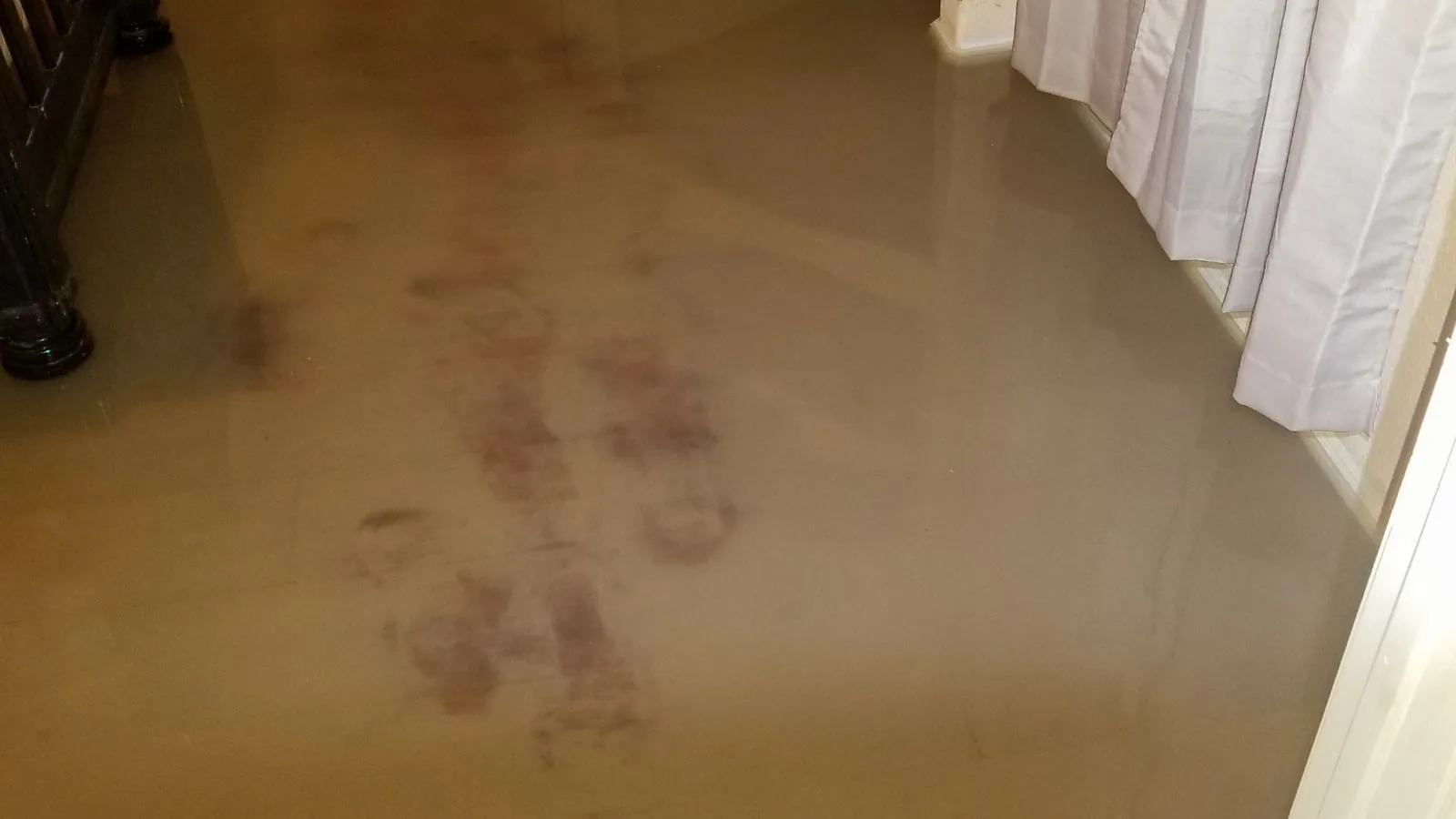
Sewage backup cleanup is the removal and sanitizing of Category 3 water, the raw wastewater that rises out of floor drains, toilets and tubs when a drain line is blocked or overwhelmed. If it is happening right now, stay out of it, stop running water in the house, and keep children and pets away. Our dispatch line is staffed 24/7.
Crews extract the water, remove what cannot be cleaned, and disinfect what can, working to ANSI/IICRC S500 practice for contaminated water. Ask any company you call whether its crews follow that standard.
Stay out first: sewage water is not safe to touch or wade through
Category 3 water carries pathogens, and it spreads onto shoes, pet paws and hands faster than most people expect. Treat every wet surface as contaminated until a crew has cleaned it.
- Do not walk through the water, and do not try to mop or wet-vac it. A household vacuum can spray contamination into the air and ruin the motor.
- Stop using sinks, tubs, showers, washers and toilets. Every flush or drain adds to the problem.
- Cut power only if the panel is dry and you can reach it without crossing the water. If water has touched the panel, outlets or an appliance, stay back and call 911 or the electric utility before you call us.
- If you smell gas, leave the house and call 911 or the gas utility first.
- Keep children, pets, and anyone with a health concern out of the affected area. Questions about illness belong with a physician.
Toilet gurgling or backing up into the tub: what it means
A toilet that gurgles when the washer drains, or a tub that fills with gray water when you flush, usually means the main drain line is blocked downstream. Wastewater has nowhere to go, so it rises through the lowest opening in the house. In many homes that is a basement floor drain, a laundry standpipe or the lowest tub.
Typical causes include roots or grease in the line, a collapsed or bellied section of pipe, flushed wipes, and heavy rain that overloads the system. A plumber finds the blockage. We handle the water and the damage it left behind, and the two jobs often run the same day.
Raw sewage in the house?
Stay out of the water and call (732) 352-9660, any hour, for same-day response when available.
Raw sewage from a basement drain right now: what to do while you wait
These steps protect your family and your belongings until the crew arrives. We offer same-day response when available, and no one can promise an arrival time during a storm.
Stop adding water
Stop every tap, flush and appliance cycle. Tell everyone in the house, since one flush upstairs can push more up the basement drain.
Keep people and pets out
Close the door to the basement or affected bathroom. Wash hands with soap and clean water after any contact.
Check the electrical risk
If the water is near the panel, outlets or a furnace, do not wade in. Call 911 or the utility, then call us.
Lift what you can without wading
Move dry items from doorways and stairs only when you do not have to step in the water. Leave soaked cardboard and upholstery where they are.
Photograph before anything moves
Take wide and close photos from dry ground for your insurer. Then call (732) 352-9660 and describe what you see.
What gets cleaned and what gets thrown out
Porous materials soak up contamination and cannot be made safe, so they are removed, and carpet and pad are the most common example. Hard, sealed surfaces can be cleaned and disinfected. The table shows how most basement and first-floor contents sort out.
| Material | Salvageable? | Typical result |
|---|---|---|
| Wall-to-wall carpet and pad | No | Cut out and discarded, since the pad cannot be sanitized |
| Drywall and insulation below the waterline | No | Removed with a margin above the wet line |
| Sealed concrete, tile, vinyl | Yes | Extracted, scrubbed, disinfected and dried |
| Solid wood furniture, finished | Often | Cleaned and disinfected, then checked once dry |
| Upholstery, mattresses, stuffed items | No | Discarded |
| Cardboard boxes and papers | No | Discarded after you photograph what was inside |
How the cleanup runs, from extraction to final check
Extraction comes first. Trash pumps and truck-mounted or portable extraction units pull the wastewater out, and the crew wears waterproof boots, gloves, eye protection and respirators. Contaminated debris goes into heavy bags and leaves the house without crossing clean rooms.
After the removal, surfaces are cleaned and sprayed with an antimicrobial, and air movers and LGR dehumidifiers dry the framing and slab. The same sequence applies in a finished basement, though more wall and flooring comes out when the room is finished. Moisture readings confirm the structure is dry before rebuilding starts.
When rain and flooding are behind the backup
Sometimes the drain line is fine and the system itself is overloaded. In a storm, a flooded yard and an overwhelmed line can arrive together, and the water coming in is a mix of both. That is flood damage with a sewage component, and it is treated as Category 3.
Insurance sorts these two causes differently. A standard homeowners policy generally excludes flood, and sewer or drain backup is often a separate endorsement or not covered at all. Check your policy for the words backup and overflow, and ask your insurer before you assume either way.
What drives the cost of a sewage cleanup
Sewage jobs cost more than clean-water jobs because of the protective gear, disposal and extra removal. Scope and price are explained before work starts, and these factors set the range:
- Water category: every Category 3 job requires removal of porous materials and disinfection.
- Affected area: a single bathroom floor differs sharply from a finished basement with carpet and walls.
- Materials removed: carpet, pad, drywall, insulation and contents that cannot be cleaned.
- Drying days and equipment: air movers, dehumidifiers and monitoring until the structure reads dry.
- Rebuild scope: replacement drywall, flooring, trim and paint once the area passes inspection.
Insurance coverage depends on the cause and your endorsements, so check your policy and ask your insurer what applies. When you are ready for a real number, call (732) 352-9660.
Questions that belong with the township and a plumber
Township sewer service varies by street, so ask the township which system your address connects to before you assume anything about the line outside your house. A licensed plumber can camera the pipe and tell you where the blockage sits. A restoration crew works on the water and damage inside the building, not on the line.
If a water main break rather than a drain is involved, the Marlboro Township Water Utility directs off-hours water emergencies to township police. For the cleanup itself, crews also reach homes in Colts Neck with the same containment practice.
Sewage backup questions from people standing in the basement
Yes. Dispatch runs 24/7, and a call at 2 a.m. on a Sunday is handled the same as one at noon. We offer same-day response when available, but we do not promise an arrival time. While you wait, stop all water use, keep everyone out of the affected area, and call 911 first if electricity or gas is involved.
Stop using water, stay out of the area, and keep people and pets away. Photograph the damage from dry ground, then call (732) 352-9660. The crew will extract the water, remove porous materials, disinfect and dry the space. A plumber should clear the blockage so it does not happen again.
Usually the main drain line is blocked below the house, so wastewater rises through the lowest fixture it can reach. Stop flushing and running water, then call a plumber to find the blockage. If water has already reached the floor, the cleanup is a Category 3 job.
We advise against it. Raw sewage contains pathogens, porous materials hold them after the surface looks clean, and a wet-vac can spread them through the air. Crews use protective equipment, containment and disinfectants matched to the surface. If you need to act before help arrives, limit yourself to stopping water use and keeping people out.
Almost never. Carpet and pad that touched Category 3 water are removed and discarded, because the pad cannot be sanitized. The subfloor underneath can be cleaned and dried. Rugs and hard surfaces are judged item by item.
It depends on your policy. Many standard policies exclude sewer or drain backup unless you added an endorsement, and flood damage is usually excluded and needs separate flood coverage. Check your policy and ask your insurer before work starts. Keep your photos and the written scope from the crew.
Get contaminated water out and the room sanitized
Call (732) 352-9660 any night or weekend and we will explain the scope and price before work starts.