
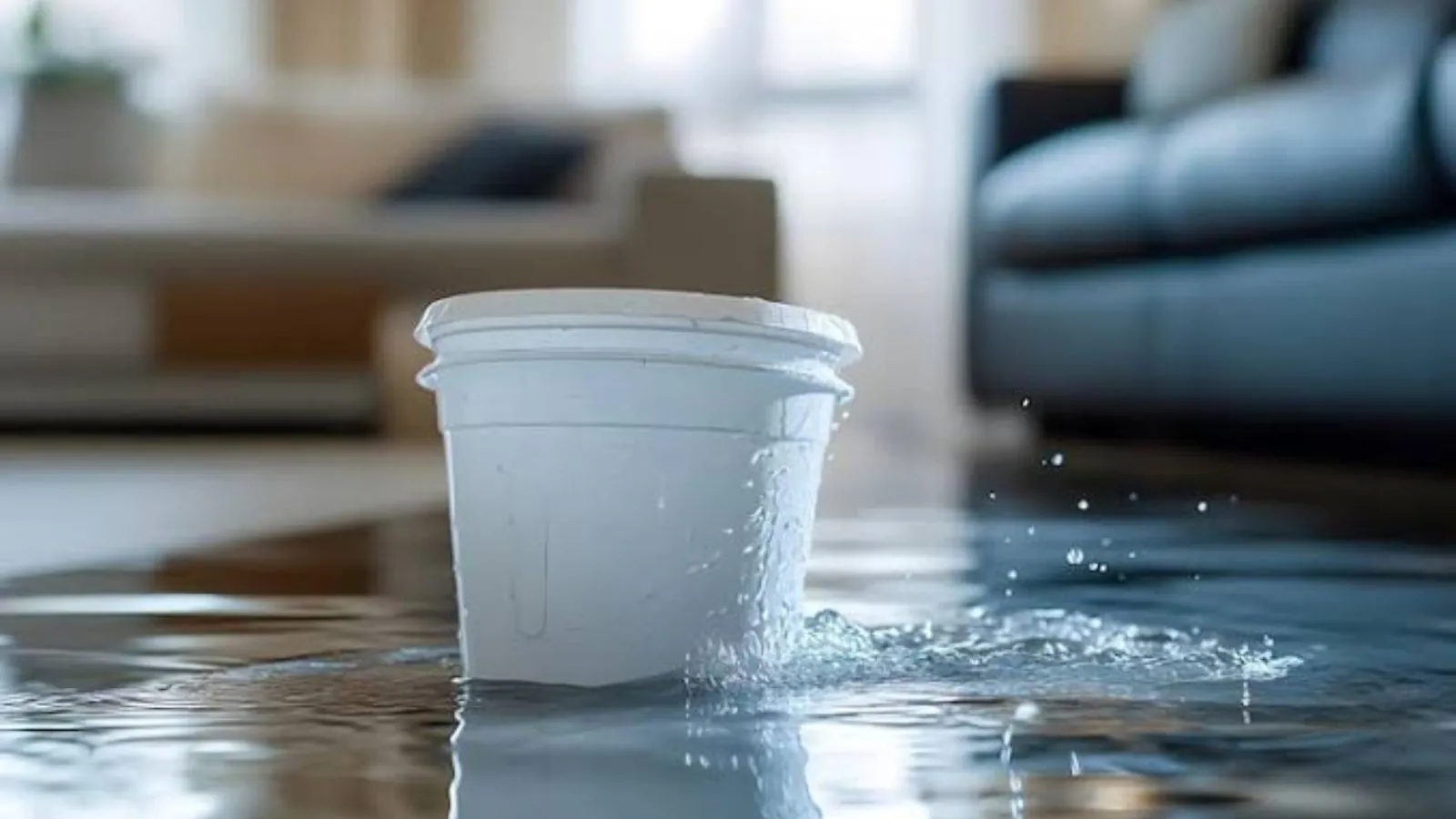
Water damage restoration is the work of getting a building back to its pre-loss condition after water: extracting water, drying materials, cleaning and rebuilding. Mold remediation is the work of containing and removing mold growth and fixing the conditions that fed it. A flooded basement may need only the first. A leak that sat for weeks may need both.
The industry writes these as two separate published standards, ANSI/IICRC S500 for water damage restoration and ANSI/IICRC S520 for mold remediation. This guide explains what each one covers, where the jobs overlap, and what a Marlboro homeowner should say on the phone so the right crew shows up with the right equipment.
The two words, defined without jargon
Restoration is about water and the building. The crew finds where the water went, removes what is standing, and dries wet materials until moisture readings match a dry reference. Then it cleans, removes what cannot be saved, and prepares the space for rebuild.
Remediation is about mold. The goal is to contain the affected area, remove or clean contaminated materials, and correct the moisture problem so growth stops. Testing and clearance steps follow the S520 approach.
A third word, reconstruction, covers the carpentry: new drywall, flooring, paint and trim. Many estimates bundle all three, which is why the vocabulary matters. If you cannot tell which line item is drying and which is rebuilding, ask for them to be listed apart.
Side by side: what each job covers
The table lays out the basic differences. Real jobs blur the edges, but the columns hold up as a starting point.
| Question | Restoration | Remediation |
|---|---|---|
| Main problem | Water in the building | Mold growth on materials |
| Typical equipment | Extraction units, air movers, LGR dehumidifiers, moisture meters | Containment barriers, negative air machines, HEPA filtration |
| Published standard | ANSI/IICRC S500 | ANSI/IICRC S520 |
| Success measure | Moisture readings back to a dry reference | Moisture source fixed, growth removed, clearance step done |
| Time pressure | Hours and days after the loss | Depends on how long moisture sat |
| Usually ends with | Rebuild scope | Rebuild scope |
Both end with rebuild, which is a third trade. That is why a clear written scope matters, and why a line for drywall replacement is not the same thing as a line for mold removal.
Not sure which job you have?
Describe the water, the timing and what you see on a call to (732) 352-9660.
Where the two jobs overlap
Mold needs moisture, so every mold job has a water question inside it. A bathroom wall growing mold needs the leak behind it found and stopped before anything else makes sense. In the other direction, water damage that is not dried fast enough can turn into a mold job.
That overlap is why a crew doing structural drying will check for mold signs while it maps moisture, and why a mold crew will want moisture readings before it declares the area ready. Neither job stands alone when water is the cause.
Wall and ceiling materials are the most common crossover. A saturated section of drywall can be dried in place if it is clean and caught early. If growth is present, the material usually comes out. Drywall water damage repair covers the removal and replacement side of that decision.
What S500 and S520 are, and what they are not
ANSI/IICRC S500 is the published industry standard for professional water damage restoration. It sorts water into categories, describes drying goals and sets out how a job should be documented. ANSI/IICRC S520 is the published standard for professional mold remediation, covering containment, removal methods and verification.
A standard is a reference, not a license. Anyone can say they work to S500 or S520, so ask for specifics. Ask which category of water the crew sees, which equipment goes in, how moisture is measured, and what readings mark the end of drying.
Do not take an S500 or S520 mention as proof of anything. Ask the company to explain how its crews apply the standard on your job, and ask for the answer in writing in the scope.
Who does what on a water plus mold job
A typical sequence on a job with both problems runs in a set order. The order matters because each step sets up the next.
First, stop the source and extract the water. Second, map moisture with a meter and thermal imaging to see how far it spread. Third, decide whether materials with growth come out under containment. Fourth, dry the structure to target readings. Fifth, verify, and only then rebuild.
Some companies do all of these steps in house, and some hand off mold or rebuild to another crew. Either approach can work, as long as the handoff is clear in writing. Ask who is responsible for each stage, and who checks the final readings before walls close up.
- Water first: extraction and drying stop the problem getting worse.
- Mold second: containment and removal happen before fast drying fans can spread spores.
- Rebuild last: new drywall goes on after readings and any clearance step are done.
What to say on the phone
The vocabulary question matters most in the first call. If you describe only what you see, you give the dispatcher what is needed to send the right equipment. Say where the water came from, how long ago it happened, which rooms are wet, and whether you see or smell anything that looks like growth.
Do not call it a mold job just because you see a stain, and do not call it only a water job if you have a musty smell and a ceiling that has leaked for weeks. If unsure, say so. A crew can look at the readings and tell you which job you have.
For a fresh leak with no growth, call and describe it as water damage. For a patch of growth after a long leak, say you have visible growth and a known moisture source. Call (732) 352-9660 for either.
What Marlboro homeowners should know
The New Jersey Department of Health mold page states that there are no State certification programs for companies performing mold work, and that the department does not endorse companies. That means asking about S520, written scope and references matters more here, because the state does not certify mold companies for you.
Rebuild is where the township comes in. The Marlboro Township Construction Division permit page says building, remodeling or adding onto a house generally requires a building permit, and that home improvement contractors must be registered with the New Jersey Division of Consumer Affairs and show their registration card before permits are issued. The page does not say anything specific about water damage repairs, so ask the Construction Division whether your rebuild needs a permit.
The department's mold guidelines also set a size scale: under 10 square feet a homeowner may handle it, 10 to 100 square feet seek a professional opinion, and over 100 square feet hire a qualified contractor. A crew in Freehold or Colts Neck can reach a Marlboro job and explain which side of that scale you are on.
How insurance language treats the two terms
Policies often treat the water loss and the mold that follows it differently. Sudden and accidental water damage is often covered, while mold may carry its own limit or exclusion. Flood damage is usually excluded from standard homeowners policies and needs separate flood coverage.
That split is a reason to keep the two jobs separated on paper. If your invoice shows water damage restoration as one line and mold remediation as another, you and your insurer can discuss each on its own terms. Check your policy for mold wording, and ask your insurer how it treats mold that follows a covered water loss.
Nothing here predicts what a policy will pay. Photos, moisture readings and a written scope make the conversation easier on every kind of claim.
Restoration and remediation questions
No. Restoration removes water and dries and rebuilds the building. Remediation contains and removes mold and corrects the moisture that fed it. They overlap because mold needs moisture, and a slow drying job can become a mold job.
On many calls both are needed, which is why a written scope should list each stage separately.
ANSI/IICRC S500 is the published industry standard for professional water damage restoration. ANSI/IICRC S520 is the published standard for professional mold remediation. One concerns water categories, drying and documentation, and the other concerns containment, removal and verification.
Ask any company how its crews apply them on your job, instead of accepting the standard's name as an answer.
The New Jersey Department of Health mold page says there are no State certification programs for companies performing mold work, and that the department does not endorse companies. Contractors doing rebuild work that needs a permit in Marlboro must be registered with the NJ Division of Consumer Affairs, per the township permit page.
Ask for a written scope and how the crew follows S520.
The state health department's guidelines say a homeowner may handle areas under 10 square feet, should seek a professional opinion for 10 to 100 square feet, and should hire a qualified contractor above 100. In every case, fix the water source first and dry the area.
Questions about health effects belong with a physician.
Maybe. The township Construction Division page says building and remodeling generally require a permit, but it says nothing specific about water damage repairs. Ask the Construction Division whether your scope needs one.
If a permit is needed, the page says contractors must be registered with the New Jersey Division of Consumer Affairs and show the registration card.
If water is still present or the leak is recent, call for restoration first, because drying is time sensitive. If you have visible growth and a known moisture source, say so on the call so the crew brings the right equipment.
Many jobs need both, and one phone call to (732) 352-9660 is enough to describe the situation.
Water, mold or both?
Call (732) 352-9660 for the right crew and equipment on your Marlboro job.