
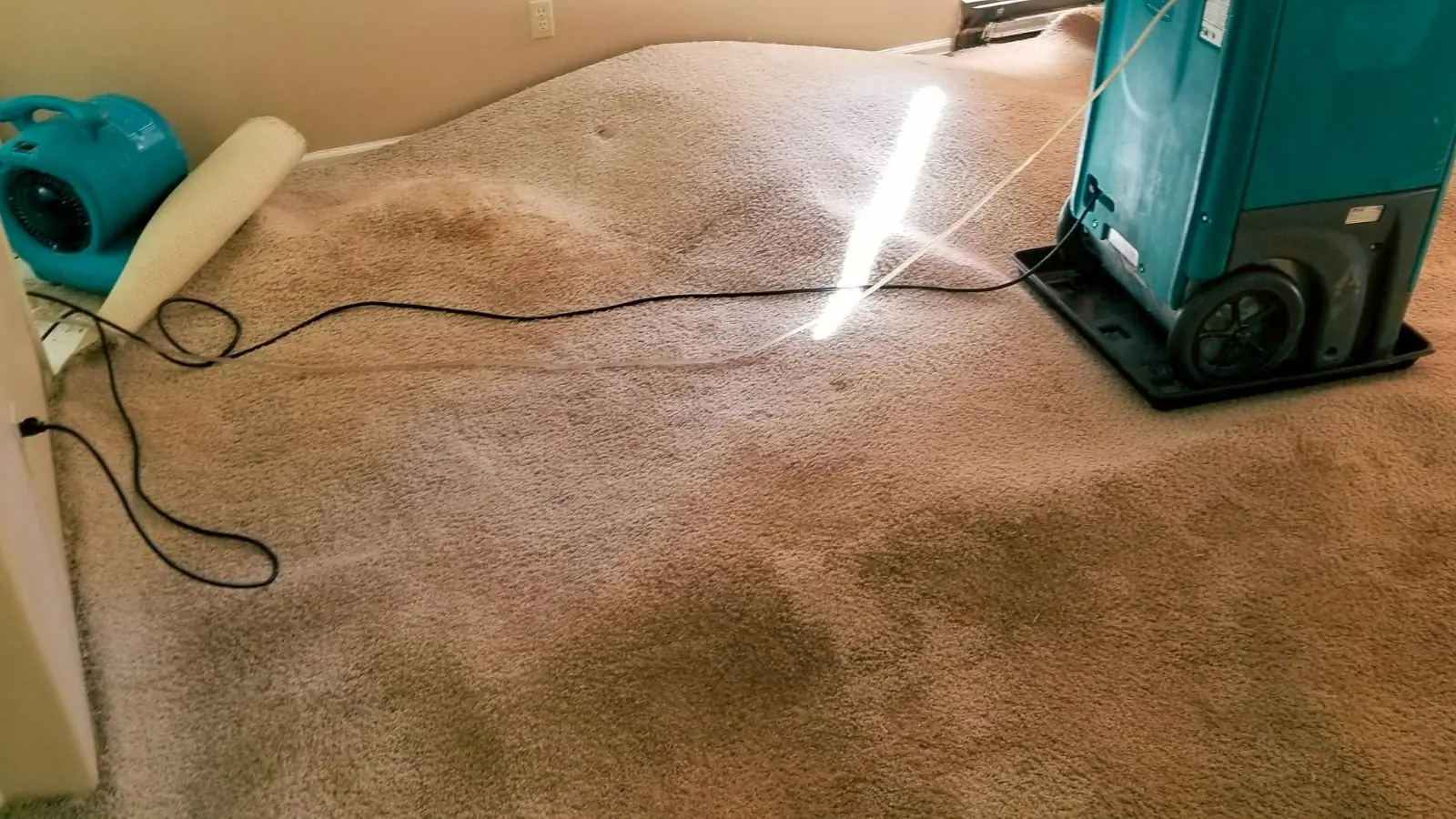
Water damage restoration cost changes with six things. They are the category of the water, the hours it has been sitting, the area that is wet, the materials that absorbed it, the days of drying, and how much has to be torn out and rebuilt. This guide gives no dollar figures, because none would be honest without seeing your house.
What it does give you is the logic behind a quote. Once you know which of the six factors applies to your loss, a number stops looking arbitrary and starts looking like a sum you can check. The decision table below shows which way each factor pushes.
Why two similar-looking losses cost different amounts
Imagine two basements with an inch of water and the same footprint. One took clean water from a supply line and was reached the same afternoon. The other took groundwater during a long rain and sat overnight with carpet down. A tape measure says the two are identical. The work is not.
The second basement likely has contaminated water, more absorbed material, a longer drying period and a bigger demolition list. Each of those lines adds labor, equipment time or disposal. The first may be extraction, a few days of drying and little else.
That is the reason cost pages that quote a single figure for all water damage mislead. The real question is which of the six factors applies to you.
Factor one: water category
Category 1 water comes from a clean source, such as a supply line or a tap. Category 2 carries some contamination, like washing machine discharge or an overflowing sink with soap and grime. Category 3 is grossly contaminated: sewage, rising floodwater and surface water that entered the home.
The category sets the safety steps and the materials decision. Porous materials such as carpet, pad and insulation that touched Category 3 water are typically removed instead of dried. Crews wear protective gear and clean surfaces with antimicrobial products.
Water can move to a worse category the longer it sits, which links this factor to the next one. A clean-water leak left for days is no longer the same job.
Want to place your own loss?
Describe the water source and how long it has been wet at (732) 352-9660.
Factor two: hours since the loss
Time is the quiet multiplier. Wet drywall, carpet pad and wood begin to swell and stain within a day or two, and mold can begin to grow when materials stay damp. Prompt water extraction gets the bulk of the water out before it travels into walls and subfloors.
Early response often means more materials can be dried in place. Late response often means more tear out, longer equipment runs and a bigger rebuild scope. That is not a sales point, it is how wet building materials behave.
If you are reading this with water still on the floor, stop the source if you can, keep people out of any water that may touch electrical equipment, and call (732) 352-9660 for same-day response when available.
Factor three: area and materials
Affected square footage drives equipment counts and labor hours, but the materials involved change the outcome more. Hardwood flooring, plaster, engineered wood, insulated walls and finished cabinets each behave differently when wet.
A concrete slab with a thin vinyl layer dries fast. A multi-layer floor over a wet subfloor does not. A drywall wall with a clean cavity can often be dried with small holes and airflow, while a wall with insulation, tile or a built-in cabinet needs more.
When a crew gives you a number, it should name the rooms and the main materials in each, so you can see where the size and the material mix come from.
Factor four: drying days and equipment
Drying is measured in equipment and days. Air movers, LGR dehumidifiers and sometimes specialty drying systems run until moisture meter readings match a dry reference. A small clean loss can finish in a few days. A larger or deeper loss takes longer.
Humidity matters here too. Summer air holds more moisture, which can make drying harder in a closed building, and a wet cold month can slow some materials. Crews track readings daily and adjust the number of machines.
This is the factor that makes a fixed price for drying hard to promise. A responsible estimate says expected days and ties the end of drying to readings.
How the factors stack: a decision table
Use the table to place your own loss. It does not produce a price. It shows which direction each condition pushes the work and why.
| Condition | Pushes the job | Why |
|---|---|---|
| Clean supply line, reached quickly | Smaller | Category 1 water, more materials dry in place |
| Sewage or floodwater | Larger | Category 3 means removal, protective steps and disposal |
| Water sat for days | Larger | Swelling, staining and possible growth add tear out |
| Finished basement with carpet and drywall | Larger | More absorbent material per room |
| Concrete floor, hard surfaces | Smaller | Surfaces dry and clean with less removal |
| Water in walls or under flooring | Longer drying | Moisture hides, so mapping and extra airflow are needed |
| Rebuild included in the scope | Larger | Drywall, flooring, paint and trim are separate trades |
Factor five: demolition and rebuild
Demolition removes what cannot be dried: wet baseboard, lower drywall, insulation, pad, sometimes flooring. Disposal of that material is part of the job. The rebuild replaces it, and many restoration estimates list rebuild separately or leave it out.
Ask whether the quote ends at dry or at finished. A quote that stops at dry looks smaller than one that includes new walls and floors, but the two are not the same job.
If you are weighing documents from several companies, the process is covered in a separate guide on what a written estimate should list. Here the point is simpler: the rebuild is its own line, and it can be larger than the drying.
Where the water is also changes the work
Access and location change labor. A lower level with a sump pump or seepage calls for basement water damage cleanup, where water has to be removed, materials mapped and drying set up around finished walls and floors.
An under-floor void is a different challenge. In a crawl space water damage job, tight access, insulation, joists and vapor all affect how long the work takes and what equipment fits.
Both examples show why a good quote starts with someone looking at the space. Photos help, and a phone call to (732) 352-9660 can sort what to expect, but a real figure comes after the crew sees where the water went.
What Marlboro homeowners should know
NOAA 1991 to 2020 climate normals for the Freehold-Marlboro station show 48.57 inches of precipitation in an average year. That number is a reason to look at drainage, sump pumps and grading before a heavy rain, because a small seepage problem handled early is a smaller job than one found after a storm.
The same station records an average of 106 days a year with a minimum temperature at or below 32 degrees Fahrenheit, which is why supply lines in cold walls matter in winter. The New Jersey Department of Banking and Insurance says standard homeowners policies generally exclude flood. It also says a new National Flood Insurance Program policy generally has a 30-day wait, so flood cover must be in place before the loss.
A crew from Colts Neck or Adelphia can reach Marlboro addresses, and the cost conversation always begins with the same questions about category, hours, materials and rooms.
Cost and insurance: keep the two conversations separate
The factors above set what the work is. Insurance decides what, if anything, a policy pays. Sudden and accidental water damage is often covered, gradual leaks and neglect often are not, and flood damage is usually excluded and needs separate flood coverage. Check your policy and ask your insurer.
Keep photos, moisture readings and the written scope. They support both conversations.
- Water category: clean, gray or black changes materials and safety steps.
- Time: hours since the loss decide how much can be saved.
- Size and materials: area, flooring, walls, insulation and cabinets.
- Drying: days of equipment and the readings that end it.
- Demolition and rebuild: what comes out and what goes back.
For a number based on your own rooms, call (732) 352-9660 and describe what you see.
Cost questions, answered for Marlboro
Size is only one factor. Water category, hours since the loss, materials absorbed, drying days and the amount of demolition and rebuild all change the work. A clean leak caught early and a floodwater loss left overnight can be the same footprint and very different jobs.
Call and describe the water source and how long it has been wet.
It can. Materials swell and stain, water spreads into walls and subfloors, and mold can begin when things stay damp. Early extraction usually leaves more materials that can be dried in place.
That is a reason to call quickly, not a reason to accept an unseen figure. Same-day response is offered when available.
Often, because floodwater is Category 3 water. Porous materials that touched it are typically removed instead of dried, and crews take extra safety steps. A supply line leak reached quickly is usually Category 1.
Each job still depends on rooms, materials and drying days.
NOAA normals for the Freehold-Marlboro station show 48.57 inches of precipitation a year and 106 days a year at or below 32 degrees Fahrenheit. They say nothing about how many Marlboro homes have problems.
They are a reason to check sump pumps, grading and exposed supply lines before heavy rain and cold snaps.
It depends on your policy and the cause. Sudden and accidental water damage is often covered, gradual leaks and neglect often are not, and flood damage is usually excluded and needs separate flood coverage. Ask your insurer before you decide.
A written scope and photos help. Nobody can promise coverage in advance.
Sometimes. Clean, early water in materials that dry well, such as many wall cavities and hard floors, can be dried in place. Category 3 water, long-soaked carpet pad and damaged insulation usually come out.
Ask what is being saved and what readings show it can be saved.
Ready for a number on your rooms?
Call (732) 352-9660 for same-day response when available and a scope explained before work starts.