
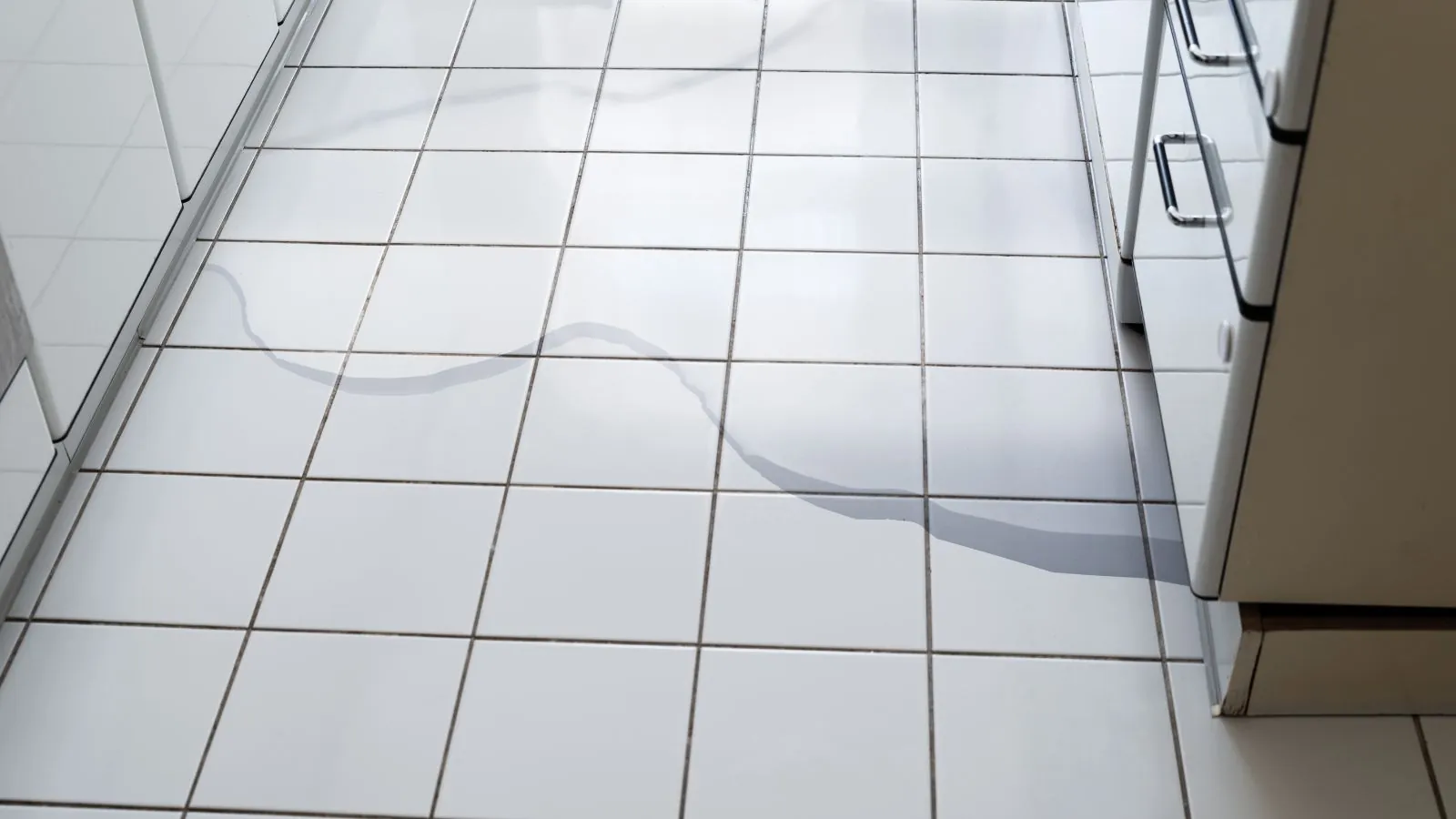
To document water damage for an insurance claim, take wide photos and close-ups before you move anything. Record a slow video of each affected room and list every damaged item. Keep receipts for temporary repairs, and hold on to wet materials until the adjuster has seen them.
None of this needs special equipment. A phone, a notebook and a plastic bin are enough. What matters is order: record first, stop the water, then clean up.
Record before you touch anything
The New Jersey Department of Banking and Insurance tells policyholders to photograph damaged items before disposing of them. Do that first, even if the room looks bad enough that cleanup feels urgent. A few minutes of pictures will cover most of what an adjuster needs to see.
Start from the doorway of each room and shoot the whole space. Then move closer to stains, standing water, sagging ceilings and swollen baseboards. Put something familiar in the frame for scale, such as a tape measure or a coin. Take every photo with the flash off first, then a second pass with the flash on, because stain edges show differently under each.
Your phone stamps each image with a date and time. Leave that data alone and do not edit or crop the originals. Copy them to a second place, such as a cloud folder or a relative's phone, the same evening.
Shoot a walk-through video
Photos show a moment. Video shows the layout and the path of the water. Walk slowly through each affected room and talk as you go. Say the room, the date, where the water seems to have started and what you can see, such as a wet carpet edge or drips from a light fixture.
Keep each clip short, under two minutes, and name the file by room. A folder with Kitchen, Hall Bath and Basement Stairs is easier to hand over than one fifteen-minute recording.
Do not open walls or cut into ceilings just to get a better shot. If a ceiling is bulging, stay out from under it and photograph from the side. A bulge that holds water can release it all at once, and the extra footage is not worth an injury.
Need a written scope?
Call (732) 352-9660 and describe what you see. We explain the scope and price before work starts.
Build an inventory while the memory is fresh
Write down every damaged item with a description, an approximate age and where you bought it. Include the brand and model when you can see them. A sofa, a rug, a box of tax papers and a stand mixer all belong on the list, even the small things you think will not count.
Pull old receipts, order confirmations and photos that show the item in the room before the loss. Pictures from last winter's holiday party often show a TV or a bookshelf in the background. Email searches for order confirmations can also fill in dates.
Sort the list into three piles: items that are clearly destroyed, items that might be saved after cleaning, and items you moved to a dry space. Your insurer may ask about each. If a belonging was soaked by sewage-contaminated water, say so in the list, because that changes how it is handled.
Temporary repairs and receipts
DOBI's claim guidance says to make necessary temporary repairs to protect the property from further loss and to save all receipts or bills to submit as part of the claim. That includes tarps, plywood, plastic sheeting, a wet-vac rental and the cost of a crew to remove standing water.
Stopping more damage is part of what a policy usually expects of you. Shut the main water valve if a supply line failed. Move furniture off wet floors and put foil or wood blocks under legs. If the source is a roof leak, cover the opening and photograph it before and after the cover goes on.
A crew that does water extraction is often the quickest way to stop damage from growing, because standing water soaks into drywall and subflooring within hours. Ask for an itemized invoice that lists the work performed, so the receipt is easy to match to the loss.
What to capture and why it matters
Not every item carries the same weight in a review. The table below pairs each piece of evidence with the reason an insurer or adjuster tends to want it.
| Evidence | How to capture it | Why it helps |
|---|---|---|
| Source of the water | Photo of the failed pipe, hose, roof opening or drain | Shows how the water entered, which affects how the claim is sorted |
| Wide room shots | Four corners and the doorway of each room | Shows the scale of the loss |
| Close-ups | Stains, buckled floors, wet insulation, swollen trim | Shows the materials involved |
| Walk-through video | Slow pass, narrated, under two minutes per room | Shows layout and the path of the water |
| Inventory list | Item, age, brand, place of purchase, photo | Supports the contents portion of a claim |
| Receipts | Photo of each and a folder for the paper copies | Supports temporary repair costs |
| Moisture readings | From a meter, with date and location noted | Shows what was wet and how drying progressed |
| Conversation notes | Date, name, what was said | Keeps the timeline clear |
Keep the original files untouched and make working copies if you need to mark them up.
Hold on to wet materials until someone has looked
DOBI advises policyholders to keep damaged property until the insurer has inspected it or says it can be discarded. That can feel wrong when a soaked rug smells or a drywall corner is crumbling, so set a few sensible rules.
- Photograph the item first, then move it to a garage or a covered spot outdoors if it is damp or smelly.
- Cut a small labeled sample of carpet, pad or flooring when you must remove a whole piece to make a space safe.
- Bag and label hazardous items such as sewage-soaked material and keep them away from living areas.
- Ask your insurer in writing what it needs to keep and what you may discard.
What a written scope of work adds
A scope of work is a written list of what is wet, what needs to be dried or removed, which equipment will run and how long the crew expects drying to take. It is different from your photos because it comes from a trained person reading moisture meters, thermal images and the building materials.
Your insurer's adjuster does their own review, so a restoration scope does not replace it. What it does is give both sides a shared starting document. When the scope names rooms, wall heights, flooring layers and drying equipment, there is less to argue about later.
Ask any company you hire what the scope will contain. A good one lists affected rooms, the materials in each, the water category, the equipment and the plan for structural drying, and it explains each line in plain words. If you want to see how that looks for one common material, read how crews approach wall and drywall water damage repair.
What Marlboro homeowners should know
The state's guidance is the same for every New Jersey homeowner. DOBI says to report your loss as soon as possible, cooperate with the adjuster and keep written notes of your conversations. It also says you are not required to use the company's recommended contractor and that public adjusters, who are optional, must be licensed by the Department.
If a dispute with your insurer continues after you have tried to resolve it with the company directly, DOBI points consumers to its consumer hotline. Write down the claim number and the adjuster's name at the start so those details are ready.
Keep this in mind if you live near a stream corridor. The county hazard plan notes that Texas Road and Fletcher Drive flood in intense rain, and flood damage follows different insurance rules than a pipe failure. Check your policy to see which one applies.
What to do after you have everything saved
Once the evidence is gathered and the water is under control, send your insurer a clear summary of what happened and what you have done. Attach the key photos and keep the full set. Then let the drying proceed on its own schedule, because rushing a rebuild before the structure is dry is a common source of repeat problems.
Our crews serve homes around Colts Neck and Lincroft as well as Marlboro, and the same checklist applies there. If you are looking at wet floors and a notebook right now, call (732) 352-9660. We respond the same day when a crew is available.
Claim documentation questions from Marlboro homeowners
Before. Photograph and film the damage as you found it, then start removing water and moving belongings. DOBI tells policyholders to photograph damaged items before disposing of them. Once the room is changed, you cannot recreate how it looked.
There is no fixed number. Aim for four wide shots per room, close-ups of every damaged surface and item, a photo of the water source, and a short video walk-through. More is better than less, and phone storage is cheap. Back them up the same day.
Wait until the insurer has seen it or says you may discard it. Photograph it, keep a labeled piece if cutting is needed, and move it out of living space. If the water came from a sewer backup, bag the item and keep it away from kids and pets.
No. You file the claim with your insurer, and you deal with your adjuster. A restoration crew can provide documentation such as moisture readings, photos and a written scope, but it does not speak for you or promise how a claim will be decided.
Not required. DOBI states that public adjusters are not required to file or resolve a claim, that they are paid from the claim settlement and that they must be licensed by the Department. Some owners hire one for large or complicated losses. Ask about fees before signing anything.
That is flooding, and standard homeowners policies generally exclude it. Document it the same way, then check whether you carry a separate flood policy through the NFIP or a private insurer. Marlboro's county hazard plan lists Texas Road and Fletcher Drive as flooding in intense rain, so owners nearby should confirm what they hold.
Photos taken, now stop the water
Call (732) 352-9660 for same-day response when a crew is available.