
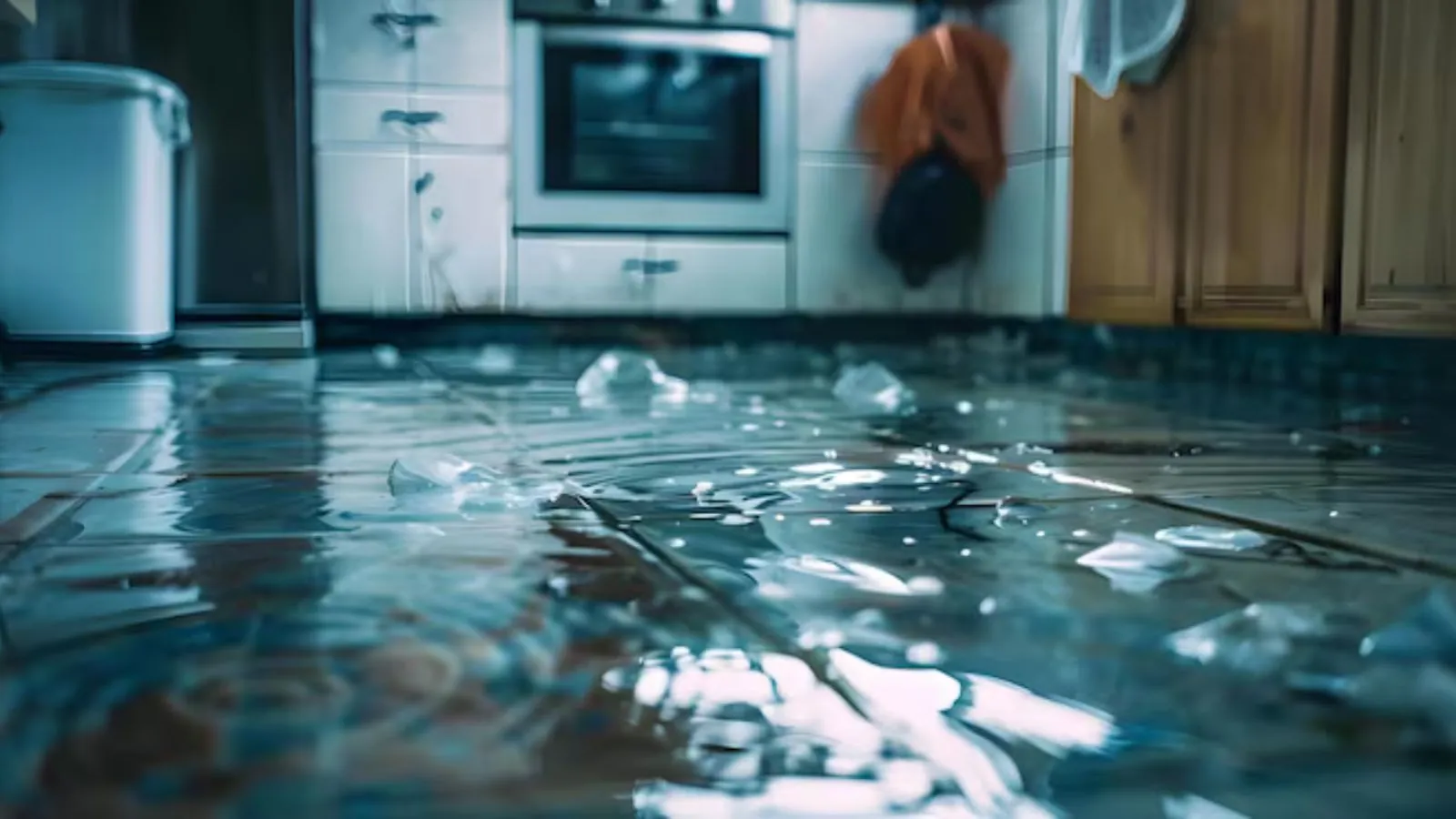
A water damage assessment is an on-site inspection in which a trained person finds the source, measures moisture in building materials, classifies the water and writes down what must be dried, removed or rebuilt. Expect questions, a walk through the house, readings from meters and a written scope at the end.
It is not the same as a price quote, although the two often arrive together. This guide explains each step so you know what is normal and what should raise a question.
What an assessment is meant to answer
Every assessment tries to answer five plain questions. Where did the water come from? How far did it travel? What kind of water is it? Which materials absorbed it? How long will it take to dry them? The rest of the visit is just a method for answering those with evidence instead of guesses.
A wet floor can be the smallest sign of a much larger problem. Water follows framing, pipes and gaps, so a stain in a hallway ceiling may trace back to a bathroom on the second floor. An assessor who only looks at the visible stain misses where the moisture went.
If you are on the phone with a company before the visit, describe what you see, when it started and what you have already done to stop it. That gives the crew a head start on equipment and timing, though a real answer always requires someone to look at the structure.
The questions you will be asked
The first few minutes are conversation. Expect to be asked when the water started, whether the source has been stopped, and if you have turned off power to wet areas. The assessor will want to know what the building is made of, whether there has been earlier water damage, and if anyone has noticed odors.
They will also ask about the type of water. Was it a clean supply line, a drain, or an outside source such as flooding or a backed-up sewer? The answer changes safety steps and the scope. If you are unsure, say so, because the water category is something the assessor will test and judge on site.
Have your insurance information handy if you plan to file a claim, though the assessor does not need it to take readings. Tell them about any pets, children or health concerns in the home, so they can plan how to set equipment and keep the work area safe.
Want someone to look at the water?
Call (732) 352-9660 and say what you see. We respond the same day when a crew is available.
Tools that measure what your eyes cannot
Moisture meters are the core tool. A pin meter reads through contact with the material, and a pinless meter scans below the surface. Both report relative readings, which the assessor compares to a dry reference reading taken from an unaffected area of the same material.
A thermal imaging camera shows temperature differences that often point to wet areas behind walls and under floors. It does not show moisture directly, so the assessor confirms every suspicious spot with a meter. A hygrometer measures air humidity and temperature, which tells the crew how much drying capacity the room needs.
Some assessors also use a borescope to look inside a wall cavity through a small hole. These tools together produce a moisture map, a labeled sketch of the rooms with readings marked. That map is the baseline against which drying progress is checked later.
Setting the water category and class
The ANSI/IICRC S500 standard for water damage restoration describes three categories of water. Category 1 comes from a clean source such as a supply line. Category 2 carries some contamination, such as dishwasher or washing machine discharge. Category 3 is grossly contaminated, such as sewage or river flooding.
The standard also sorts jobs into classes based on how much of the space and which materials got wet. A small area with low-absorbency materials is a lower class than a room where wet carpet, pad, drywall and wood framing hold a lot of water. Class guides how much drying equipment the job needs.
Water can move up a category as it sits. Clean water that stays in carpet and pad can pick up contamination over time. That is one reason to start an assessment soon after a loss. You can ask any company whether its crews work to S500, and a clear answer is a good sign.
Assessment versus quote versus scope
People use these three words as if they meant one thing. They do not. The table lays out how they differ.
| Item | What it is | What it answers |
|---|---|---|
| Assessment | The inspection and readings | What is wet, how wet and why |
| Written scope | A list of work, equipment and drying plan | What will be done in each room |
| Price | A figure tied to that scope | What the work is expected to cost |
| Insurer review | The adjuster's own inspection | What the policy will pay for |
The order matters. A price that arrives before anyone has taken readings is a guess. Ask for the scope in writing, and ask the company to explain how each line connects to what it measured.
Where the assessor looks beyond the stain
Expect an assessor to open cabinet doors, lift carpet edges, pull a baseboard, check the room below a wet ceiling and test the wall at several heights. The goal is to find the edge of the wet zone, because everything inside that edge needs a decision.
A wet wall might need drilled weep holes for drying, partial cut-outs or full removal, depending on materials and contamination. The assessor weighs those options with you. See how repair choices differ in the guide to wall and drywall water damage repair.
In a flood or sewage event, the assessor will also be thinking about what must be discarded. Porous materials that sat in contaminated water are usually removed rather than dried. A flood damage restoration assessment therefore includes a safety plan for the crew, covering gloves, respirators and containment.
What ends up in the written scope
A useful scope is specific enough that someone else could read it and understand the job. Look for these elements before you agree to any work.
- Rooms and areas affected, with the water category noted
- Materials to be dried, treated or removed in each room
- Equipment to be placed, such as air movers, LGR dehumidifiers and air scrubbers
- Expected drying duration and how progress will be checked
- Demolition and disposal, listed separately
- What is not included, such as rebuild carpentry, paint and flooring
What Marlboro homeowners should know
An assessment tells you what is wet. Whether the repair needs a permit is a separate question for the township. Marlboro's Construction Division page says building, remodeling or adding onto a house generally requires a building permit. It says nothing specific about water damage repairs, so ask the division whether your rebuild scope needs one.
The same page says home improvement contractors must be registered with the NJ Division of Consumer Affairs and must produce a registration card before permits are issued. If your rebuild involves a permit, confirm your contractor's registration before you sign. Ask any company you hire to show it.
Permit applications also ask for an estimate or list of materials and total cost, so a clear written scope helps when you reach that stage. The Construction Division can be reached through the township's main number.
After the assessment: what happens next
If the readings show wet materials, drying starts right away because mold needs moisture and time. The plan usually includes extraction of standing water, removal of materials that cannot be saved, air movers and dehumidifiers, and readings every day or two until the numbers reach dry standards. Our page on structural drying and dehumidification describes what the equipment does.
Crews working in Freehold and Eatontown follow the same assessment steps as in Marlboro. If you see water now and want someone to look, call (732) 352-9660. We respond the same day when a crew is available, and we explain the scope and price before work starts.
Assessment questions we hear from Marlboro callers
A small, single-room leak can be assessed in under an hour. A multi-room or multi-floor loss takes longer, because the assessor has to trace the path of the water and test each material. Rushing the moisture map to save time usually costs more later.
If you can safely stop the source, yes, because it keeps the loss from growing. Shut the main valve for a supply line, and stay out of wet areas near electrical panels. If you cannot stop it, tell the crew when you call so they can plan. We do not promise an arrival time, but we do respond the same day when a crew is available.
Ask the assessor to show you the meter, name the dry reference reading and mark each reading on the moisture map. Readings should be taken at the same points over time. A company that cannot explain its numbers should be questioned before work starts.
No. A water damage assessment measures moisture and classifies water. Mold testing is a separate step, and mold remediation follows the ANSI/IICRC S520 standard. If you suspect mold, mention it at the start of the visit. Questions about how mold affects a person belong with a physician.
No. The assessor documents the loss and writes the scope. Your insurer decides coverage after its own review. Check your policy and ask your insurer, and share the assessor's readings and photos if they are helpful.
The township Construction Division says building, remodeling or adding onto a house generally requires a permit, but its page does not address water damage repair specifically. Call the division and describe the rebuild before work begins. It also says contractors must show a NJ Division of Consumer Affairs registration card before permits are issued.
Get the readings, then decide
Call (732) 352-9660 for an on-site assessment and a scope explained before any work starts.