
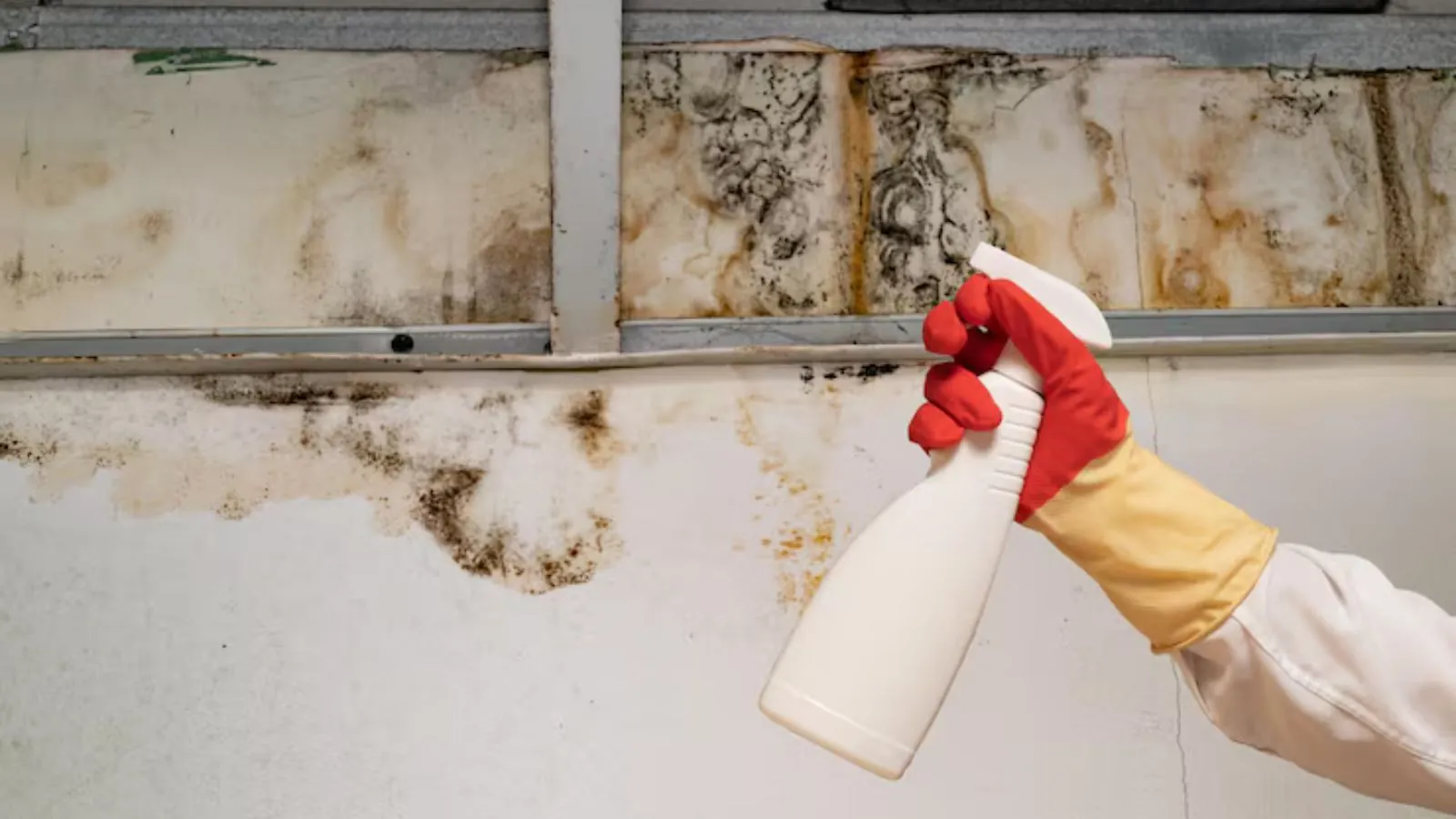
To remove mold from bathroom walls, first find and stop the moisture feeding it. Then, if the patch is under about 10 square feet and sits on a hard, sealed surface, scrub it with detergent and water while wearing gloves, goggles and a respirator, and dry the area fully.
If the patch is larger, if the wall is soft or crumbling, or if it keeps coming back after you clean, stop and call a professional. This guide gives you the steps and the lines you should not cross.
Start with the water, not the stain
Mold needs moisture. The CDC says mold grows where there is moisture, such as around leaks in roofs, windows or pipes. In a bathroom the usual suspects are a weak exhaust fan, a shower that leaks behind the tile, a drip at a supply valve or a toilet base, and a cold exterior wall that collects condensation.
The New Jersey Department of Health mold guidelines say to identify and correct the source of moisture first and to make sure the area is completely dry before any renovation. Scrubbing a stain while a leak keeps feeding it only buys a short break.
Run the fan during and after every shower and look for a drip under the sink. Check the wall on the other side, because a bathroom stain sometimes begins in a hall closet or bedroom. If you find a plumbing leak, shut the valve and fix it before you clean.
Size decides who does the work
The NJ Department of Health sets out a simple size guideline. Under 10 square feet, a homeowner may be able to handle it. From 10 to 100 square feet, seek a professional opinion. Over 100 square feet, hire a qualified contractor. The EPA uses a similar line, saying a patch under about 10 square feet can usually be handled by the homeowner.
Ten square feet is roughly a three-by-three-foot square, so measure before you start. Most bathroom patches fall in the small range, but a patch behind a vanity or along a whole tub wall can add up quickly.
The guideline is about size only. A small patch on soft drywall, on a ceiling that is sagging, or in a wall that has been wet for a long time may still call for help. The table below covers those cases.
| What you see | Usual approach | Why |
|---|---|---|
| Under 10 sq ft on tile, grout or painted hard surface | Homeowner cleanup is reasonable | Matches the NJDOH small-area guideline |
| 10 to 100 sq ft anywhere | Get a professional opinion first | NJDOH guideline for medium areas |
| Over 100 sq ft | Hire a qualified contractor | NJDOH guideline for large areas |
| Soft, crumbling or sagging drywall | Call, do not scrub | Porous material may need removal |
| Patch returns after cleaning | Call | A moisture source is probably still active |
| Water leak, sewage or flooding involved | Call before any cleaning | Different safety and scope |
| Anyone in the home has health concerns | Ask a physician, and call a professional | Health questions belong with a doctor |
Not sure about the size?
Call (732) 352-9660 and describe the patch. We respond the same day when a crew is available.
Protect yourself before you start
The CDC cleanup guidance says to wear at least a NIOSH-approved N95 respirator, protective gloves (non-latex vinyl, nitrile or rubber) and goggles that give complete eye protection. Open a window or door for fresh air when using cleaning products, and keep children and pets out of the room.
Bathrooms mix water and electricity. Do not spray liquid into outlets, switches, fan housings or light fixtures, and keep wet rags away from them. If water has reached an outlet or the panel, stay out, cut power only if the panel is dry and safe to reach, and call 911 or the utility for any electrical or gas risk before anything else.
- Wear an N95 respirator, nitrile or rubber gloves and sealed goggles
- Open a window and run the exhaust fan if it is dry and working
- Never mix bleach with ammonia or any other cleanser
- Keep liquid away from outlets, switches and fan housings
Step by step cleanup for a small hard-surface patch
Use these steps only for a patch under about 10 square feet on a sealed, hard surface after the moisture source has been stopped.
Stop the moisture
Fix the leak, repair the fan or adjust how the room is ventilated before you scrub.
Gear up and ventilate
Put on the N95 respirator, gloves and goggles, and open a window.
Scrub with detergent
The EPA says to scrub mold off hard surfaces with detergent and water and dry completely. Use a stiff brush or a cloth and fresh water.
Use one product at a time
The CDC says bleach or dish detergent can be used on mold in the home. Choose one, follow its label, and never combine it with another cleaner.
Dry the area fully
Wipe with a clean towel and run the fan or a dehumidifier until the surface and the wall around it are dry to the touch.
Bag the waste
Seal rags and sponges in a plastic bag before they go in the trash, and wash your hands and clothes afterward.
Why you should never mix cleaners
The CDC states it plainly: never mix bleach with ammonia or any other cleanser. Many bathroom cleaners contain ammonia, acids or other ingredients that react with bleach and release gases. Mixing happens easily when someone sprays one product on top of another to try to do a better job.
Pick a single product and apply it to a small test area. Rinse the surface and let it dry before you try anything else. Keep products in their original containers with labels, and read the warnings on each bottle.
Also skip the idea that a stronger chemical removes mold for good. Cleaning removes the growth on a surface, but it does nothing about the water that fed it. If the moisture remains, the patch can return. We do not promise otherwise, and any company that does should be questioned.
When the wall itself is the problem
Bathroom drywall is porous. Paint and tile protect the face, but moisture can get into the paper and gypsum from behind, from a leak or from a shower that is not sealed. The EPA says absorbent or porous materials, such as ceiling tiles and carpet, may have to be thrown away if they become moldy. A soft, bowing or stained-through wall belongs in that category until someone measures it.
If you press a stained wall and it gives, stop. Cutting into it can spread the problem into the room and may expose plumbing or wiring. Read how crews handle wall and drywall water damage repair to see what removal and drying involve.
A ceiling patch above a shower may point to a leak in the room above or a fan duct that is dripping. Spots on the ceiling often need the cause traced before cleaning, and the ceiling water damage repair page explains that process.
What a professional does differently
Professional mold remediation follows the ANSI/IICRC S520 standard. That means finding and correcting the moisture, containing the work area so dust does not spread, removing affected porous materials, cleaning the remaining surfaces and verifying that the space is dry before rebuild. You can ask any company whether its crews work to S520.
Testing is a separate question. Some owners want sampling to document conditions, and a buyer's lender may ask for it. Independent testing and clearance are best done by a party that is not selling the cleanup, and questions about how mold affects a person belong with a physician.
If your patch fits the larger categories, see our page on mold remediation for how the process works. We explain the scope and price before work starts.
What Marlboro homeowners should know
The NJ Department of Health mold page states that there are no State certification programs for companies performing mold work, and the department does not endorse companies. That means you cannot rely on a state mold license to vet a company, so ask what standard it follows and for a written scope.
The state size guideline applies in Marlboro the same as anywhere in New Jersey. If you are cleaning a bathroom in one of the township's villages such as Morganville or Robertsville, the same limits apply: under 10 square feet, a homeowner may handle it, and anything larger needs an opinion or a contractor.
If cleanup leads to wall replacement and the work needs a permit, the township Construction Division says contractors must show a NJ Division of Consumer Affairs registration card before permits are issued. Ask your contractor to show it.
After cleanup: keep the room dry
Run the exhaust fan during every shower and for a while afterward, wipe down walls and the tub surround, and fix drips quickly. Use a hygrometer if you want to watch humidity in a bathroom that never seems to dry. A reading that stays high points to ventilation or an unseen leak.
If the patch comes back in the same place, treat it as a signal and not a nuisance. Our crews serve homes around Freehold and Colts Neck as well as Marlboro. Call (732) 352-9660 if the area is large, the wall is soft or the moisture source is unclear, and we respond the same day when a crew is available.
Bathroom mold questions from Marlboro homeowners
Government guidance names detergent and water for hard surfaces, and the CDC says bleach or dish detergent can be used. Whatever you choose, use one product at a time and never mix cleaners. Vinegar is a popular home choice, but check the label of any product and keep it separate from bleach.
About a three-by-three-foot square. Measure the patch with a tape before you decide. The NJ Department of Health guideline says homeowners may handle patches under 10 square feet, professional opinion is advised from 10 to 100, and a qualified contractor is needed over 100.
Not until the moisture is fixed and the surface has been cleaned and dried. The NJ Department of Health says the area must be completely dry before renovation work. Painting over a patch hides it, and a wet wall can push paint off again.
A corner that keeps growing mold is usually staying wet. Common causes are a weak fan, a failed seal, a leak behind the tile or a cold exterior wall. We cannot promise that mold will not return after cleanup, but finding the moisture is the step that makes the difference.
For a small patch on a hard surface, most homeowners clean without testing. Testing becomes more relevant for larger areas, unclear causes or a home sale where a lender asks for documentation. Independent clearance testing is a separate service from cleanup.
The state health department says there are no State certification programs for companies performing mold work. That means you should ask each company which standard it follows, such as ANSI/IICRC S520, and request a written scope. For permit work, Marlboro asks contractors to show a NJ Division of Consumer Affairs registration card.
Know when to stop scrubbing
Call (732) 352-9660 when the patch is large, soft or back again.