
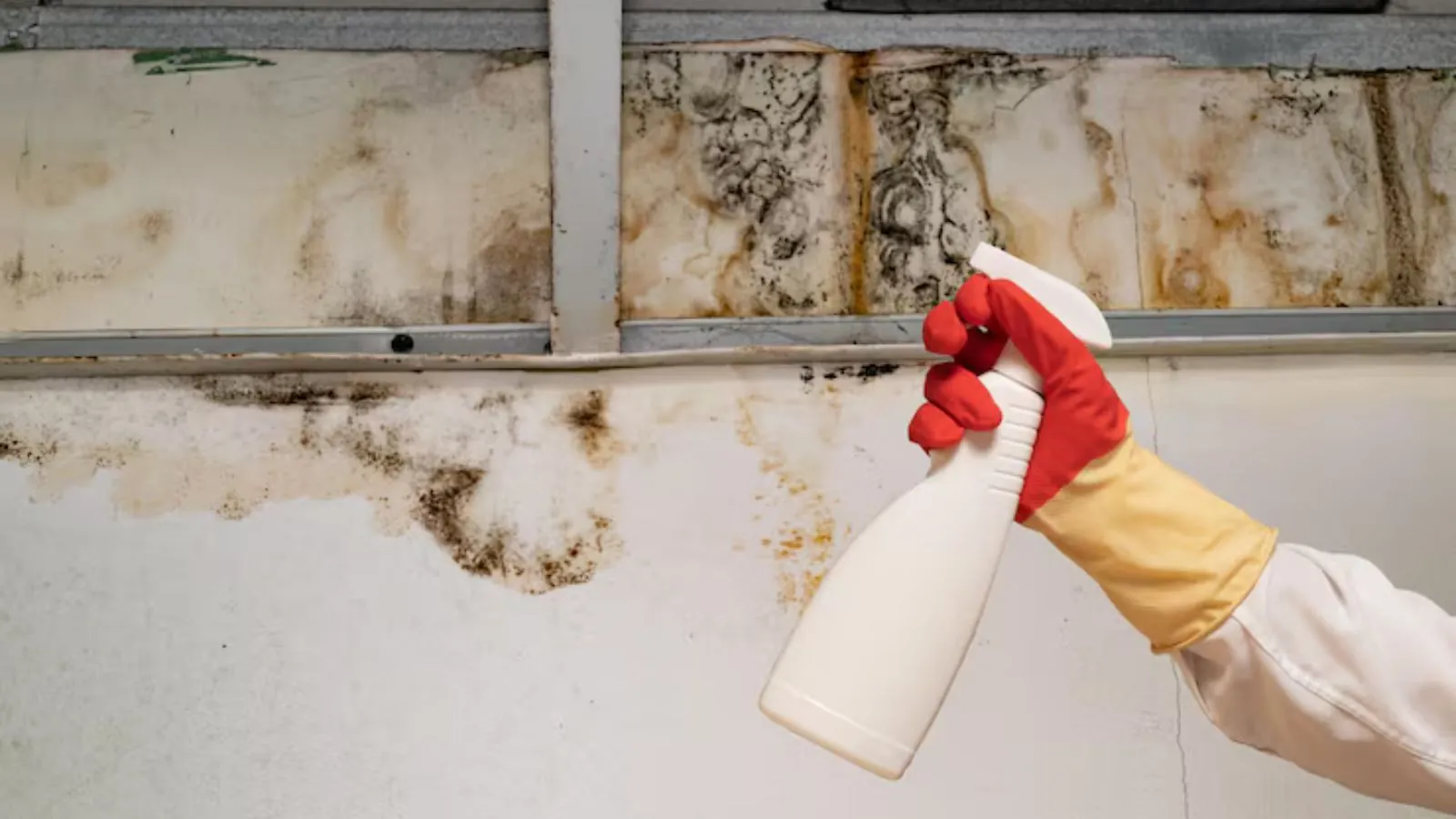
You cannot reliably tell mold from a stain by looking at it. Mold, old water stains, soot, dust lines and ordinary dirt can all look like gray, brown or black marks on paint. What you can do is gather clues: where the mark is, whether water has ever been near it, how it is shaped, how it smells, and what happens when it is lightly wiped.
Those clues tell you whether to relax, watch the spot, or call for an inspection. This guide walks through the cues, explains why a confident guess can backfire, and covers when testing makes sense, including for a home sale or loan.
Start with the moisture question
The New Jersey Department of Health says mold spores need water to grow and that mold problems usually occur when there is excess water. So the first question about any dark mark is not what color it is. It is whether liquid water or humid air has been in contact with that wall.
Think back over the last year. Did a supply line weep behind the vanity, a window leak during a storm, or a roof drip into the attic above this room? Did a shower run without a working exhaust fan? A yes makes mold more plausible. A firm no, on a dry interior wall far from any water source, makes soot, dust or smudging more plausible.
If you have no idea where the moisture could come from, treat that as a finding. Hidden leaks are common enough that a mark with no obvious source deserves a closer look rather than a repaint.
Visual and context cues, side by side
No single cue settles it. Read several together, and keep in mind that every row below is a hint that points toward a next step, not a diagnosis.
| Clue | More consistent with growth | More consistent with a stain or dirt |
|---|---|---|
| Location | Near a tub, sink, window, outside wall, ceiling below a bath or roof | Behind furniture, above a candle or vent, along a door frame |
| Pattern | Spotty or fuzzy clusters that spread outward over weeks | Straight lines, rings with a hard edge, or a flat smear |
| Texture | Raised, powdery or speckled in places | Flat, even, part of the paint film |
| Smell | Musty or earthy, stronger when the room is closed | No smell, or a smoky or dusty smell |
| Paint and drywall | Bubbling, peeling, soft or damp wall board | Paint intact and wall firm |
| Wipe behavior | May smear, lift partly, or reappear | Often lifts cleanly or does not change |
Count how many clues point one way. Three or four toward growth, plus a known wet history, is enough reason to stop cleaning and call for an inspection.
Not sure what the mark is?
Call (732) 352-9660, describe where it is and what water has been near it, and we will tell you whether an inspection makes sense.
Water stains that look like mold, and the reverse
A dried water stain is usually brown or tan with a ring, because dissolved material in the wall moves with the water and collects at the edge as it dries. It can be perfectly harmless on its own. But the stain also proves water reached the spot, and mold can start in damp drywall paper or insulation that you cannot see.
The reverse also happens. A gray mark along a ceiling joint line may be dust drawn by a temperature difference between the framing and the surrounding board, and a dark patch above a baseboard heater may be soot from burned dust. Neither needs remediation.
The point is that color is a weak signal. A tan ring may sit on top of active growth, and a black mark may be nothing but dirt. That is why the moisture history and a professional look carry more weight than the shade of the spot.
Why guessing is risky
Guessing wrong in either direction costs you. If you assume it is dirt, scrub or paint over it, and it was growth, you can spread material into the room and seal moisture in. Paint over a damp wall tends to blister, and the underlying problem keeps going.
If you assume it is mold and tear into the wall without a plan, you can create dust and mess for a problem that was a stain. You may also remove material an insurer or inspector wanted to see first.
A middle path works better. Photograph the mark from a few feet and close up, note the date, check for a moisture source, and keep any wet material you remove until someone has documented it. Then decide with evidence rather than a hunch.
What a size guideline tells you about next steps
The New Jersey Department of Health gives a size-based guideline for visible mold. Under 10 square feet, a homeowner may handle it. From 10 to 100 square feet, it suggests seeking a professional opinion. Over 100 square feet, it says to hire a qualified contractor.
Ten square feet is roughly a patch three feet by three feet. Hold a tape measure to the mark before you decide anything. A strip of dark spots along a baseboard can look small and still add up once you account for the wall behind the furniture.
The same guideline says to fix the water source first and let the area dry before renovation. Cleaning a spot that is still being fed by a leak only buys a short pause. If the mark touches more than one wall, covers a ceiling, or sits where you cannot see behind it, treat it as a professional question.
Testing: what it can and cannot settle
Testing is how you replace a guess with evidence. A tester can take a surface sample from a mark, or air samples from a room, and a lab reports what is present in that sample. That settles the mold-or-not question for the spot that was sampled.
It does not tell you why the wall got wet, how far the moisture extends, or whether a second area is hiding behind it. A moisture meter and thermal camera do that work, and a good assessment pairs both.
Choose a tester who is independent of the company that would do any removal. That keeps the result separate from the sale of a service and gives you a cleaner record if an insurer, buyer or lender asks for one.
Selling or refinancing: why clearance testing comes up
Mold questions often surface during a home sale or loan, after an inspector notes a stain or a musty room. A buyer may ask for the mark to be evaluated, and a lender or insurer may have its own requirements. We cannot speak for any lender, so ask the one involved what documentation it wants.
Independent clearance testing is a separate step from removal. After the work is done, a third party samples the area and writes a report on the result. That report is what you hand to the buyer or lender, if they request one.
Plan the timeline early. Remediation, drying, clearance sampling and lab turnaround happen in sequence, and a closing date does not move to suit them. Call about mold remediation as soon as the inspection note appears, not the week before closing.
What Marlboro homeowners should know
Mold in the township follows moisture, and the township has plenty of ways for moisture to reach a wall. The Monmouth County hazard mitigation plan annex for Marlboro says about 4.9 percent of the township sits in the 1 percent annual-chance floodplain, and that Texas Road and Fletcher Drive flood in intense rain. If your home is near either, a dark mark on a lower wall or basement room deserves a closer look after any storm.
NOAA's 1991 to 2020 normals for the Freehold-Marlboro station show 48.57 inches of precipitation a year, which means a roof, window or foundation seam gets tested often. Check where gutters and downspouts discharge and look at the ceiling below any bathroom or above any exterior wall that shows a mark.
One more point from the state: the New Jersey Department of Health says there are no State certification programs for mold companies and that it does not endorse any company. Ask any company how its crews work and whether they follow the ANSI/IICRC S520 mold standard.
- Check the FEMA flood map for your address if the mark is on a lower level.
- Look at gutters, downspouts and window seals on the wall with the mark.
- Ask any mold company whether its crews work to ANSI/IICRC S520.
When to stop and call
Call if the mark is larger than about 10 square feet, keeps coming back after a wipe, sits on a ceiling, or comes with a musty smell and a soft or bubbling wall. Call if you found a leak, even a small one, behind or above the spot.
Also call if you are selling or refinancing and someone has flagged it. Describe what you see, where it is, and what water has been near it. Neighbors in Freehold and Colts Neck can use the same checklist before they call. If wall board has gone soft, the next conversation is likely about wall and drywall repair, and if the mark is on a ceiling, ceiling water damage repair covers what sits above it.
Mold or stain questions from Marlboro homeowners
No. Soot, dust, dirt, old water stains and mold can all look dark. Location, moisture history, smell and pattern help, but only sampling can confirm what a mark is.
If you do not know the source of the moisture and the mark is growing, have it looked at instead of guessing.
A light wipe with a damp cloth on a small spot is a clue, nothing more, and you should wear gloves and a mask. Never mix cleaning products, since some combinations create dangerous fumes.
If the mark returns or the wall is damp, stop cleaning and get it assessed. Scrubbing a large area can spread material around the room.
Not necessarily. A stain proves water was there at some point. Whether mold formed depends on how wet the material got and how long it stayed that way.
A moisture meter can tell you if the area is still damp, and an opened section or a test can tell you if growth is present.
It is sampling done after remediation by a third party that did not do the work, with a lab report on the result. Buyers, lenders or insurers sometimes ask for it.
Requirements differ, and we cannot speak for any lender. Ask the lender or buyer what documentation it needs before work starts.
It is a guideline from the New Jersey Department of Health, not a rule you must pass or fail. It suggests homeowners may handle under 10 square feet, seek a professional opinion from 10 to 100, and hire a qualified contractor above 100.
It is a good test for whether to call, but any mark connected to an unknown leak merits a professional look at any size.
The county hazard plan says Texas Road and Fletcher Drive flood in intense rain, and about 4.9 percent of the township lies in the 1 percent annual-chance floodplain. Homes near those spots, or near Deep Run, are more likely to see water reach lower walls.
Check the FEMA flood map for your address. Wherever you live, dark marks near roofs, windows and plumbing walls deserve the same moisture questions.
Need a second set of eyes on a wall?
Call (732) 352-9660 for same-day response when available, and bring your photos and notes.