
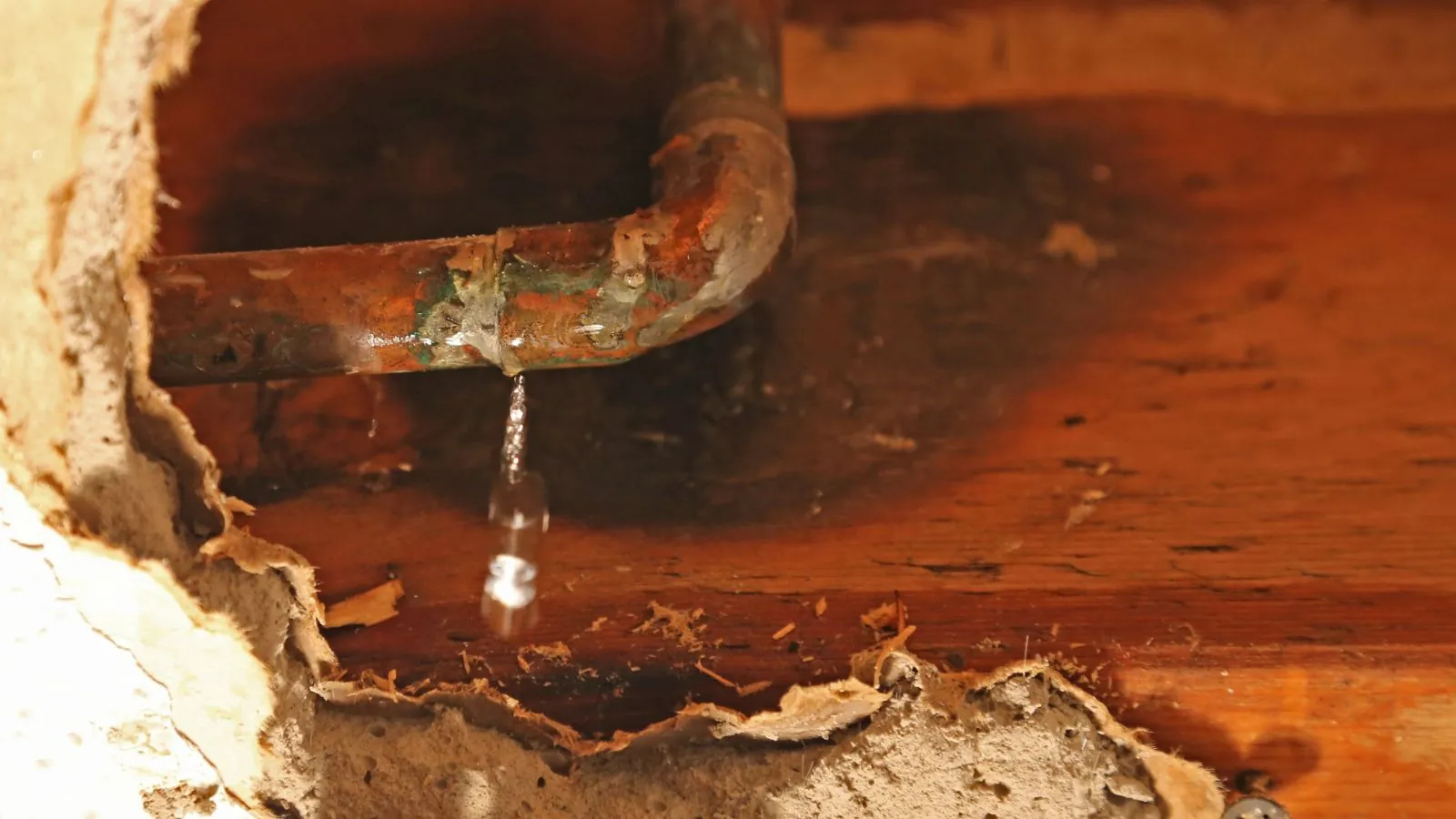
Does homeowners insurance cover water damage? Often yes, when the water was sudden and accidental, such as a supply line that snaps in a wall. Often no, when the damage built up slowly from a leak nobody fixed, and almost never for flooding, which standard policies generally exclude.
Your own policy has the final word, so the practical answer is always to check your policy and ask your insurer. This guide explains the logic behind those answers so the words in your declarations page make sense.
The three questions an insurer asks first
Most water claims start from the same three questions. How did the water get in? How long was it there? What was the home's condition before the loss? The answers sort a claim into covered, partly covered or excluded long before anyone looks at a moisture reading.
A pipe that bursts overnight reads as a sudden event. A drip behind a vanity that stains the cabinet floor over several months reads as maintenance. A creek or storm surge pushing water across the ground and into a house reads as flood. Each path lands in a different part of the policy, and each one asks you for different proof.
Keep that sorting in mind as you read the rest of this guide. When you call your insurer, describe the source and the timeline in plain facts, without guessing at cause. Say what you saw, when you saw it and what you did to stop it.
Sudden and accidental versus gradual damage
Standard homeowners policies commonly respond to sudden and accidental water damage. Think of a washing machine hose that splits, a water heater tank that fails, or a frozen line that cracks when it thaws. The water arrives fast, the cause is clear, and the loss is a one-time event.
Policies commonly push back on damage that comes from long-term seepage, rot, repeated leaking or lack of upkeep. The wording differs by company, so a slow leak is not automatically denied, but the burden of showing it was sudden often falls on the person filing.
| What happened | How policies often view it | What to check in your policy |
|---|---|---|
| Supply line bursts inside a wall | Often treated as sudden and accidental | Water damage section and any exclusions for plumbing |
| Shower pan or grout leaks for months | Often treated as gradual or maintenance | Language about continuous or repeated seepage |
| Toilet supply or overflow event | Often sudden if it happened in one episode | Whether the cause was a defect or an ongoing issue |
| Rain enters after wind damages the roof | Often covered if the roof was damaged first | Whether the opening came from a covered storm event |
| Creek or runoff rises into the house | Flood, generally excluded | Whether you hold a separate flood policy |
| Drain or sump backs up | Often needs an add-on | Any water backup endorsement and its limit |
A row in this table is a pattern, not a promise. Two homes with the same leak can get different outcomes because their policies read differently.
Water in the house now?
Stop the source first, then call (732) 352-9660 and we will tell you what we can do the same day.
Flood is a separate category
The New Jersey Department of Banking and Insurance states plainly that flooding is not covered under standard homeowners policies, and that its extreme weather page lists flood as an example of a standard exclusion. That includes flooding that accompanies a hurricane.
Flood coverage comes from the National Flood Insurance Program or from private insurers that sell flood policies. DOBI says there is normally a 30-day waiting period before a new flood policy takes effect, so buying one when a storm is already in the forecast is too late.
For a sense of how the line gets drawn, see how a crew approaches flood damage restoration work. Rising ground water and storm runoff are treated differently from a pipe failure, in the restoration process and in the paperwork.
What Marlboro homeowners should know
The Monmouth County hazard mitigation plan annex for Marlboro Township says about 4.9% of the township sits in the 1% annual-chance floodplain. The same annex lists 7 repetitive-loss properties and 104 National Flood Insurance Program policies in force, using FEMA data from August 2024.
The annex also notes that Texas Road and Fletcher Drive flood in intense rain and have to be blocked, and that Deep Run has a regulatory floodway. If you live near either road or along a stream corridor, check the FEMA flood map for your address before assuming flood is someone else's problem.
The 104 policies are a small number next to the township's 14,716 housing units (ACS 2024), which is a reminder that most homeowners here are relying on a standard policy that excludes flood. Ask your agent which kind of policy you hold.
Pipes, basements and where the policy line falls
A burst pipe is the textbook sudden loss, and many policies cover the resulting water damage to the structure and sometimes the cost of tearing out finishes to reach the break. What they often do not cover is the repair of the pipe itself. Ask your insurer how the policy splits the two.
A wet room below grade is harder to sort. Water from a failed supply line or an appliance is one thing. Water that seeps through a foundation wall or comes up through a floor drain is another, and policies often word those causes differently. A basement water damage cleanup job can involve both kinds of water in the same room, so describe the source before you describe the damage.
Sump pump failure and sewer or drain backup sit in their own lane. Many policies exclude them unless a water backup endorsement was added, often with a lower limit than the main coverage.
If you rent, the picture changes
A renter's policy covers your belongings and living expenses in many covered events, but not the building itself. The landlord's policy handles the structure. DOBI recommends that renters talk to an agent about a renters policy if they do not already have one.
That split matters in a real loss. If a neighbor's overflow soaks your ceiling, your clothing, furniture and electronics fall under your policy while drywall and flooring belong to the building owner. Take your own photos either way, and tell the landlord in writing.
Marlboro is mostly an owner-occupied township, with 93.1% owner-occupied housing in the 2020 to 2024 Census data, but rentals and in-law suites exist. If you are the owner renting out a unit, ask whether your policy treats a landlord loss differently from an owner-occupied one.
Policy words worth looking up before you need them
Pull out your declarations page and the full policy form on a dry day. These terms tend to decide water claims, and finding them in advance saves time during a loss.
- Sudden and accidental, and how the policy defines it
- Continuous or repeated seepage or leakage
- Water backup or sump overflow endorsement, and its dollar limit
- Deductible amount, and whether a separate one applies to certain perils
- Ordinance or law coverage, which can matter if code upgrades are required during rebuild
- Duties after a loss, including what you must do to protect the property
What you still handle when a loss is covered
Even a covered loss leaves homeowners with tasks. You pay the deductible, you stop the water from causing more harm, and you keep proof of what you did. DOBI tells policyholders to make necessary temporary repairs to protect the property and to save all receipts.
Stopping the source is the first of those tasks. Shut the main valve, move valuables, and keep wet materials until the insurer says they can go. If a crew is needed, you are not required to use a company the insurer recommends, according to the DOBI claim guidance.
Fast drying also changes the size of a claim. Water left to sit turns a small loss into a bigger one, and policies often expect you to limit that growth. A call to a crew that does water extraction during the first day can keep the scope smaller, and a nearby crew serving Freehold or Colts Neck can be reached the same way as one serving Marlboro.
Who to call first
Call your insurer to report the loss and call a restoration company to stop the damage. Those two calls do not compete. The restoration company cannot tell you a claim will be approved and should not try. Its job is to dry the structure and document what it finds.
At Marlboro Water Damage Pros, we explain the scope and price before work starts, and we respond the same day when a crew is available. If water is moving through the house right now, stop reading and call (732) 352-9660. The insurance questions can wait until the water is controlled.
Insurance questions Marlboro homeowners ask about water damage
It depends on speed and cause. A pipe that fails suddenly is the kind of event standard policies are often written to cover, while a slow drip that rots a cabinet over many months is often treated as maintenance. Report the loss, describe what you saw, and ask your insurer how your policy treats the pipe repair versus the water damage.
Rain that enters through a roof opening created by a covered storm event is often handled differently from rain that rises along the ground and enters at doors or foundation walls. The second case is flood, and DOBI says standard homeowners policies do not cover it. Read the policy language on rain, wind and flood together.
DOBI says floods can happen anywhere, even in low-risk areas. The township annex puts about 4.9% of Marlboro in the 1% annual-chance floodplain, which means most homes are outside it, but heavy rain can still flood roads and low lots. Check the FEMA flood map for your address and ask an agent about a policy.
DOBI says there is normally a 30-day waiting period before a new flood insurance policy becomes effective. That is why the agency advises against waiting until a storm is imminent. If you are buying a house, ask your agent about timing before the closing date.
No. Only your insurer decides coverage, and a trustworthy restoration company will not promise an outcome. What a crew can do is dry the structure, record moisture readings and photographs, and write down the affected materials so your insurer has clear information to review.
No, the township and county figures do not alter your contract. They help you judge risk. The 4.9% floodplain share, 7 repetitive-loss properties and 104 flood policies come from a county planning document, and they are a prompt to read your own declarations page and confirm whether flood is included.
Coverage questions can wait, drying cannot
Call (732) 352-9660 to get a crew moving while you phone your insurer.